
















What skills should every child learn?
Schools have traditionally focused on the 3 R’s of education: reading, ‘riting, and ‘rithmatic. (All right, whoever came up with that might have needed another year or two of school.) Modern schools and Christian schools have supplemented this standard by making science, civics, and Bible courses mandatory, with a wide array of elective courses to help students pursue their different interests and talents.
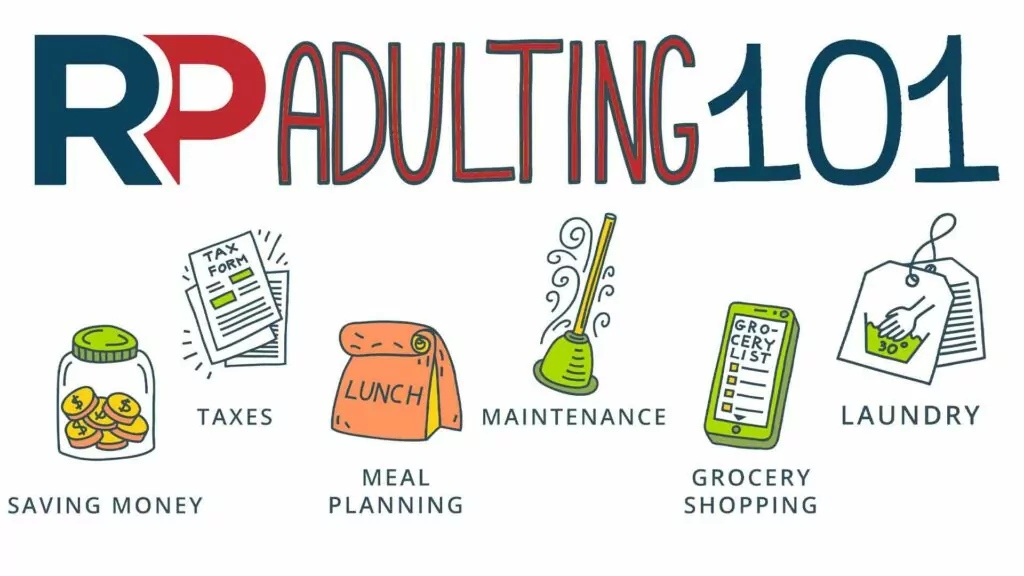
But as all Christians should know, it isn’t only (or even primarily) the school that should teach children. The ultimate classroom is the home, where parents teach their children not only knowledge, but also character and skills. The “school of mom and dad” was particularly important for me and my siblings as we spent most of our grade school years being homeschooled. Much of our education included the standard academic subjects. But over the years, our family started naming a few less orthodox “life skills” that we needed to have some proficiency in before graduating high school, if not earlier. My family is made up of four boys, followed by our one sister. To some degree, our family’s set of life skills was designed to ensure that, no matter our gender, we all could be competent in some basic life skills.
So, without further ado, here is my family’s not-so-complete list of life skills.
Cooking
Cooking typically isn’t a strength of the male sex. The stereotypical menu of a young man when he first moves out of his parents’ house and lives alone or rooms with other young men isn’t a particularly nutritious or varied one. Quick and easy meals – ramen, mac ‘n cheese, pizza, or leftovers – abound.
Lest you think this is more fiction than fact, I’ve lived it. For two years, I roomed with a set of university buddies. We each took turns cooking one night of the week for the five or seven of us. And you know what was on the menu three or four days a week? Pizza ordered from the school cafeteria. Most of my roommates didn’t have the ability (or at least the time or interest) to cook, and I ate more pizza in those two years than I probably will eat for the rest of my lifetime.
Anticipating this problem, our parents ensured that we all had some basic culinary ability. Once all five of us siblings were old enough, we annually held an “Iron Chef Minderhoud” competition, based on a Food Network show. Each sibling (with our parents being the sous chefs for the younger ones) was responsible for cooking one new dish each summer. The goal was not only for us all to have the ability to cook, but also to spark creativity and explore new recipes.
And pretty much all the recipes were a hit: lamb dhansak, pierogies, schnitzel and spätzle, crab cakes, lamb chops and couscous, lobster pasta, gulab jamun, cinnamon fudge, and xocolatl are the most memorable delicacies that I remember.
The perks of gaining this life skill are that you will always be able to make delicious and nutritious food regardless of your stage of life. Whether you’re freshly moved out of your parents’ house and living alone, married but your spouse who usually does the cooking is out of town, or widowed towards the end of life, cooking is a life skill.
 Swimming
Of all the “life skills” on this list, this is probably the most important one for preserving life.
My parents never learned to swim. (We affectionately refer to them as “rock” and “anchor” at the pool.) But we often went to the beach on hot summer days. Well, one day when I was something like seven or eight, I decided that I wanted to swim across the tip of the lake. So, without telling my parents, I strapped on my life jacket and set out on the 150-meter swim to the dock on the other side.
I made it across just fine. But my parents were terrified that their son was swimming in the middle of a lake where they were unable to reach me. When they realized what I was doing, my dad frantically ran around the outer edge of the lake, and once I reached the other side, he hauled me up out of the water. I was perfectly fine and rather proud of my swim, but I got quite the scolding for the heart attack that it gave my parents.
And so, given their lack of swimming ability and their desire for us to be safe in the water, my parents diligently enrolled us all in swimming lessons. I forget precisely how many years we took swimming lessons, but my parents insisted that it was literally a “life skill.” Thanks to those years of swimming lessons, all of us have a basic ability to keep our heads above water.
Even if we still have a penchant to sink rather than float.
Volleyball
This one might seem like the oddest life skill of the bunch, but it was the one most elevated to the status of “life skill.”
Why?
Well, this skill was less about volleyball itself and more about what it represented: being competent in common social activities. At the time, a common social activity at youth retreats, church picnics, or backyard barbecues was to play volleyball. Most people would join in and have a blast. Those who didn’t know how to play risked loneliness on the sidelines. Those who played badly risked inciting frustration from their teammates.
In hindsight, those risks probably say more about the character or temperament of the other players than anything else. But, without being able to do anything about the actions of other teenagers and young adults, basic competency at volleyball was designated a life skill in our family. (How good we actually were at volley is another question entirely.) Other sports and games that are common social activities informally followed suit. Most of us are half-decent at hockey, cornhole, or spike ball, Setters of Catan, Dutch Blitz, or Codenames.
And the life skill has paid off, at least for me. The life skill of being a (somewhat) capable athlete, board gamer, and card shark has led to countless hours of fun and fellowship. It may not be necessary for life, but it can certainly enhance the enjoyment of life.
Personal hygiene
I don’t think that this one ever officially made the list, but this was definitely a life skill that our parents had to hammer into our quartet of homeschooled boys. There were the parental refrains to put deodorant on, do our hair, untuck (or tuck in) that shirt, or shower after a hockey game before going to bed. When we were older, there were admonitions to get a haircut or trim that Hutterite beard.
At the time, we didn’t care about such things. But now we sometimes look back through family photos and playfully tease each other about our stylistic choices of yore. The proverb “cleanliness is next to godliness” isn’t found in the Bible, but it still is a life skill that will benefit you and the people around you.
Reading
Now, I know that I mentioned reading at the top of the article. By listing reading as a life skill, I don’t mean the ability to read. (That’s absolutely a life skill, but one that I trust is virtually universal.) I mean a love of reading, which is far from universal.
Teaching anyone to love something is far harder than teaching them about something. But the best way to ensure that a kid loves to read is to make reading enjoyable. My parents spent a pretty penny buying books that I enjoyed so that I would develop a love for reading.
For me, that started with my parents reading aloud to me: Little House on the Prairie, Little Britches, The Chronicles of Narnia, and Redwall are all books that I recall listening to before bed.
My personal love of reading began with the Hardy Boys. One day – probably for my birthday or Christmas – my parents gave me The Tower Treasure. I must have read it pretty quickly and asked for another because I got The House on the Cliff soon after. And then I got the next book. And then the next book. Eventually, I discovered that my mom had bought and stashed the entire 58-book series in her work desk. And so, when I finished one book, I snuck into the desk and grabbed the next book. Before my twelfth birthday, I had read a stack of Hardy Boys books that was taller than I was.
After that, I got hooked on the historical novels of G.A. Henty. Writing at the end of the nineteenth century, Henty is certainly not an award-winning writer. But to a teenage boy, historical military fiction was addictive. I read and re-read about 45 of his books, recounting episodes as diverse as the destruction of the Jewish temple, the Spanish conquest of the Aztecs, and the struggle between the British and Napoleonic forces in Spain and Portugal.
That life skill of a love of reading has stuck with me. I’ve never quite been able to reach RP’s challenge to read 52 books in a year, but I always have a stack of books that I’m working through.
Any others?
These are a few of the life skills emphasized as I was growing up. Perhaps you’d consider them important life skills too. Perhaps you think that one or two of these are not so vital. Perhaps you have your own list of skills that every high school graduate should learn. Either way, it is a good exercise to think through.
Are there any life skills that you would want your children to learn before graduating high school? Maybe some of these life skills would stem from personal regrets, skills that you wish you had but never acquired. Others might come from personal experience of what is important. Perhaps you’ve always thought that X should be taught in school, but isn’t.
I challenge you to pick up a pen and jot down your own list. What makes the cut?