Transparent heart icon with white outline and + sign.

Life's busy, read it when you're ready!

Create a free account to save articles for later, keep track of past articles you’ve read, and receive exclusive access to all RP resources.

White magnifying glass.

Search thousands of RP articles

Helping you think, speak, and act in Christ.

Open envelope icon with @ symbol

Get Articles Delivered!

Helping you think, speak, and act in Christ. delivered direct to your Inbox!

A A
By:

Harlem Globetrotters

Drama
1951 / 77 minutes
Rating: 7/10

This won’t appeal to most of Reformed Perspective‘s readers. But for the right audience, this will be an absolute gem.

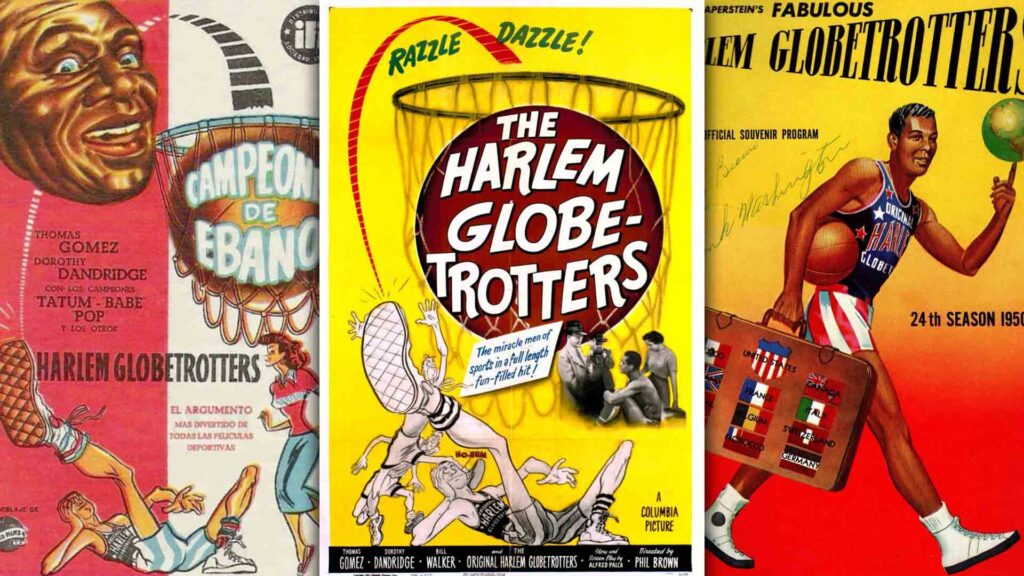
This stars the actual 1951 Harlem Globetrotters’ team, and they do a very good job of playing themselves. Billy Townsend is a college hotshot who is looking for a payday playing for the best team in basketball. So he quits his college team and drops his classes before convincing the Trotters’ GM to sign him up. He’s good – really good – but is he Globetrotter material? Billy turns out to be too selfish to fit in, and gets himself kicked off the team. But, of course, that’s not how the story is going to end; redemption is right around the corner.

What makes this a gem is the historic interest. This was filmed back before Globetrotter games were staged, and when they were legitimately one of the best teams in all of basketball. And for an all-black team to be this good at this time was important. It was a  big and bold statement to the racists and anyone who’d listen that the only way you could say the black man was inferior was by closing your eyes. Of course, basketball dominance isn’t nearly as good as the biblical case for equality – that we are all the same race, Adam’s, and all made in the very Image of God (Gen. 1:27). But three years earlier, when the 1948 Trotters team beat the all-white Lakers’ team (two years before professional basketball was desegregated), it was a statement that even folks who never sat in a pew could readily understand.

So that’s the historical background for this film, and it makes this quite the education.

Cautions

The hero of our story, Billy Townsend, is self-absorbed, and when his Globetrotter teammates have had enough of it, they kick him off the team. That’s fine and good. He’s also self-absorbed in his marriage, making decisions without his wife’s involvement, but that comes around too, when she makes a decision for their family at the film’s end. It’s not revenge – more comeuppance, and lovingly, rather than selfishly, done.

Gambling is a plot element, and portrayed in only a slightly negative fashion. Some high-money rollers are shown as slightly sleazy as they try to get inside information on players’ health, but when a college student speaks of making a bet, that’s portrayed in either a neutral or maybe even approving manner, as it’s no big deal. But it’s not pushed. Overall, I don’t think there’s anything that would keep this from being an all-ages film… as long as your kids are interested.

Conclusion

This will be a delight for any fan of the Globetrotters and their 100-year-old history. The team is amazing today, but was even more so back in this day, still clowning, but doing it then in real games against real competition. It includes some real game footage, and whether you’re into history or basketball, it’s fun to see how the game used to be played.

The Globetrotters have been in a lot of films and TV specials, including The Harlem Globetrotters on Gilligan’s Island, and Scooby-Doo! Meets the Harlem Globetrotters, so to find this film be sure to search for “Harlem Globetrotters 1951.”

Enjoyed this article?

Get the best of RP delivered to your inbox every Saturday for free.

A A
By:

The Jackie Robinson Story

Drama
1950 / 77 minutes
Rating 7/10

This is the true story of the first black man to play Major League Baseball, made all the more interesting by the fact that Jackie Robinson plays himself and does a solid job of it.

The story starts with Robinson as a boy getting his first glove. Time passes quickly and we soon see him showing his athletic skills in multiple sports at the college level. But athletic skills, and even a college degree, didn’t get his brother a good job, so Jackie isn’t feeling optimistic about his future. He eventually lands a job with a traveling African-American team, but for low pay and with long days of travel keeping him away from his girlfriend.

However, it’s on that traveling team that he catches the eye of a Brooklyn Dodgers scout, who invites him to try out. Team president and part-owner Branch Rickey has both practical and principled reasons to want to integrate blacks onto his team: he had seen discrimination impact someone close to him and so wants to fight it, and he also knows that whatever team is first to integrate will have their pick of the best black players. Rickey wants Robinson to understand what sort of abuse he’d be signing up for. And most importantly, the two of them need to be in agreement that no matter what insults are directed at Robinson, or cheap shots delivered on the field, he can’t hit back. Robinson’s play, and not his fists, need to do that talking.

When Robinson agrees, he’s sent first to the Dodgers’ minor-league affiliate, the Montreal Royals. After leading the league in hitting, he eventually gets the call to the Dodgers, and on April 15, 1947, he made his debut for them, blowing open the doors for many others to follow.

Cautions

A modern-day reviewer criticized the film for presenting a muted version of the real events: we aren’t shown the worst of the insults and threats that Robinson had to deal with, and consequently, we don’t get a full appreciation of the courage he had to have to endure that gauntlet.

That’s a valid observation, but it misunderstands this film’s target audience. While it isn’t suitable for the very young, this is meant to be family viewing. Robinson is humble enough here but he is also trying to set an example that will impact the next generation. To reach that generation, he couldn’t make a gritty R-rated film. The end result is an account of a courageous man, and his backers, fighting both deep-seated bigotry and the more surface-level ignorant sort of racism, and his story has been made suitable for ages 10 and up.

Conclusion

Robinson made this film in the off-season, just three years after breaking into the major leagues. While he continued to get death threats throughout his career, this still marks an encouraging shift in the populace’s thinking. Just three years after many folks were jeering at him to get out, many more were now flocking to theaters to learn how he made it in.

So, even as this is “muted” there’s lots to love about it, including Robinson’s mother directing him to God, as he wrestles with decisions he has to make.

Because The Jackie Robinson Story is in the public domain, you can watch it in black and white for free below. But you can find it in higher resolution, and also in a colorized version, available on many streaming platforms that would make for much better viewing for a family movie night.