















A new trend in Canadian schools
*****
Imagine a student who has struggled academically for several years. In the past, their grades would have alerted teachers and parents that intervention was needed. But this student is at a school where there’s been a shift from A’s and B’s to something called a “proficiency scale.” Parents understand percentages and letter grades, but this proficiency scale uses terms that aren’t at all clear.
• Emerging
• Developing
• Proficient
• Extending
The result? Our imaginary student falls through the cracks in the system instead of being noticed early on.
This scenario isn’t just imaginary. I talked to Joanna DeJong VanHof, Education Program Director at Cardus, a Christian think tank, and she explained that this is what’s happening under British Columbia’s new method of assessing students. In 2023, B.C. abolished letter grades for Grades K-9 and adopted a Provincial Proficiency Scale with those four categories. The scale was introduced amid concerns that grades stressed deficits – they emphasized where the student fell short – whereas, with a scale, learning would be regarded as an ongoing process.
B.C. is not an isolated case. Their shift was part of a broader trend in Canadian schools away from traditional teaching and grading methods. Schools are replacing quantitative assessments – letter grades and percentage scores – with qualitative approaches, like observations, narrative feedback, and ongoing conversations about student learning.
VanHof says this shift is problematic because qualitative assessments measure student performance “relative to their peers” rather than against “actual content.” While intended to support struggling students, the approach raises questions for educators. Is compassion for students being confused with lowered expectations?
The BC proficiency scale: a case study
Victor Brar, a University of British Columbia professor with expertise in K-12 education, has written on the rationale behind B.C’s proficiency scale. In an article on The Conversation news site, he made a case for the change. He noted that while grades “highlight the deficits of underperforming students,” the scale focuses on the process of learning itself and encourages teachers “to assign equal value to all the learning that happens between tests.”
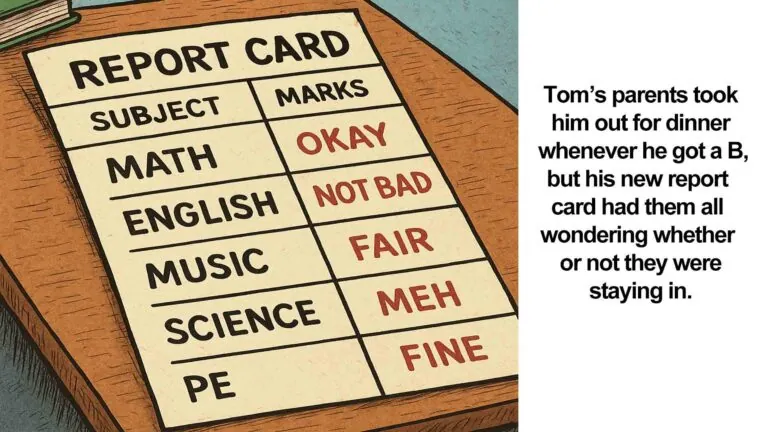
However, eliminating letter grades has left parents confused with what their child’s progress has been. According to the National Post, only 36% of parents could correctly interpret what an “emerging” grade meant. Similarly, educators needed to interpret and translate what the criteria meant, raising concerns around subjectivity.
“There’s always a sense in which grading is subjective,” said VanHof, but when that subjectivity is taken to the extreme, there are unintended consequences. One of them, VanHof said, is grade inflation where students may have high marks on paper, but “the actual content knowledge that has happened isn’t at the same level as it has been in previous years.”
De-streaming: equity or erosion?
VanHof drew a parallel between B.C. ‘s proficiency scale with Ontario’s 2021 “de-streaming” policy, which eliminated separate Grade 9 academic and applied courses for a single course. Previously, the applied math courses focused on the math we need in our every day, like balancing our household budget, while academic courses prepared students for the university level.
The goal of de-streaming, like the proficiency scale, was to promote an equitable learning environment. According to Ontario Educators, streaming reinforced economic disparities and racism, disproportionately placing Black and Indigenous students in applied courses and creating a “class system” that perpetuated a “self-fulfilling prophecy” of lower academic achievement.
However, Michael Zwaagstra, Senior Fellow at Fraser Institute said that while de-streaming policy “sounds fair,” it does not serve students who may be disinterested in academic coursework, or may be choosing other paths like trades.
On the other hand, VanHof criticized de-streaming for the demands it put on teachers to accommodate to a much wider spectrum of abilities. It’s like teaching two classes at once, and to do it properly would require additional resources, like TA assistance, in the classroom.
“You can implement a policy. But the capacity and the resources that you have to implement it well is a totally different question,” VanHof said. Since educators were not given additional time or support, the result was that no one was receiving the “targeted instruction and time they needed.”
John Wynia, League Coordinator at League of Canadian Reformed School Societies echoed the perspective.
“The standards have been lowered in the grade nine class to allow for equity, but then that results in reaching the lowest common denominator.”
The bigger picture: declining test scores
VanHof’s concern that students are learning less content has been reflected in declining test scores, as seen on the international PISA test (Programme for International Student Assessment). PISA, administered by the Organization for Economic Co-operation and Development (OECD), assesses reading, math, and science skills of 15-year-olds.
Although Canada has ranked among the top ten countries, since the 2000s its scores have consistently declined. The 2022 PISA test was on mathematics, with Canada’s score falling by 35 points compared to 2003, roughly equivalent to a drop of two whole grade levels according to the Fraser Institute.
Some attribute the decline to the COVID school closures, and to the increased screen time kids have had in the last decade. However, B.C. has been restricting phone usage in schools since September 2024, so if phones were a big part of the problem, there should have been a rapid increase in student performance after the phone ban, right? The results are still out on whether that has happened but it will be interesting to see. In the meantime, Canada has experienced a statistically significant decline in all three subjects for over a decade (2012-2022). And that raises questions about our educational policy in the last decade. Is what we’re doing different causing the decline?
Math methods matter: what Quebec gets right
John Richards, emeritus professor at SFU’s School of Public Policy says that the problem extends beyond the shift from numerical assessments and includes a change in teaching methods. For instance, Quebec outperformed other provinces on the 2022 PISA test, and Richards said this was because of how teachers in that province are trained and taught.
“Probably the explanation of Quebec is that the math teachers who want to be math teachers in secondary schools have to do a lot more math courses than most teachers.”
Richards also referenced Anna Stokke, a mathematics professor at University of Winnipeg. She is a strong critic of “discovery-based education,” where students find solutions on their own instead of being directly instructed. For example, in discovery-based math, a teacher presents students with rectangles drawn on grid paper and ask questions such as, “Is there a relationship between the number of squares in a row and the total number?” Under direct instruction, the teacher explicitly states, “Area = length x width.”
Discovery-based learning was introduced with the goal of helping students develop critical thinking and problem-solving skills over rote memorization of mathematical formulas. However, Stokke says the approach fails to provide students with the solid foundation students need so they’ll be able to apply critical thinking to complex problems later on. Without sufficient instruction or practice building on concepts – without enough time just memorizing the basics – Stokke says students become confused and fall behind.
In response to concerns among educators and parents, the Ontario government promised reforms in 2018 and began implementing a “back-to-basics” curriculum, including direct instruction in math for kindergarteners. Changes are officially in effect since September 2025.
However, Fraser Institute has criticized the new curriculum for “doubling down” on its DEI (Diversity, Equity, and Inclusion) focus, including Social Emotional Learning (SEL) in math where students “work collaboratively on math problems—expressing their thinking, listening to the thinking of others, and practicing inclusivity.” This does not go back to the basics as promised.
Meanwhile, declining math scores continue to sound alarm bells for a return to fundamentals in teaching methods.
Qualitative assessment: is it all bad?
Progressive reforms in Ontario and British Columbia have reshaped both teaching methods and assessment practices like B.C.’s elimination of letter grades. But have all these changes been harmful?
Unlike British Columbia which completely eliminated letter grades, Ontario’s 2010 Growing Success policy retained letter grades but expanded qualitative assessments such as observations, portfolios, and self-assessments. The policy also introduced a “no-zero” approach, discouraging teachers from failing students or giving late penalties.
Jack Huizenga, Academic Dean at Covenant Canadian Reformed Teachers College, sees benefits with Growing Success. The policy sees “assessment as not something for the end of learning,” with grades providing a one-time snapshot of student performance. Instead, it regards assessment as “something along the way to help improve learning” with formative and descriptive feedback.
“So, then assessment can’t just be about a multiple-choice question or true and false question or short answer questions,” Huizenga said, describing how the new approach communicates a fuller picture to parents on the student’s progress. Nevertheless, Huizenga said grades were indispensable since colleges and universities also look for those numbers.
“That pendulum has to be somewhere in the middle. I think there’s room for proficiency type scales to measure. But there’s also going to be the need for grades to communicate where students are at.”
Independent schools: a call to higher standards
The declining international test scores that accompanied the national trend to remove academic benchmarks would seem to suggest this removal doesn’t serve students. And that challenges independent school educators to balance measurable standards with empathy and support.
The Cardus Education Survey has studied schools with a focus on the independent sector in recent years. According to VanHof, the question for independent schools was how they would translate policy “into something that is meaningful for parents,” and even “exceed the standards” of the policy. For example, within B.C.’s proficiency framework, she saw independent educators engaging in meaningful conversations with parents around the criteria.
“What does an ‘emerging’ student, what does that actually mean in terms of real objective standards of learning?” VanHof asked. She noted how Christian and independent schools had the “ability to be nimble and to make changes that are in line with their mission and vision.”
John Wynia’s time at Hope Reformed Christian School is an example which exemplifies this. He shared how students thought of him as a tough teacher because they had to work hard to achieve good grades. “But they often thanked me for that,” Wynia recalled, “because when they went to university, they were very well prepared.” Within the Growing Success framework, Wynia also continued to assign late penalties, though he was lenient around extensions.
“There’s a lot of research and a lot of evidence that shows that if you have high expectations for your students, your students will rise to meet those expectations.”
Wynia cited the No Child Left Behind Act passed in 2002 under George W. Bush, which targeted the “soft bigotry of low expectations” that assumes some groups are incapable of meeting high standards because of their background or socioeconomic status. No Child Left Behind measured school progress with standardized testing in reading and math and coincided with higher student performance – especially among low-income students.
Wynia added that teachers should tell students honestly where they are at – it’s not at all compassionate to hide the truth. VanHof echoed this view.
“I think we disservice children by saying policies like this will make learning less stressful,” she said. “It sounds kind and considerate, but we all know that’s not what learning actually is.”
VanHof maintained that qualitative feedback has value, but “quantitative assessment has to form the backbone of any education system.”
Education as a “formation of persons”
Education shapes the society we become, underscoring the critical role of assessment methods in that process. VanHof said that education is more than about ensuring students can enter the workforce.
“It is much more than that. It’s about the formation of persons,” said VanHof. From a Christian worldview, it is about enabling students to know their Creator and to “help them to live within that world to glorify Him.” To elaborate on this, VanHof referenced Romans 12:2:
“Do not conform to the pattern of this world, but be transformed by the renewing of your mind. Then you will be able to test and approve what God’s will is – His good, pleasing and perfect will.”
As she explained:
“That to me speaks so clearly about the fact that education is about the joy of learning, renewing our mind, about being transformed, about understanding who God is, and learning for learning’s sake.”
But without measurable benchmarks, she said, students were missing out on the sense of accomplishment which comes from hard work, progress, and learning new things. VanHof also referenced Jonathan Eckert, Senior Fellow at Cardus Education who served in the US Department of Education in both the Bush and Obama administrations, and who coined the phrase, “gritty optimism.” “I love that phrase because I think it really captures the fact that education done well is education in which there’s hard work involved,” said VanHof, which she said involved both student and teacher.
While Canadian schools have adopted models like de-streaming and the proficiency scale to promote equity, they fail to meet students who need the most support. By combining qualitative feedback with measurable standards, clearly communicating with parents, and providing teachers with proper training and resources, schools should help students grow academically and in character, equipping them for real-world challenges.