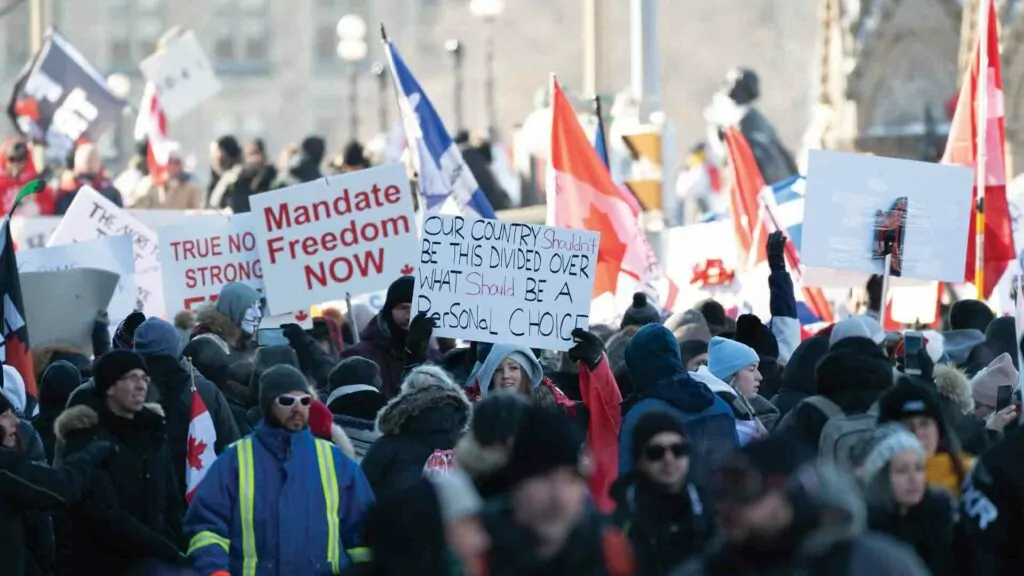

















Four years ago, in February 2022, Canada’s federal government invoked the Emergencies Act for the first time since it was enacted back in 1988, granting itself extraordinary power to break up the truckers’ convoy that assembled in Ottawa and elsewhere to protest Covid policies.
By invoking the Act, the government received the power to prohibit citizens from assembling, as well as freeze bank accounts of those involved in the protests, and even ban and freeze crowdfunding, among other measures.
In January of this year, the country’s Federal Court of Appeal made a unanimous decision, agreeing with the lower court ruling from 2024, that the government had not been legally justified to making use of the Emergencies Act.
The court ruled that the protests “fell well short of a threat to national security.” The court also found there simply wasn’t sufficient evidence to back up the government’s claim that the convoy posed a threat of serious violence.
“When all these legal and factual considerations are taken into account, we fail to see how the [Governor General in Council] could ‘reasonably believe’ that a threat to national security existed at the time the decision to invoke the Act was made.”
This decision is a good example of why civil governments need checks and balances on themselves, given our sinful human condition, and particularly a check on the age-old thirst for more power. The legislative and executive branches require the accountability and safeguards that are supposed to come from the Constitution, through the oversight of the judicial branch.
For Christians, obeying the Romans 13 command to “be subject to the governing authorities” isn’t as simple as submitting to whatever the Prime Minister or Governor General orders in a given moment. In this case, it was the Prime Minister and Governor General that were acting illegally, and not the private citizens – the Canadian Civil Liberties Association and the Canadian Constitution Foundation, among others – who successfully challenged them in court.