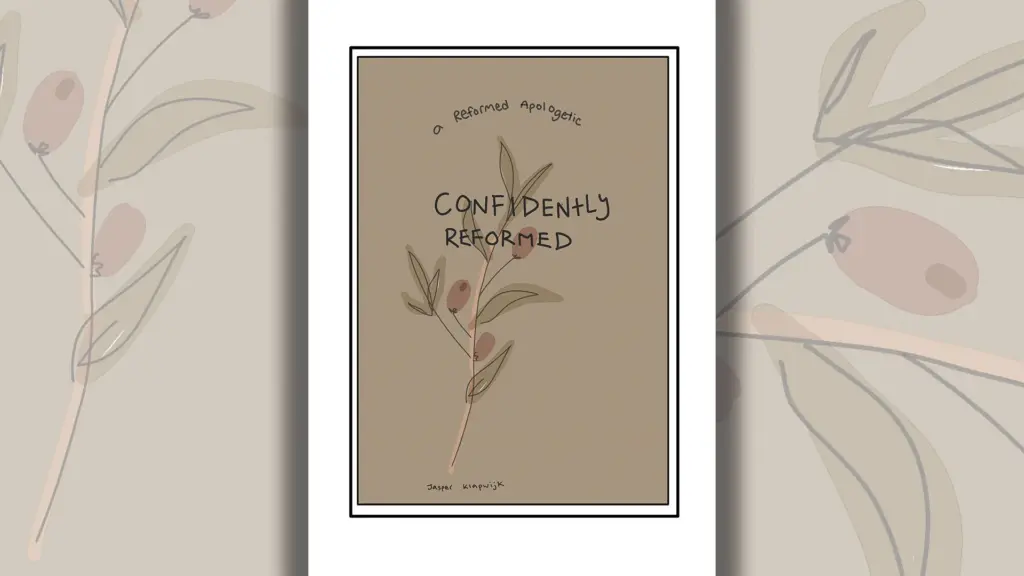
by Jasper Klapwijk
2025 / 136 pages
Like many of our readers, while growing up I wrestled with doctrines like predestination and our responsibility before a sovereign God. I was raised in a Reformed church, but I wanted to figure out whether that was where I should stay.
My questions compounded as I became acquainted with more Christians beyond my Reformed community. I attended an evangelical university, lived in a home with 17 or so non-Reformed Christians, and then worked for a couple years for an evangelical ministry. I also did a degree in philosophy, looking for answers from ancient and modern thinkers who claimed to “love wisdom.”
Fast forward about seven years and I saw with clarity the depressing destructiveness of secular philosophy – so full of questions and often full of themselves. I also saw the lack of rootedness beneath a lot of evangelical and mainstream Christianity, making it susceptible to ever-changing opinions and fads, particularly if they came from charismatic leaders. Reformed doctrine was looking more and more beautiful and meaningful, accurately reflecting who God showed Himself to be, both in Scripture and in the world.
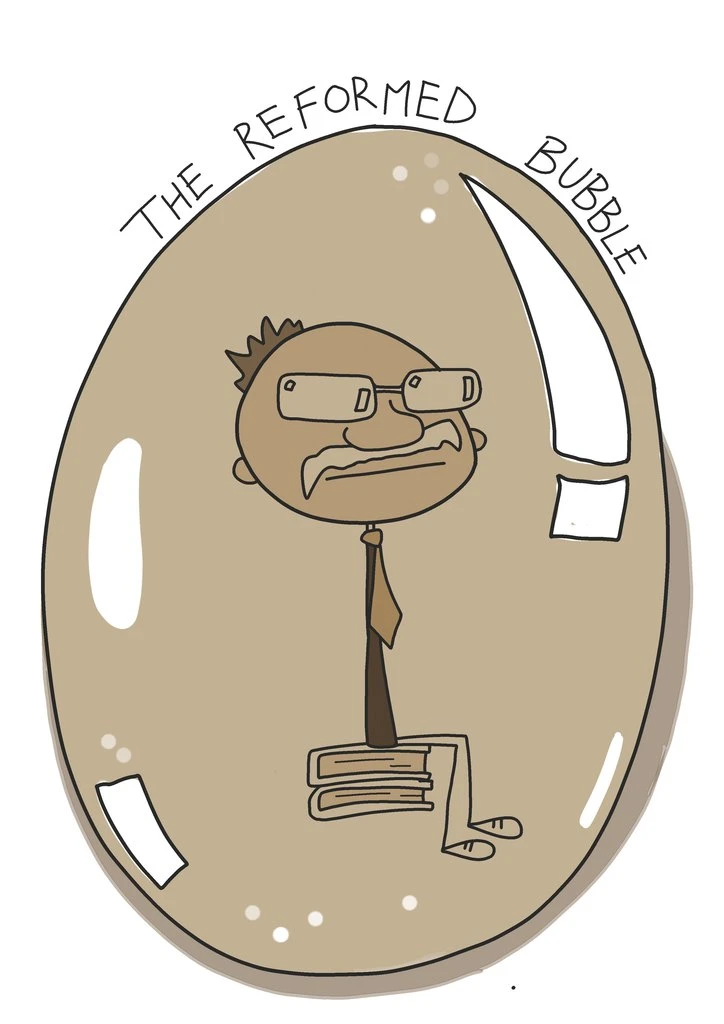
But there was one aspect of my (Dutch) Reformed heritage that I didn’t warm up to. There was no shortage of confidence in being Reformed, but it seemed to translate into justification for our way of doing things, or our particular denomination. We were in a bubble, leaving the impression that there was little of God’s Truth to be learned anywhere outside our denomination (and perhaps a few others that were almost identical). I’m encouraged that this has changed in the past 20+ years. But I know that there are multiple generations alive today who are weary and wary of these kinds of confidently Reformed Christians.
So, when I received a book titled Confidently Reformed, written by a Dutch minister, and translated into English no less, my “spiritual pride” antenna was raised. But I have a lot of respect for the publisher, Providence Books & Press, so I cracked it open.
I’m glad I did.
This is the kind of Reformed apologetic that I wish I had encountered as a teen or young adult. The author, Jasper Klapwijk, and his wife were called to serve as missionaries on the island of Curaçao, in the Caribbean. During that time, he taught many non-Reformed Christians, and was also asked to teach at a school associated with a Pentecostal church.
“Constantly, I was confronted with the necessity to state very clearly what the Reformed doctrines are. On a regular basis, I observed that this message changed the lives of people who embraced these doctrines.”
But after 15 years on the mission field, he returned to the Netherlands to find “we did not return to the same Reformed churches that we had left fifteen years earlier.” There was a lot of variation among the churches, with some wanting to embrace changes that they discovered in non-Reformed churches and others digging in their heels to maintain nostalgic ideas of how things used to be. He was struck by a flippant attitude: “Sorry man, but I’m Reformed.” There was no “joyful, missional, Reformed glow.”
Klapwijk had learned on the mission field that if we fail to share the rich message of the Reformed faith, “you run a great risk that you become so blasé or even indifferent about your faith that you won’t recognize the riches of that message yourself.”
He did a series of lectures – forming this book – to reacquaint Reformed Christians in his home country with the beauty, and missional calling, of their own faith.
He accomplished that goal for me. I loved the humility and simplicity with which he explains the “Five Solas” of the Reformation, as well as “reading the Bible from a Reformed perspective.” But what I found even more encouraging was that my 16-year-old daughter saw the book in our home and was drawn to open it herself. She has had her own questions about being Reformed, particularly after spending the year with a group of Pentecostal friends and traveling together with them on a mission trip to Mexico this spring. This had led to many doctrinal discussions with them, and with her Reformed peers, about matters like infant baptism.
Not only did she pick up the book, she read through the whole thing. And when I told her that I was planning to write a review, she asked if she could contribute as well.
– Mark Penninga
– – – –
I was very happy when I found this book because, unlike most of the books in the “Reformed Apologetics” section, it didn’t require a year of weight lifting at the gym or a small forklift to get it to the couch. In this book Mr. Klapwijk does a fantastic job being to the point but still clearly goes over the simple aspects of a Reformed faith.
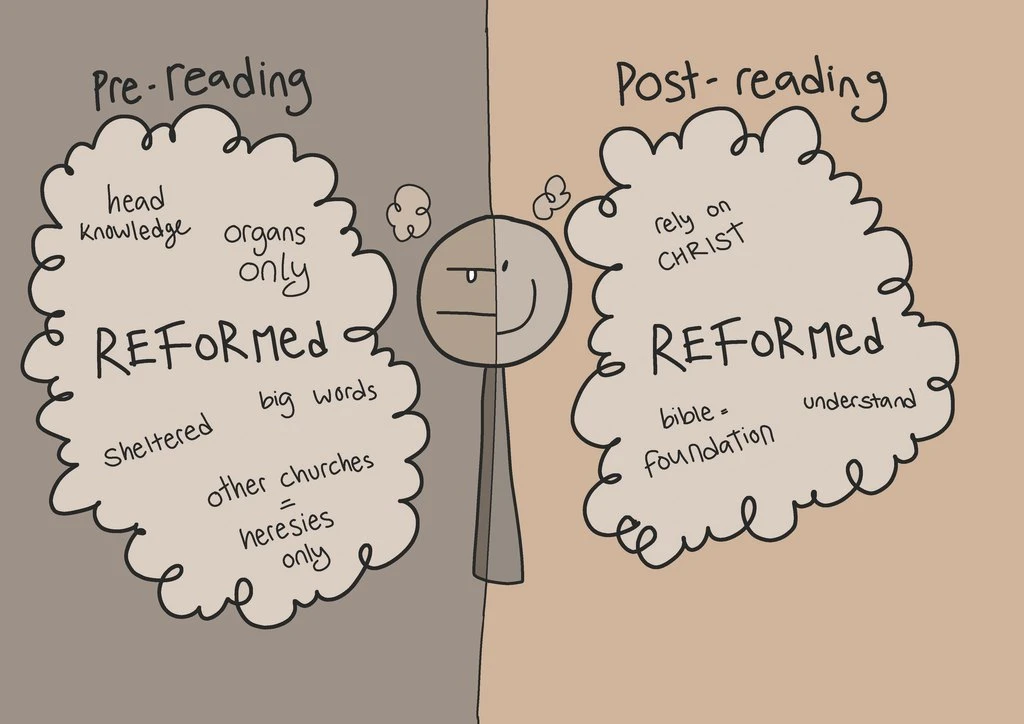
However, while reading this, I found myself thinking that it seemed to just be describing a Christian faith. I spent the first half of the book reviewing the key gold nugget truth of faith. This is something I find can be a refreshing reminder in Reformed churches, focused on how to read the Bible properly.
I was raised in a Reformed church but during my teen years I began to become frustrated with it. We seemed too stoic, too sheltered, too boring. I began to look to other churches. Sure, they had slight theology problems, but I greatly admired their heart. They were so passionate and wholehearted. I found myself wondering if the trade of some ancient creed/confession by a guy with a long beard for an overflowing heart was worth it.
Then I read this book.
Confidently Reformed is full of gems but not in an over-the-top, every-third-word-ends-with-___ification way. But in a way I could easily understand and connect to the Bible. This book doesn’t explain what Reformers believe and then give proof texts to the Bible. It explains the Bible and says, “btw, this is the foundation of Reformers (and many others).”
This book restored my faith in being Reformed. I highly recommend it to anybody about to profess their faith.
– Hannah Penninga
Images drawn by Hannah Penninga