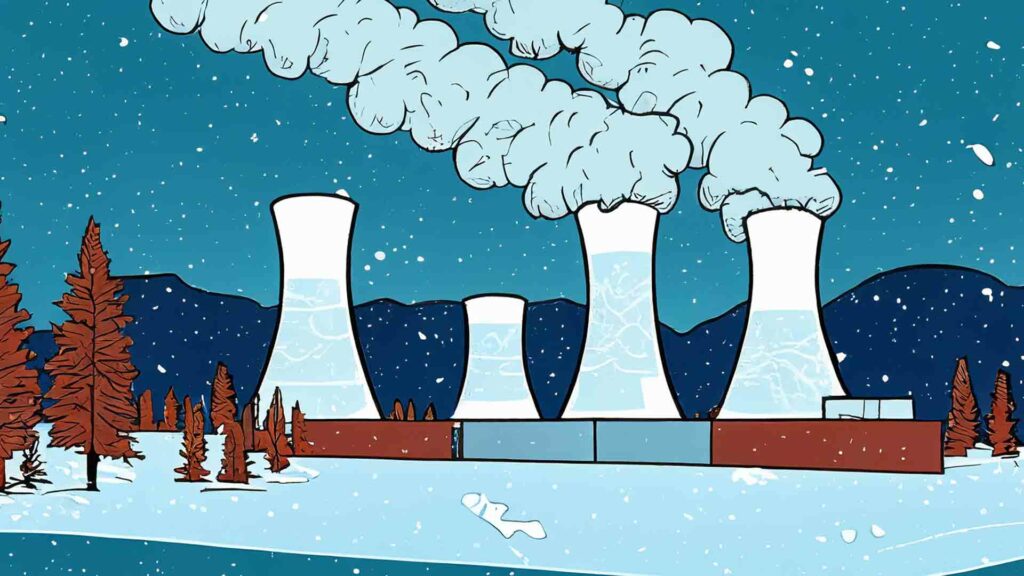
In the same week that Alberta was facing power shortages, the government announced they were going nuclear. Last week the province was sending emergency alerts to residents asking them to limit their electricity usage because of pressure on their electrical grid from extremely cold temperatures. Then, on Jan 15 an announcement was made of a partnership between two corporations to examine the feasibility of building small modular reactors (SMR) in the province. Currently there are no nuclear power projects west of Ontario.
The partnership is between Alberta company Capital Power and the crown corporation Ontario Power Generation, which owns four nuclear power plants and is responsible for close to half the electricity generation in Ontario. The two companies shared that their plan is to take two years to assess the feasibility of small nuclear reactors in Alberta.
This aligns with a strategic plan that was created by the governments of Alberta, Saskatchewan, Ontario, and New Brunswick in 2022, towards the advancements of SMR’s, which they called “the next evolution in nuclear innovation and technology.”
Nuclear power is far more reliable than “renewable” power options like solar and wind, which Canadian governments have been pushing for decades now. They are able to produce maximum power more than 92 percent of the year, compared with 35 percent for wind and 25 percent for solar.
“Nuclear energy offers humanity the safest, most efficient approach to harnessing natural resources for its use” explained Vijay Jayaraj, Research Associate for the CO2 Coalition. “As the densest energy source available, nuclear fuel requires the least amount of material and land for electricity production.”
Safe electricity is necessary for lighting, heating, cooling, refrigeration, and most commercial activity. Although we take it for granted, it has been critical for alleviated poverty and promoting human flourishing. As Andrew Spencer, from the Gospel Coalition notes,
“as we prudentially consider technologies that balance the goods of society with the limits of creation, relatively clean sources of electricity like nuclear power are part of seeking the welfare of the city in which we dwell. (Jer. 29:7) This is especially true for people on the margins who cannot afford expensive electrical backups and are most at risk when the power goes out.”
Enjoyed this article?
Get the best of RP delivered to your inbox every Saturday for free.