Transparent heart icon with white outline and + sign.

Life's busy, read it when you're ready!

Create a free account to save articles for later, keep track of past articles you’ve read, and receive exclusive access to all RP resources.

White magnifying glass.

Search thousands of RP articles

Helping you think, speak, and act in Christ.

Open envelope icon with @ symbol

Get Articles Delivered!

Helping you think, speak, and act in Christ. delivered direct to your Inbox!

Book Reviews, Economics, Teen non-fiction

Nobody knows how to make a pencil

What is a pencil worth? It's a simple question, about a simple product, and it highlights just how complicated our economy is, and how very much managing it is beyond any one man, even the Prime Minister.

Nobody knows what a pencil is worth...

So how much is a pencil worth? You might try to answer that question by going to Walmart and checking their prices. They're selling a pack of 10 for $1.68, so that'd mean a pencil is worth roughly 17 cents, right? Except Walmart is also selling a pack of 10 "break-resistant lead" pencils for $2.87, so, for some at least – folks who hate getting up for that long lonely walk to the pencil sharpener at the front of the classroom – a pencil is worth 29 cents.

And what if, as you were shopping, you had a million dollar idea you just needed to write down right now before you forget. But you didn't have a pencil and the person in front of you had just grabbed the last pack off the shelves. How much would one single solitary pencil be worth to you then? How much would you be willing to offer them for that package? A lot more than 29 cents, certainly.

So we have three possible answers right at the start – 17 cents, 29 cents, and just short of a million dollars – and we haven't even left Walmart yet. They have about 50 different kinds down at the art supply store.

There's all sorts of reasons a pencil could be worth more or less. Prices could go down or up based on whether its become cheaper or more costly. A tariff on wood products could hike the cost of its casing, and then we'd find out if consumers are willing to swallow a price increase. If Walmart's "low low price" goes from $1.68 to $2.25, maybe cheap pens start looking like a better alternative and demand for pencils would drop. Or maybe that $2.25 is still cheap enough, and people keep buying just as many pencils as before, even at this higher price. It's hard to say. Very hard to predict.

And that's just pencils. Now imagine if we wanted our country's leaders to manage, not simply the pencil supply chain – determining how much of each pencil should be made, and for what price – but how many electric cars should be manufactured, how much egg and dairy should be produced, and how much grain should be grown. If pencil demand is hard to predict, its hard to imagine anyone would think they could run a whole national economy.

And yet, that's what our politicians regularly promise to do.

...or how to make it either

Way back in 1958, Leonard Read wanted to use the simply pencil as an illustration to show just how arrogant central planners really are. But he didn't talk about how much pencils are worth. He, instead, wrote a first person account, from the pencil's perspective, about how "not a single person on the face of this earth knows how to make me." This account, titled, I, Pencil, highlights how, as simple as a pencil might be, its few parts require enormous expertise. Consider just the wood, which requires men who need to know how to cut trees safely, and others who can drive those sketchy logging roads. And don't forget the knowledge needed to make the logger's chainsaw, and the driver's truck. And on and on it goes, layers upon layers of complexity such that, no man can know how to do it all. Not even close.

And if no one knows how to make even a pencil, how would they be arrogant enough to think they could run the whole of the economy?

But how then does a pencil get made, if no one actually knows how to do it? And how does an entire economy produce without someone at the top calling the shots. Economist Adam Smith credited "the invisible hand" – economics decisions that no one man or woman at the top could ever competently plan, all of us together can coordinate simply be everyone seeking after their own self-interest. Seeking my own self-interest could be misunderstood as being self-ish, but what Smith is emphasizing here is humility over hubris – I can't figure out what's best for everyone, but I am the best qualified person to figure out what works best for me. And when I am allowed to do so, the results are astonishing. This kind of unmanaged free enterprise has lifted more people out of poverty than every government program ever created. As documentarian Arthur Brooks noted, “From 1970 until today the percentage of people living at starvation’s door has decreased by 80%. Two billion people have been pulled out of starvation-level poverty." And where did the credit lie? It was due to a turn to freer markets.

These results shouldn't surprise us, simply because they happen when governments obey God's own economics laws: do not steal, and importantly, do not envy. Adam Smith's "invisible hand" would best be understood as God's own Invisible Hand – He is directing traffic, for our good.

Read's I, Pencil essay gets into the theology of free enterprise only a little, but it is an absolute classic for a reason. You can read it for free, or get it as a free e-booklet in all sorts of e-book formats here. You can also watch an animated audio version of it below (or an abridged and less lyrical  video here).

And if you want more of the same, you can learn about how no one knows how to make a loaf of bread, or read my review of a clever kids' book called, No One Knows How to Make a Pizza.

Red heart icon with + sign.
Economics

On why freer trade is best

The following is based on Real Talk’s episode #126, “Mere Economics and the Issue of Tariffs,” with host Lucas Holtvlüwer talking to economics professor and author Dr. Caleb Fuller about the only four ways that people can get the things they need. **** We might not be medical experts, or have a law degree, but we all know a lawyer, and a nurse or two. But how many of us know an economist? Not too many, and I think that's why economics can seem an intimidating field. But it doesn't have to be complicated. When it comes to how we can best get the things that we want and need for ourselves and our families, Dr. Fuller boiled things down: “…there's only actually four possible ways for me to get what I want. And these four ways are logically exhaustive.” What he means by "logically exhaustive" is that these four are it – there are no other possibilities. So what are these four ways? And more importantly, why should we know? To answer the second question first, this is vital information because only one of the four ways will actually work for a society. So it is key we pick the right way. 1. Getting gifts One way we could get the food, clothing, and shelter we need is to simply receive it from someone else. That’s what we do for our kids, after all. But there is a problem, as Dr. Fuller explains: “I could rely on gifts from someone else. But if you think about that for a couple seconds, you realize that if everyone was doing this – if you kind of systematized that way of getting what you want – the world would be incredibly poor. It also pushes the question back a step. You know, where did the gift-giver get what he's giving?” 2. Stealing what we want and need A second option is chosen by some, but we’d all starve if everyone did the same. “You could steal from others. Ethical problems aside, if you universalize that means of getting what you want, you also live in a world ‘nasty, brutish, and short,’ to quote Thomas Hobbes. And, also, just like the first option pushes the question back, where did the person who's being stolen from…get the goods in question?” 3. Making it all ourselves So, that leaves us only two more possibilities. We can either make everything we need ourselves, or, instead, use our particular skills to make something others want, and trade with them for what we want. So, our options are make or trade, and one of the reasons President Trump instituted his tariffs is he wanted less trade with other countries, and more of the making done in the US. Dr. Fuller highlights the problem with this approach. “Let's think about make for a second. There's a great book called The Toaster Project by a guy named Thomas Thwaites. Thwaites chronicles his attempt to build a very simple toaster from scratch, that is, without cooperating with anyone else. So he's not going to engage in buying, he's not going to engage in exchange, he's just going to make, okay? “And it takes him about nine months. He does cheat a little bit along the way. And after this nine months of full-time work on this toaster, he plugs the toaster in, and five seconds later it shorts out. “There's a small fire that melts it down. After nine months of work, that was the consequence. And that is a little vignette of what our lives would be if we systematized or universalized this third means of getting what we want – just making everything that I want to consume.” 4. Specializing/trading And as Fuller shares, that “brings us to this fourth option, of specialization.” Few of us will be any better at making toasters than Thwaites was, but we might have other skills we can offer. One person might be a great nurse, another a very good farmer, and a third might be a skilled high school teacher. We all have our specialties, and it doesn’t take a lot of imagination to recognize how much worse off we’d be if we didn’t specialize. Then the nurse would have to build her home, the farmer would have to teach his kids high school physics, and the teacher would have to fix his son’s broken leg. Specialization helps us do and make more. Dr. Fuller specializes as an economics professor producing lectures and books that others value, and he trades those away for money and then uses that money to buy what he wants. “That's why I say that the ability to exchange is not optional if you want to observe ‘mass flourishing,’ to use economist Ed Phelps’ term. And so that's why economists are so obsessed with specialization…” Conclusion Of these four ways of getting what we need, God’s commandment against stealing rules out the second. His call to be fruitful (Gen. 1:28 and in the Parable of the Talents, Matt. 25:14-30) eliminates the first as an option – we can’t just live off of our parents, even if they were willing. A fruitful life would also address the third option. It doesn’t make sense for us to try to do everything ourselves. If everyone did, we’d all be not simply poor, but quite likely dead. What’s true for individuals is true in large part for countries too. The US is currently trying to use tariffs on foreign goods to drive companies to produce in-country more of the goods that Americans consume. But even the US can’t be better than everyone at producing everything. So, for example, in a June 3rd House Appropriations meeting, Rep. Madeleine Dean questioned Commerce Secretary Howard Lutnick about the tariff being imposed on bananas. The US grows less than a tenth of one percent of the bananas that Americans eat. The other 99.9% are imported. And, as Secretary Lutnick noted, the tariff is “generally 10%.” Lutnick defended the tariff, arguing that, as trade deals are made, the tariffs will eventually be eliminated. But he also argued that “if you build in America and produce your product in America, there will be no tariff.” To which Rep. Dean pointed out, “You can’t build bananas in America.” Free trade remains best, and not simply for banana lovers. ...

Red heart icon with + sign.
Economics

Work is Worship

Done right, it is an expression of God’s character and beauty **** There we sat under the starry skies, talking faith, family, fun and business. A familiar space. Like many of you, I get to enjoy some nice campfire-convos each summer. But this particular night challenged me. It didn’t take long for the business conversation of this committed Christ-follower and marketplace leader to leave me saddened. “We’ve tried investing in people for years, even hired consultants to help us! At the end of the day, nothing works. We’ve just resigned ourselves that there’s only one reason we’re in business: to make money. At the root of it, that’s what it’s all about.” Similarly, a Christian business owner recently told me the purpose of his business was to simply retire with a healthy nest egg so that he didn’t have to worry. It's a familiar business ploy by the great Deceiver. Skewed view See, many Christians hold a decidedly skewed image of work. Some view it simply as a curse post-Genesis 3. Others make a false distinction between what they perceive as the sacred (God), and the secular (everything else), separating Sunday’s worship from Monday’s work. The problem with these is that these views of work always disappoint. They force us to view God as an evil taskmaster and you just have to buck-up because “that’s your lot in life.” Or, when my identity is not a reflection of God’s character and design, that’s because I’m choosing to run parts of my life on my own, thank you very much. Both these approaches to work will leave you banging your head against the wall – we're hungry for something more, because we’ve left God out of the picture. Work is a gift Work is God’s gift to us. It’s not a result of the fall into sin. In giving Adam and Eve the job of cultivating and caring for the garden, He not only made them the first landscapers, He designed their DNA so that whatever they put their head, heart and hands to is a form of worship. The same is true for us. Made in His image, vocation is an extension of God's work of maintaining and providing for His creation, bringing Him glory and enjoying Him. Hundreds of times in the Bible the Hebrew word “avodah” is used to mean both “to work” and “to worship.” Our work is meant to serve God’s purposes more than our own, which prevents us from seeing work as a means to stock up our coffers, set ourselves up for retirement, or just plod away ‘cause it's a necessary burden. Simply put, work is worship. The Gospel actually gives us new lenses to see work through: we actually work for God Himself! Consider Eph. 6: “Slaves, obey your earthly masters with respect and fear, and with sincerity of heart, just as you would obey Christ. Obey them not only to win their favor when their eye is on you, but like slaves of Christ, doing the will of God from your heart. Serve wholeheartedly, as if you were serving the Lord, not people...” Now there’s a reason to get out of bed in the morning! Why does it matter? Martin Luther said that you can milk cows to the glory of God. Why? It's your attitude that says, “God I'm doing it for you.” So whether you’re cutting flagstone or someone’s hair today, your handiwork, even with imperfection, is for God’s glory. Your and my work is an expression of His creativity, because we’re made in His image. That’s a calling. That’s worship! So why does having the right understanding of work matter? Because it is only when we understand it rightly that we can best use it to: GIVE GOD THE GLORY: a response of gratitude for what He did for us REFLECT HIS CHARACTER: made in His image, we get to display this to others SERVE PEOPLE: we are conduits for God’s grace and kingdom to extend GIVE: we earn so we can to give to others MEET OUR NEEDS AND INVEST OUR TALENTS: by exercising God-given gifts He provides for us So, the next time you arrive in your office, on the plant floor or at your client's site, remember who you are, and then consider what you are doing. Your spiritual life is being expressed through your work. Your work is worship. It’s life changing. Col. 3:23 says: “Whatever you do, work at it with all your heart, as though you were working for the Lord and not for people.” It’s my prayer that you will see your work as significant and view that significance in the light of God’s favor and plan. We are created to intimately know God, glorify him and enjoy Him forever. Let’s do that in our work! Deliberate application: How does seeing work as a form of worship change my company’s purpose and values? If I begin doing everything "as though I’m working for the Lord and not for people” (myself or others), how would that change the way I work? Because God loves business and the marketplace, and because we are called to imitate God (Eph. 5:1) let’s consider, how would Jesus do my job? Which people would He serve? What would be His vision or S.M.A.R.T (or specific, measurable, achievable, relevant, and time) goals? When we finish a job, can we say, “Thank you Father, for making me for this purpose”? https://youtu.be/oqxo3PiIYIU Darren Bosch is a partner at DeliberateU, a group offering business leadership mentoring for Christian business owners in their workplace, families and communities, with the goal of increasing their capacity to grow in both faith and business effectiveness. Their conviction is that God uniquely uses the marketplace to extend His kingdom purpose – to serve others while growing in faith, hope and love. You can learn more at DeliberateU.com where this article first appeared. It was published in the January/Feb 2018 issue of Reformed Perspective....

Red heart icon with + sign.
Economics

Let's not be the squeaky wheel

Fewer people are using VIA Rail, more trains are behind schedule, and the Crown corporation continues to bleed money by the millions: that’s what Canada’s Auditor General found when he took a close look at the passenger service this spring. In 2014 VIA had revenues of $280 million, but spent $597 million in operating costs, plus another $82 million in capital projects (putting down tracks, etc.). That works out to a loss of $399 million, all of it covered by the government. So what did taxpayers get for their money? Well, an economy ticket for a four-day trip from Vancouver to Toronto is roughly $500, but the true cost is $1,100, with the government chipping in the difference of $600.  Even with government subsidies of $55 million for the Vancouver-Toronto route, VIA Rail can’t compete on speed or price. In comparison an economy ticket for a flight on WestJet for the same route can be had for $300 and will take five hours. A bus ticket for a three-day Vancouver-Toronto trip is as little as $250. Government intrusion into the marketplace has left us with a business that is slower, more expensive, and costs hundreds of millions of Canadian tax dollars each year. Why, then, does VIA Rail still exist? Because every time they cut service on unprofitable routes, ticket buyers – those who get the bulk of their ticket price paid for by taxpayers – protest. And these squeaky wheels continue to get greased. What’s the takeaway for us? Let’s not be that sort of squeaky wheel. We can make use of VIA’s service for as long as they exists – we don’t need to feel guilty about taking advantage of their subsidized ticket prices. Why? Because so long as their trains are going to keep running whether profitable or not, our ticket purchases will amount to a small decrease in VIA’s overall losses. However, if VIA proposes cutting a money-losing route – even our favorite route – then we must not squeak! It’s one thing to make use of wasteful government services, and quite another to demand the government continue providing these services. On what biblical basis can we argue that others should be required to subsidize our scenic train trips? This originally appeared in the July/Aug 2016 issue under the title "Government train can't beat WestJet plane... or Greyhound bus."...

Red heart icon with + sign.
Economics

Tariffs are terrible economics: why Canada shouldn’t hit back

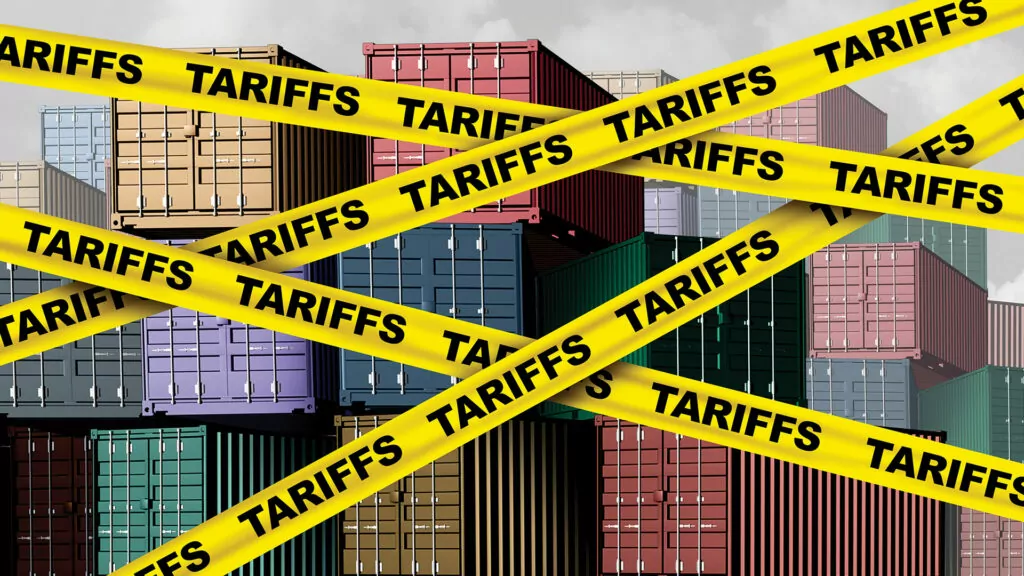
Free trade – free of barriers and restrictions – has, traditionally, been pretty exclusive to the Right side of the political spectrum. But now, with President Trump implementing tariffs on steel and threatening tariffs on Canada and Mexico, we’re even hearing the Left talk about the harms that tariffs could cause. And not just to Canada and Mexico, but to American consumers too. As the far-left stalwart Alexandria Ocasio-Cortez (aka AOC) noted on X, “Remember: *WE* pay the tariffs….Trump is all about making inflation WORSE for working class Americans, not better.” But what is she talking about when she says Americans pay the tariffs it charges? Think of it this way. Imagine two towns located right next to each other – Town A and Town B – and each has a car mechanic. These mechanics are full-service: they go right to your house to do the repairs. The only difference between the two is that the car mechanic in Town A – let’s call him Arnold – is way cheaper, so not only do all the folks in Town A use Arnold, so do most of the folks in Town B. That, understandably, makes the mechanic in town B – we’ll him Bill – quite unhappy, as it really hurts his business. So Bill demands that his town put in a tariff of sorts. He wants a 25% surcharge on any “out of town” car mechanics. He argues that this surcharge will be incredibly beneficial – applying it to Arnold for the work he does in Town B will help fund Town B’s government. It will also help protect Town B’s homegrown car repair businesses – Bill’s – by making his prices seem more competitive. And, Bill notes, if he gets more business, the government will benefit from the taxes he’ll pay. Bill pitches his tariff/surcharge as a win/win all the way around. But Bill is forgetting someone – several someones, in fact. The surcharge will make Arnold’s prices higher. Any Town B clients who do continue to use him will now be paying 25% more. And any clients he loses to Bill will be impacted too, having to pay Bill’s higher prices for their car repairs, taking a bigger chunk out of their household budget than ever before. In other words, Bill is staying in business at the expense of the car repair consumers in his own town. That’s not win/win at all – that’s a win for Bill, at the cost of everyone else in town. This is what AOC meant when she said that Americans will pay the tariffs they charge. Canada rightly fears American tariffs on the energy and goods they produce. Those tariffs could hurt our producers badly. But hitting back at American tariffs with our own tariffs on US goods is only going to compound the pain. It might benefit some of our producers – whoever makes the goods that compete with imported American goods – but that benefit will come at the expense of Canadian consumers overall by making them pay more. Just like Town B’s car repair “tariff” hurt Town B’s citizens. Is there an explicitly biblical perspective to be brought here? Well, what about Leviticus 19:15? “Do not pervert justice; do not show partiality to the poor or favoritism to the great, but judge your neighbor fairly.” God equates justice and impartiality, which prompts a question: should a government take actions that benefit some of its citizens – some producers – at the expense of other citizens, the consumers and producers who use those goods? Isn’t that partiality? God also speaks to this in His Golden Rule (Matt. 7:12). “Do unto others as you would like done unto you,” applied to the economic realm would mean that car mechanic Bill wouldn’t argue for his surcharge because he wouldn’t want that same surcharge applied to everything he buys. If Town A has cheap car parts, or groceries, or gasoline, he’d love to be able to benefit. The fact is, tariffs always hurt consumers, so no matter what the US does, let’s not let tariffs beget more tariffs. Instead of putting up trade barriers, there are actually interprovincial trade barriers that we could greatly benefit from taking down, as Pierre Poilievre has been highlighting recently. In  the video below Remy highlights one of the ills caused by tariffs – fewer choices and higher costs. ...

Red heart icon with + sign.
Economics

Christians can’t “invest” in cryptocurrency

I hope this headline got your attention! I can hear some of the objections already: What do you mean, we can’t invest in cryptocurrency; don’t you know that it’s the wave of the future? My friend bought $2,000 worth of Bitcoin a few years ago, and now it’s worth $16,000! It is going to replace the dollar within a few years. And crypto is a means for us to resist the prying eyes of the government into our finances – we can shield our savings from the bureaucrats who may seek to punish us for our Christian beliefs by freezing our funds, or taking them from us! We’ll hope to respond to these thoughts below… so read on! What is crypto? First off, what is cryptocurrency? In brief, crypto is a digital currency, not backed by any government, bank, or physical standard, that is designed as a means to save, to buy, and to sell. There are different types of cryptos, some well-regarded like Bitcoin and Ethereum, and some that have failed spectacularly and are now worth little or nothing (such as OneCoin and SpaceBit). What they all have in common is that they are seeking to replace traditional currency like the Canadian or U.S. dollar with a modern way of doing business and commerce in the marketplace. In our last issue, RP reprinted a beautiful perspective on investing written by Randy Alcorn called “Investing in Eternity – thinking 30 million years ahead.” If you haven’t read it yet, please go back and peruse it! Alcorn has very thought-provoking and wise perspectives on what we do with the financial gifts the Lord has given us. He writes that “no matter how great an earthly treasure is, it is still worthless in the eyes of eternity.” And Alcorn encourages Christians to think about how we in this lifetime support godly ministries that will have an eternal impact on the lives of lost souls. Does this mean Christians shouldn’t “invest” at all, and should instead give everything away? Perhaps it depends on one’s definition of investing! What is investing? Let’s go back to the basics and consider what this means. Investing can be defined as the commitment of resources to achieve later benefits. Often, this is understood primarily to be about finances, but that is not always the case. Consider that a mom invests time and energy (the resource) into her children with the goal of raising productive, godly adults (the later benefit). A farmer invests money, labor, and seed (the resources) into a field to grow crops he can sell for others to eat (the later benefits being for both the farmer as he sells, and the buyer as he eats). Often, there is an element of time that is necessary for an investment to have its intended effect. Kids don’t become adults overnight; a builder might take a year or more to build a beautiful home. Obviously, in this broader sense of the word, Christians should not have any trouble investing, and we do so in our daily lives in myriads of ways. In the more common sense of the word, investing relates to where we put our finances (the resource) in order to grow them for future use (the later benefit). One might become a partner in a retail store by putting up a percentage of the capital required to get the operation going. Before writing a check, you would want to look at your partners’ business plan, and examine the location and the type of goods that will be sold; you might consider the experience that your partners have in the industry.  You would probably make a list of the pros and cons of the business, and take a responsible risk to invest in the partnership, with the hope that it will generate a profit down the road. In a similar way, one might buy publicly traded shares in a company that builds cars and trucks that perhaps is expanding into another part of the market. You would have access to a track record of financial performance. You might ask if the company has consistently paid out dividends. Has it managed its money well? Is the leadership of the company committed to its customers? Has the company made risky decisions that could endanger your investment? Are the cars and trucks that the company makes high quality and well received by consumers? These types of questions and this type of study helps an investor to take responsible risks in the hope of a return in the stock market. What does Scripture say about investing? The Lord Jesus taught two similar parables that are often quoted about investing. In Matthew 25 and in Luke 19, a wealthy man leaves town for a period of time, and entrusts some of his fortune to servants to manage. When he returns, the master praises those whose trading and commerce compounded the funds they were managing, and condemns the foolish servants who simply buried their coins in the ground. Jesus is teaching about far more than how to handle money in these parables, but it is striking that the master praises unreservedly those that managed well the resources entrusted to them. The book of Proverbs is full of practical and beautiful counsel for living a godly life, and has much to say about wise and foolish behavior about investing. Solomon teaches us not to spend all our money today, forgetting about the needs that both we and our community will face tomorrow. Proverbs 21:17 and 20 say: “Whoever loves pleasure will be a poor man; he who loves wine and oil will not be rich…” “Precious treasure and oil are in a wise man’s dwelling, but a foolish man devours it.” Notice that Solomon does not condemn “keeping” treasure or resources for a rainy day in one’s possession, but calls out as “foolish” the man who recklessly uses all his resources without a thought for the future. So, the Bible is certainly not anti-investing. Our savings are not just for ourselves But what sort of investing should it be? A Christian’s goal in saving is not just for our own needs tomorrow, but also for the community in which we live, and for future generations of our families. Proverbs 11:24 tells us: “One gives freely, yet grows all the richer; another withholds what he should give, and only suffers want.” Then in chapter 13, verse 22 we read: “A good man leaves an inheritance to his children’s children, but the sinner’s wealth is laid up for the righteous.” We should never withhold from giving generously to the Lord, in our tithes and offerings, and also in our willingness to help our neighbors. Solomon stated this in Proverbs 3:27-28: “Do not withhold good from those to whom it is due, when it is in your power to do it. Do not say to your neighbor, ‘Go and come again, tomorrow I will give it’ – when you have it with you.” Wealth gained hastily… Another theme that recurs frequently in Proverbs is the element of patience, or delayed gratification for the wise man. “Wealth gained hastily will dwindle, but whoever gathers little by little will increase it.” – Prov. 13:11 “Whoever works his land will have plenty of bread, but he who follows worthless pursuits lacks sense.” – Prov. 12:11 “Whoever is slothful will not roast his game, but the diligent man will get precious wealth.” – Prov. 12:27. The theme here and in many other passages is that “getting rich quickly” is often a dangerous pursuit – the person who only focuses on rapid accumulation of wealth may be on a foolish pathway that will not be blessed. One who is focused only on enormous potential returns from an investment may skip the important steps of finding out how a return is being earned, how $100 put into this company or stock will actually earn a profit for the investor. By racing to the potential conclusion (I’m going to make ten times what I put in!) without careful consideration of how one is “working the land,” a foolish investor may have only himself to blame when a scamster absconds with his treasure. Remember Solomon’s warning in Proverbs 14:23: “In all toil there is profit, but mere talk leads only to poverty.” How are these warnings connected to crypto? Now that we have considered whether a Christian may invest, we can now ask: Why not cryptocurrency? The answer is in the very term “currency” itself. Currency is a means of paying for a good or service – it does not on its own produce a good or service that can make or lose money for its owner. While Bitcoin may be a very secure, very stable platform that may become a common way for citizens to buy bread at the grocery store, and to receive our paychecks, it is not producing anything tangible from which to make a profit. I would argue that Christians could exchange some of their assets into Bitcoin, or into another cryptocurrency, as a way to transact business, or to diversify risk with the Canadian dollar as measured against the U.S. dollar. One who would like to support a currency independent of any one government’s control, might also consider putting some of their savings into a cryptocurrency. The risk, of course, would be that the value of all cryptocurrency is very unstable, and difficult to pin down, but that could be a responsible risk for a citizen. But doing so is definitively not an investment, because it is not of itself producing anything tangible. A number of years ago, there was a huge push for people to “invest” in the Iraqi dinar – the currency that is still in use in Iraq. Before the 1990 U.S. invasion of Kuwait, one dinar was worth three times more than a U.S. dollar (at least in theory). Over the next ten years, the currency collapsed, with a dinar becoming worth as little as 3 U.S. cents. Unscrupulous financial advisers urged people to exchange their savings for Iraqi dinars, to take advantage of the dinar’s “inevitable comeback.” The advisers made their money by collecting inflated purchase fees along the way, while the dinar has continued to be worth very little (today being valued at around 7 U.S. cents). Like Bitcoin, the dinar is a unit of exchange, a way of transacting business. It is certainly possible that both currencies will be worth more in the future. However, it is also very possible that both will be worth far less in the future. If one exchanges currencies that are relatively stable (like the U.S. or Canadian dollar) with volatile currencies, that is not investing, but simply speculating – more like gambling than responsible stewardship. Christian financial adviser David Bahnsen’ Bahnsen Group is a multi-billion-dollar investment firm. In a recent episode of his Dividend Cafe podcast he agreed that growth of cryptocurrency as a way of conducting business and making payments is likely to continue. But he warns: “I’d be speculating (if I predicted what) the price of a Bitcoin would be. It could be a hundred thousand, it could be ten thousand, and it could be both next month, and so that’s why it’s not investable for us.” Bahnsen compares the enthusiasm around cryptocurrencies to other popular investing waves of the recent past that came and went, with the common man inevitably hurt along the way: “The recent history of euphoric busts all share the same things in common: A casual willingness to ignore common sense in pursuit of a speculative return. From Chinese reverse merger UFOs in 2011 to solar SPACs in 2021 to crypto in 2022, they all possess the same four realities: A willingness to suspend logic, analysis, or traditional wisdom. A popularity that soothed the suspension and added emotional confidence to the speculation. A period of looking like a genius while other “fools” joined the party. A spectacular burst that left capital destruction in its wake.” Conclusion While I was hoping to get your attention with the headline of this article, I think it is true. I would argue that not just Christians, but no one can invest in cryptocurrencies, because one does not invest in a currency – it is not a business intended to make a profit. The broader point that I hope has come through is that speculation in hope of spectacular gain often comes to heartache, enriching unscrupulous characters along the way. Christians can certainly carefully invest their savings in many ways, but always carefully and with the ultimate goal of serving the Lord through the gifts He entrusts to us, for the good of His kingdom here on earth, and for eternity....

Red heart icon with + sign.
Economics

Investing in Eternity: thinking 30 million years ahead

In Matthew 13:44 we find a single verse that captures the heart and soul of following Christ: “The kingdom of heaven is like treasure hidden in a field. When a man found it, he hid it again, and then in his joy went and sold all he had and bought that field.” Picture an average guy, leading a routine life. One day something happens that changes his life forever. While crossing a field, aimlessly thrusting his staff into the ground, he hears a thud. He gets down on his knees, digs with his hands, and finds treasure. He realizes this is very old – way too old to have been buried by the current landowner, who wouldn’t have any idea it’s even there. He has found unclaimed treasure, waiting for someone to unearth it. The treasure captures his imagination. It becomes the reference point, the center of gravity of his life. He is single-mindedly bent on obtaining that treasure. He is willing to pay any price. This is a man who experiences the ultimate paradigm shift. He takes on a new perspective and sees life through different eyes. Incomparable joy Of course, Jesus is simply using the treasure in the field as an illustration of heavenly treasure. No matter how great an earthly treasure is, it’s still worthless in the eyes of eternity. In fact, it is exactly this kind of treasure that people waste their lives on. Jesus is appealing to what people do value – temporary earthly treasure – in order to make an analogy to what they should value: eternal heavenly treasure. Today, Christians desperately need such a radical paradigm shift. God doesn’t just raise up donors; He raises up disciples whose lives are so filled with a vision for eternity that they wouldn’t dream of not investing their money and their time and their lives where they will matter most. Once they see the treasures of eternity and become consumed by them, nobody will be able to keep them from giving. The only joy I know comparable to leading a person to Christ is giving generously to the kingdom of God. That through my giving, people might be won to Christ, the hungry fed, and the suffering helped in the name of Christ is a joy beyond comprehension. Let me ask you a question about this man in Matthew 13, the one who found the treasure: are we supposed to feel sorry for him? I mean, we’re told he went and sold all that he had – and in the original Greek “all” means all; that’s why it’s translated that way! We might think, “It cost him everything. Poor man. Think of his sacrifices!” No. We are not to pity this man – we are to envy him. The sacrifice paled in comparison to the reward. The payoff was much greater than the cost. The man who found the treasure would be a fool not to do exactly what he did. He made short-term sacrifices for long-term rewards. “But it cost him everything he had.” Yes, and it gained him everything that mattered. The key word is “joy.” “In his joy” – not in his misery – he made sacrifices! How can you sacrifice with joy? Because of the relative worth of what is given up versus what is gained. When you catch a vision for what it means to God, any feeling of sacrifice is overwhelmed with pure joy and excitement. To hear the applause of heaven, to hear pleasure in the voice of God, to hear him say “Well done, my good and faithful servant” – nothing else compares. Smart investing In Matthew 6:19-24, we see that Jesus always lived with two Kingdoms in mind: the kingdom of this world and the kingdom of Heaven. He speaks here of the Two Treasuries, Two Perspectives, and Two Masters of these two kingdoms. Verse 20 tells us to “store up treasures in heaven.” God values treasures, but He defines them differently than we do. We consider things treasures that are nothing but junk in the eyes of eternity. John Wesley said, “I judge all things only by the price they shall gain in eternity.” “Store up treasures” demonstrates that God is not against an investment mentality. In fact, He commands us to store up treasures! But He tells us to stop storing them up in the wrong place, and start storing them up in the right place. God is not against us acting in our own interests. He commands us to act not in our immediate short-term interests, but our eternal long-term interests. That which is to God’s ultimate glory is to our ultimate good. It’s just the pay-off isn’t now; it’s then. The problem with prosperity theology, also called the health and wealth gospel, and with lots of our Christian radio and television programs, is that they look for material payoffs in the present age. God’s provision of wealth is seen as a call to increase our standard of living – while Scripture presents it as a call to increase our standard of giving. Ironically, looking for the payoff now is never in our best interests, because it robs us of eternal reward. We’ll be rewarded for giving – but the real and lasting rewards will come in eternity. It all comes down to delayed gratification. I think Paul was alluding to Christ’s words in Matthew 6 when he wrote 1 Timothy 6:17-19: “Command those who are rich in this present world not to be arrogant nor to put their hope in wealth, which is so uncertain, but to put their hope in God , who richly provides us with everything for our enjoyment. Command them to do good, to be rich in good deeds , and to be generous and willing to share. In this way they will lay up treasure for themselves as a firm foundation for the coming age, so that they may take hold of the life that is truly life .” Christ gives us an incredible investment opportunity. He gives us the opportunity to cash in earthly treasure for heavenly treasure. It’s like trading a sack of old rusty bottle caps for ownership of the Coca-Cola company. You’re so excited about what you now own that the last thing you’d do is stand around whining about giving up your bottle caps. Notice Christ’s reasoning: “Store up treasures in heaven...” Why? Because it’s right? No, because it’s smart. Because it will last. It won’t be consumed by moths and rust or taken by thieves. You’ll never see a hearse pulling a U-Haul. Why? Because you can’t take it with you. John D. Rockefeller was one of the wealthiest men who ever lived. After he died his accountant was asked, “How much money did John D. leave?” His reply was classic: “He left... all of it.” You can’t take it with you. But in Matthew 6 Jesus adds something profound, something life changing. You can’t take it with you, but... you can send it on ahead. Anything we try to hang onto will be lost. Anything we put in His hands will be ours for eternity. Not just insured up to $100,000. Insured without limit by the FDIC – Father’s Deposit Insurance Corporation. John Wesley was shown around a vast estate by a proud plantation owner. They rode their horses all day and saw only a fraction of the estate. At the end of the day when they sat down to dinner he said, “Well, Mr. Wesley, what do you think?” Wesley thought about it and said, “I think you’re going to have a hard time leaving all this.” The way to lay up treasures in Heaven includes giving away our money and possessions but is not limited to it. The Bible teaches that those things which we keep can also serve kingdom purposes. They can be generously shared and invested and used in ways that serve eternal purposes, that further God’s kingdom for His glory rather than just building our own little kingdoms for our own glory. Think thirty million years ahead Missionary Jim Elliot was killed by the Auca Indians in the 50’s. His philosophy of life was expressed in those great words, “He is no fool who gives what he cannot keep to gain what he cannot lose.” Does it sound like Jim Elliot didn’t care about gain? No, he cared about the right kind of gain – gain that would last, not just for the short today but for what A. W. Tozer called “the long tomorrow.” Are you an investor? Great. Invest in what counts the most. You have the desire to succeed? Fine, succeed in servanthood, in giving, in praying, in reaching out to the lost and needy. You have ambitions? Fine. Make them kingdom ambitions. You have dreams? Great. Are you willing to trade in your short-term dreams for the eternal dreams of the risen Christ? In investments they say, “If it sounds too good to be true, it probably is.” But in this case, it sounds too good to be true, but it is true, because it is the promise of God. Financial planners tell us, “When it comes to your money, don’t just think just three days ahead, or three months or three years. Think 30 years.” Christ, the ultimate investment counselor, takes it one step further. He says, “Don’t just ask yourself, how will this investment be paying off in thirty years. Ask, how will this investment be paying off in thirty million years?” In Mathew 6, verse 22 and 23, Jesus also talks about two perspectives – the good eye and the bad eye. We must train our vision, put on the corrective lens of God’s Word, and learn not to be limited by the horizons of this world. We need to learn to see, think, and act in light of eternity. (This is the theme of my novels Deadline and Dominion, and Edge of Eternity.) Perspective is what John Wesley had when he said, “I judge all things only by the price they shall gain in eternity.” It’s what C. T. Studd had when he said, “Only one life, ‘twill soon be past, only what’s done for Christ will last.” For fourteen years I was a pastor. One Sunday morning I stood before my church and said, “I have bad news – I have a terminal disease. I’m going to die.” Then I added, “But the news gets even worse. You have the same disease. You’re going to die too.” The disease is mortality. We’re all going to die. One day very soon we will each stand before our Lord, the Audience of One. He will sift out our lives – some will burn as what 1 Corinthians 3 calls wood, hay, and stubble. Some will remain, as what he calls gold, silver, and precious stones. How much will burn and how much will remain depends on how we have used our lives and our resources here. Imagine for a moment that you are alive at the very end of the American Civil War. You are living in the South, but your home is really in the North. While in the South you have accumulated a good amount of Confederate currency. Suppose you also know for a fact that the North is going to win the war, and that the end could come at any time. What will you do with your Confederate money? If you were smart, there is only one answer to the question. You would cash in your Confederate currency for U.S. currency – the only money that will have value once the war is over. You would keep only enough Confederate currency to meet your basic needs for that short period until the war was over and the money would be worthless. Likewise, as believers we have inside knowledge of an eventual upheaval in the worldwide social and economic situation. The currency of this world will be worthless at our death or Christ’s return. This knowledge should radically affect our investment strategy. For us to accumulate vast earthly treasures in the face of the inevitable future is equivalent to stockpiling Confederate money despite our awareness of its eventual worthlessness. It’s not only wrong – it’s just plain stupid! Kingdom currency, backed by the eternal treasury, is the only medium of exchange recognized by the Son of God, whose government will last forever. The currency of His kingdom is our present faithful service and sacrificial use of our resources for Him. In the investment world there are experts and advisors known as “Market Timers.” When they read the signs that the stock market is about to take a downward turn, they recommend switching funds immediately into more dependable or consistent investments, such as money markets or T-Bills, or certificates of deposit. In Matthew 6 Jesus functions as the foremost investment advisor, the ultimate expert in the economies of earth and Heaven. His strategy is simple – He tells us to once and for all switch investment vehicles. He tells us to transfer our funds from earth (which is volatile and ready to take a permanent dive) to Heaven (which is totally dependable, insured by God Himself, and is coming soon to forever replace the economy of earth). Second Peter 3 gives us a financial forecast, or maybe you could call it an insider tip. It tells us that this world and everything in it is going to burn. There is a coming holocaust of things. Revelation 18 speaks of the economic world system of materialism, called “Babylon the Great.” If that’s the kingdom you’re investing your life in, then go ahead and be depressed. You’ve got a lot to be depressed about. Babylon is going down! If your treasures are in Heaven, there is good news. Heaven is coming and anything you’ve put in God’s hands is safe. What you’ve used for the glory of God will have counted for eternity. What you’ve given to God on earth will be there in Heaven. What you clung on to for yourself won’t be. Where’s your heart? In verse 21 Jesus says, “Where your treasure is, there your heart will be also.” He’s saying, “Show me your checkbook, your Visa statement, and your receipts, and I’ll show you where your heart is. Your heart follows your money.” Want a heart for Microsoft? Put your money in it! Want a heart for General Motors? Buy up shares. Want a heart for God? Put your treasures where God is at work. Want a heart for missions? Put your treasures in missions. Want a heart for your church’s ministry? Invest your money in your church’s ministry. Develop vested interests in the work of God. Every day, buy up more shares in God’s kingdom! Years ago, when I was a pastor, we decided our church didn’t have God’s heart for the poor and needy. We asked around to find out who was doing the best job in famine relief, chose World Relief, and decided to invest some treasure in Heaven. Though our missions budget was only $60,000 at the time, we took a famine relief offering of $25,000 and were informed that made us World Relief’s largest church supporter. In the years since, God has grabbed a hold of our church, and we have gone from being a church with a small heart for missions to a church with a great heart for missions. In 1998, our church’s missions budget was $384,000. Above that we gave $200,000 to various missions projects and a famine relief offering of $253,000 to World Relief, for a total of $830,000. Our expanding giving to missions has resulted in an expanding heart for missions. That’s what giving does – you put your treasure somewhere, and it takes your heart there. When our missions pastor returned from Sudan one November and told us of the opportunity to rescue Christians taken into slavery, family after family spontaneously decided to forgo Christmas presents and give instead to free slaves. The fourth-grade class at our school came up with projects to raise thousands of dollars. A sixth-grade girl took the $50 she’d saved up to play basketball and gave it to Sudan. One family had several hundred dollars they’d been saving for years to go to Disneyland, and their child asked if they could give the money to help slaves. Before long people had given $60,000 to redeem slaves, and we never even had a special offering. It was contagious. If we increase people’s vision for investing in eternity and help them see opportunities to make a difference, God will take care of raising funds. Now’s our opportunity Five minutes after we die, we’ll know exactly how we should have lived, but it will be too late to go back and change anything. God has given us His Word so we don’t have to wait until we die to know how we should have lived. There’s no second chance for the unbeliever – but also no second chance for the believer! You and I have one life on earth to invest in Heaven. Let’s not miss the opportunity. Here’s a prayer for us: May what will be most important to us five minutes after we die, become most important to us now. I have one final question: Why are so many Christians today afraid to die? It’s because we have made this world our home. The Bible tells us something else – that we are pilgrims, strangers, aliens, ambassadors. Our citizenship is in Heaven. But we’ve become so attached to this world – our roots are so deep – that we live for the wrong kingdom. We forget our true home, built for us by the Carpenter from Nazareth, waiting for us in a far better place. Most Christians have laid up their treasures on earth. Consequently, every day that brings them closer to death takes them further from their treasures. They end up backing into eternity, not wanting to let go of the mudpies they’ve accumulated. Christ calls us to turn it around – to store up our treasures in Heaven so instead of backing away from our treasures, we’re always moving toward our treasures. He who spends his life moving away from his treasures has reason to despair; he who spends his life moving toward his treasures has reason to rejoice. Are you moving toward your treasures or away from them? Alfred Nobel was a Swedish chemist who made his fortune by inventing dynamite and other powerful explosives, which were bought by governments to produce weapons. When Nobel’s brother died, one newspaper accidentally printed Alfred’s obituary instead. He was described as a man who became rich from enabling people to kill each other in unprecedented quantities. Shaken from this assessment, Nobel resolved to use his fortune to reward accomplishments that benefited humanity, including what we now know as the Nobel Peace Prize. Nobel had a rare opportunity – to look at the assessment of his life at its end, but to still be alive and have the opportunity to change that assessment. The same is true for us. Right now, we live on earth, the land of second chances. Let’s put ourselves in Nobel’s place. Let’s read our own obituary, not as written by uninformed or biased men, but as an onlooking angel might write it from Heaven’s point of view. Let’s look at it carefully. Then let’s use the rest of our lives to edit that obituary into what we really want it to be, and to live each day with the knowledge that every moment we get closer to death, we get closer to our treasures rather than further from them. God, give us an eternal perspective, to change the way we think and the way we give, the degree to which we invest all that we are and have into eternity. Help us to invest our resources in your kingdom purposes, now and forever. Help us not to serve our own agendas, but yours, and to live our lives for your glory and hear you say to us one day, “Well done my good and faithful servant.” We ask this in the name of Jesus. Amen. A version of this article first appeared on Randy Alcorn’s Eternal Perspective Ministries website EPM.org. He is the author of more than two dozen books, fiction and non-fiction, many of which we’ve reviewed including: Heaven, Lord Foulgrin's Letters, and The Grace and Truth Paradox. He's also made two past editions of his (especially concise) pro-life books available for free – Does the Birth-Control Pill Cause Abortions? and Why Pro-life? – so be sure to check those out. Strangely, we haven't reviewed the one of this books that might be most akin to this article, The Treasure Principle, even though it's a favorite of both editor Jon Dykstra and Executive Director Mark Penninga. ...

Red heart icon with + sign.
Adult non-fiction, Book Reviews, Economics

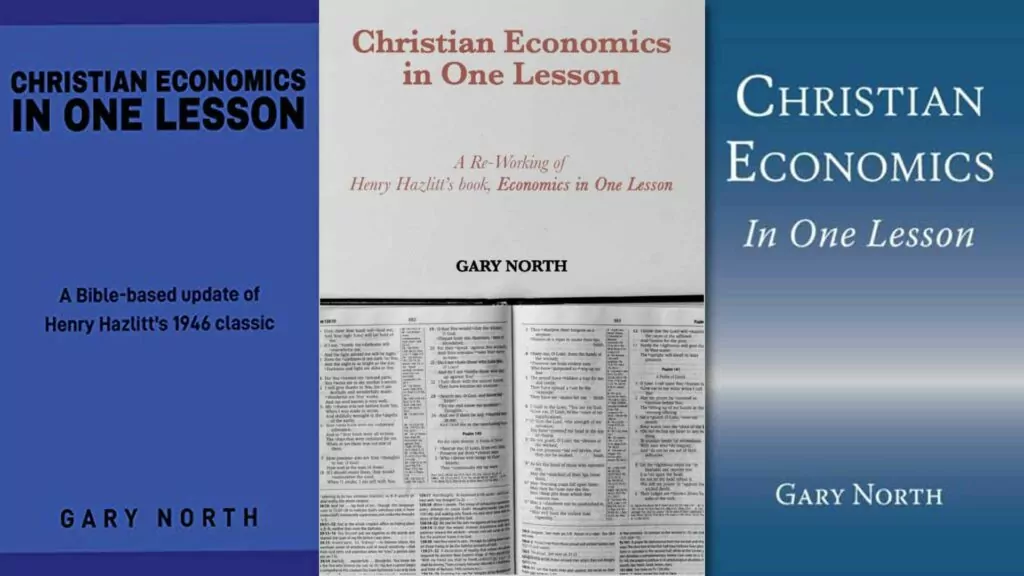
Christian Economics in One Lesson

by Gary North 2015 / 268 pages Henry Hazlitt’s Economics in One Lesson is what its title suggests, just one economic lesson explained in the first chapter – that we focus on the obvious impact of a government program, and don’t consider what otherwise might have happened with those dollars. It’s the seen vs. the unseen. That one lesson is then repeatedly applied to different situations in the 24 chapters that follow. In chapter 4, it is applied to public work projects: when the government builds a new sports stadium we can see the job created by its construction. What’s unseen is all the jobs that might have been created by businesses if they hadn’t had to pay the taxes to build that stadium. Overall, Hazlitt is making a general argument for less government and more economic freedom, but is making it on the basis of practicality: that a free market approach will make us all, overall, more prosperous (download the book for free). Effectiveness is the fruit, not the goal In his Christian Economics in One Lesson, Gary North makes his argument for free market economics on a very different basis: obedience. He also thinks the free market is the most effective way of making us all richer, but he sees that, not as a goal, but as a side effect – the fruit – of being obedient to God’s commands do not covet, and do not to steal. As his title suggests, he is riffing off of Hazlitt, and his chapters are a reworking of each of Hazlitt's. Economics is sometimes treated as a being simply about the math, about some sort of neutral accounting, pitting the different economic systems against each other to find out which creates the greatest benefit for society. Both socialists and capitalists could even agree that economics is about dealing with the problem of scarcity – there is only so much to go around, so how do we make the most of it? But North is arguing that economics is really a matter of ethics, and applying God's guidance on money, work, property, and covetousness to the real world. Then the better way is the way that obeys God’s commands. Now, like Hazlitt, North thinks the best system is the free market, and not the sort of so-called capitalism that involves getting government contracts and special favors. None of that crony "capitalism." This is, instead, a free market where people make exchanges voluntarily, and consequently, both sides benefit. No temptation to tweak But even as Hazlitt and North both hold to the free market system, it is significant that they got there very different ways. Hazlitt got there because the free market works – it is the most prosperous of all systems, doing more to raise people out of poverty than any other economic system before it. North arrives there because the free market is what results when we are obedient to God, respecting our neighbor's property and pushing back against our own covetousness. So, both support the free market. But for those like Hazlitt who arrived there for practical reasons, there will always be the temptation to tweak, and in doing so, to succumb to socialism. If capitalism works best, who's to say if capitalism plus just a smidge of socialism might not be better? Maybe just 5%? Or 10? How can we know unless we try? But there isn't the same temptation to tinker for Christians who choose the free market for its alignment with God's Word. We won't want to be 5% or 10% less obedient. And it is worth noting it is no coincidence that the economic system that most aligns with God's Word is also the one that best raises people out of poverty. That's simply God's love – He knows what is best for us, and when we obey, especially when we do so on a societal level, it goes better for us. Conclusion North's insight – that economics is about ethics, not efficiency; it is about obedience, and not prosperity – is a brilliant one, and worth the reinforcement that comes in the repeated applications that follow. If this isn’t the most important book I read last year, it is certainly in contention… and it can be downloaded for free here....

Red heart icon with + sign.
Adult non-fiction, Book Reviews, Economics

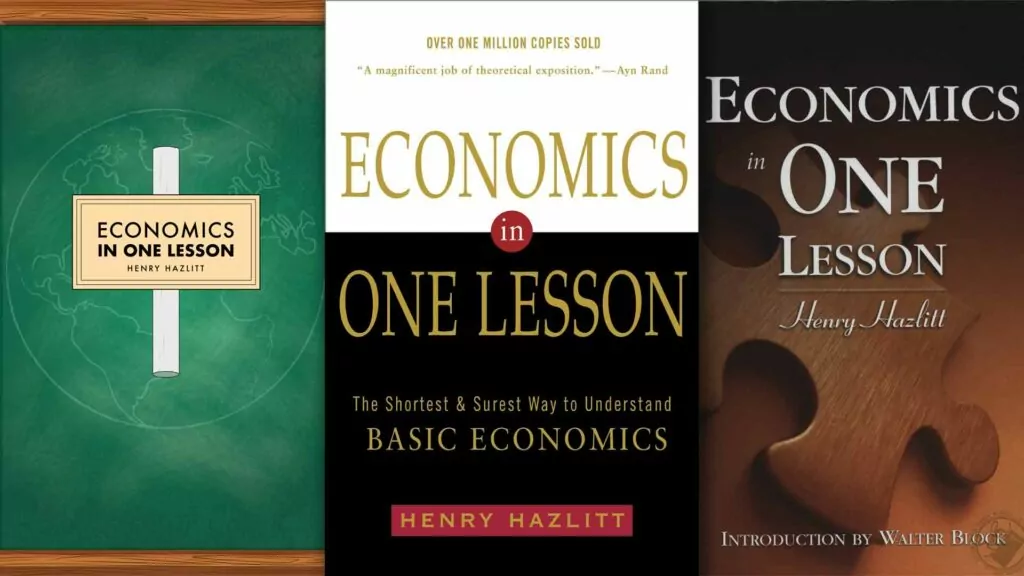
Economics in One Lesson

by Henry Hazlitt 1946 / 193 pages Universal basic income, a four-day work week, and government-funded daycare are just a few big-ticket proposals that are gaining momentum nationally, and even within our own church circles. All these proposals boil down to getting more while doing less. Promises have been made that middle and lower class families will not have to pay a cent more in taxes but the wealthy 1% will do all the heavy lifting.  In Economics in One Lesson, Henry Hazlitt argues that all these policies can’t deliver what they promise. He argues that many of these proposals only focus on a special interest group in the present and fail to consider how the proposal will affect the general populace both now and in the future.  For example, when a government announces a multitude of public “make-work” projects, at first glance these projects seem like a good idea, or at least seem like they couldn’t do any harm. The citizens get: An employment opportunity  Tangible infrastructure But Hazlitt warns that although these benefits look attractive, there are many indirect consequences that are not considered.  First, someone must pay for these employment opportunities. For every dollar spent on a public work project, a dollar will be taken away from a taxpaying citizen. Not only are the citizens as a whole worse off, there is now less money for them to create new jobs. Second, now that the infrastructure exists it is easy to assume that without that piece of infrastructure the country would be worse off – having a bridge would seem obviously better than not having a bridge. But in reality, one thing has been created instead of others. Instead of the government-built bridge there could’ve been citizen-built houses, or cars, or dresses and coats. All of these items are unrealized because the bridge is now standing. Although Hazlitt wrote this over 70 years ago, many of the issues he deals with are just as relevant as ever. We should be wary of governmental promises to ease our daily tasks. Our sinful nature yearns for an easy life; that is why these promises are so alluring to us. However, as Christians we are not called to an easy life. That does not mean that we should always seek out the hard way, but we shouldn’t become entangled in false promises of an easy way. To get Economics in One Lesson as a free pdf book, click here....

Red heart icon with + sign.
Book Reviews, Children’s picture books, Economics

Nobody knows how to make a pizza

by Julie Borowski 2019 / 30 pages Rating: Good/GREAT/Give The picture book's title makes a claim that my daughter just couldn't believe: "Come on Dad, you know how to make a pizza!" But do I really? Sure, I know how to combine a pizza crust with cheese and tomato sauce. I'm even very good at it. But the point this slim volume is trying to make is that there is a lot more to it. That flour I use started as grain that somebody had to grow, and I certainly don't know how to do that. That farmer who does, brings in his crop using  a wheat harvester, which he isn't able to make himself. He'll ship off his grain, perhaps via a train, which neither of us could ever manufacture. We also don't know how to turn wheat into flour, and the folks that do, don't know how to make the semi-trucks that ship their flour to grocery stores around the country. Making even the simple pizza crust requires a lot of different people all working together, with not one of them knowing how to get all the needed steps done. That's why the pizza narrator's claim – that "there's not a single person on Earth who knows how to make me" – isn't as outrageous as it first seem, And that doesn't even get into the tomato sauce and cheese! You might be wondering, okay, but so what? The point of this little book (and the 1958 essay, I, Pencil, which inspired it) is to expose the arrogance of any big government's central planners. Whether it's full-blown communists who want to plan everything, or a democracy where the elected leadership "merely" direct large chunks of the economy (gov't spending in Canada accounts for 45% of GDP, and their impact is extended further still via regulations), we have governments of all sorts all around the world that think they know how best to run things from the top down. However, if planning the production of a single cheese pizza is beyond the capabilities of any one man, or even a team of the very smartest people on earth, then why would we think the government could ever know enough to competently make the innumerable management decisions they make, from what minimum wage everyone should be paid, to how children should be educated in K-12 (and what they should learn), which companies should be bailed out or subsidized, or even how much milk should be produced? Of course, if no one knows how to make a pizza, that prompts an obvious question: how is it that countless cheese pizzas are made every day? Instead of someone at the top planning it all out, this miracle occurs without much planning at all. The author of this picture book makes more of a libertarian presentation than a Christian one, so I'm using the term "miracle" here for a wonder she doesn't really attempt to explain. But Christians do have an explanation. Now, we might take for granted what the free market can produce – cheaper computers, innovations like the smartphone, innumerable kinds of bagel – to the point it seems too ordinary to call all of that a miracle. But the free market is a miracle nonetheless, completely beyond anybody's ability to plan and create, making it all the easier to see God's fingerprints. His commandment "Do not steal" creates property rights, which is the basis for one person trading what they own to another for something they want more. If you can't steal from others, then the only way to provide for yourself and your family is by producing something other people will value. You get money from them to meet your needs by making something that meets theirs. So God's law is the basis for free trade and it is unplanned, unorganized free trade that has miraculously proven to be the most effective way of raising people out of poverty. The government still has a role here - to prevent theft, enforce contract laws, and generally ensure that property rights are respected – but not in picking the winners and losers. While that's deeper than this picture book goes, what Julie Borowski does highlight is the result: all sorts of strangers cooperating with one another, each looking out for their own interests, but together creating something that none of them could make on their own – innumerable voluntary exchanges and, eventually, violà a pizza! As noted, this book has a libertarian flavoring to it, and because libertarians can often be libertines on moral issues, their values can be at odds with what God knows is best. However, in this case the libertarian impulse for small government syncs up well with the Christian emphasis on humility and Man's fallibility – we have a hard enough time trying to plan out our own lives, so it's arrogant indeed for bureaucrats and politicians to think they can plan out everyone else's lives for them. Better then, to limit (though certainly not eliminate) the government and what it does, so as to leave people the responsibility and allow them the freedom to manage their own lives. This would be read to best effect with a parent along for the ride. Otherwise I could see kids enjoying it, even as they entirely miss the overall small government argument being made. You can watch the author read her book below. ...
Red heart icon with + sign.
Economics

The art of the apology

In the middle of a leaders’ coaching session, focusing on how they engaged in difficult conversations with their teams, I began to notice a theme. These leaders were frustrated with the lack of ownership for bad attitudes on the part of some of their team members. I was also not “hearing” much, if any, sense of ownership regarding their own attitudes with these frustrating team members. I asked a couple of questions: Have you ever delivered a “bad” attitude in response to a team members’ “bad” attitude? What did you do when you realized your error (assuming you did)? Most in the group had not done anything regarding their own gap in attitude. Another question was asked: When is the last time you offered an apology to someone with whom you made a mistake?  To my very great surprise over half of the group had never apologized – EVER!! Even the boss isn't perfect This was a group of leaders with spouses, kids, involved in the community and entrusted with the leadership of people in the business they were helping to lead. How could this be? This was a group in which almost all claimed faith in Christ and yet most had never owned up to their mistakes at work, home, or in their communities. It became clear that something was really wrong! The lack of character in this group was troubling. The feeling of unease became palpable as they realized the hypocrisy of what was just confessed. I felt for them. The planned agenda was dropped and I proceeded to “teach” this group the “Art of the Apology.” Until they were willing to model the way and “own” an error in judgment or attitude, there was little sense in teaching anything else. Before going further, I admit that in teaching the “Art of the Apology” it is not because I have it all figured out or find it easy to do. To be authentic and consistent has required much inner work on my part – and this work is surely a lifelong journey! Our egos, left to their own devices, crave being right, being in charge, being in control. However, the way of our God & His kingdom is so very different. His way is one of letting go of those human drives and humbling oneself before Him and others. His way is one of fully embracing one’s identity in Him. When we find ourselves in Him our sense of security and significance is bolstered. Our capacity to love, and not operate with fear, is strengthened. Because of Him we can own our mistakes and take the needed steps to apologize, forgive and potentially reconcile. 9 important words On June 15, 1985, my good friend Luch Delmonte spoke at my wedding. In his charge to me and my bride, he included 9 words. He repeated these same 9 words at the weddings of each of our 4 kids. How’s that for a legacy!! Here are the 9 words that can change your life should you choose to live them: “I am sorry, I was wrong, Please forgive me!” These 9 words have provided such a wonderful framework to help ensure relational ease at work and at home.  I cannot imagine the impact on me and on others without them.  Can you? A Deliberate application When is the last time you apologized for an attitude, words, and/or actions that were “offside”? How did you know they were “offside”? Describe what you were sensing in you and between you, God, and the other person? What does your internal conversation sound like when you work at avoiding an apology? What keeps you from living out Romans 12:18 – from taking responsibility in helping ensure peace between you and others? If you are responsible for any part of a relational disconnect, what is your part? When will you approach the person and offer the 9 words? This is the 7th in a series on “Leadership of People and Culture” that have been appearing on the DeliberateU.com blog, and it is reprinted here with permission. DeliberateU is a Christian business leaders mentorship group. ...
Red heart icon with + sign.
Economics

The hidden tax of inflation

Prices are on the rise in many countries around the world. Price increases are measured by a statistic called inflation, which expresses the percent prices have increased on average over some period of time. Canada saw its highest rate of inflation in over a decade in July when the annual pace of inflation hit 3.7%. Compared to the U.S., though, Canada is in a relatively good spot. The Consumer Price Index (CPI), which measures inflation by comparing a fixed group of goods over time, rose to 5.4% for the month of July. This ties with June’s numbers for being the largest rate of price increase since 2008. An alternative measure of inflation, the Personal Consumption Expenditures Index, reached its highest rate in 30 years. Economists have mixed feelings about how long inflation will last, but one thing is clear. Prices are on the rise, and you’ve likely noticed your money isn’t stretching as far as it used to. So why is this happening now? Well, Nobel-price-winning economist Milton Friedman famously commented, “inflation is always and everywhere a monetary phenomenon.” In other words, if you want to see why prices are rising, follow the money. Money-printing mania When a central bank prints more currency and puts it into circulation, those who get first access to the money are in for an unexpected payday. So, what will they do with this new money? Well, some of it will be saved, but some will be spent. Suddenly the newly printed money in your pocket might let you buy something you’ve had your eyes on for a while. The store then generates more revenue which can go to investors or paying new workers. So, spending increases, and this might not sound so bad so far. But this is when the problems began. As that new money goes into the pockets of new workers or investors, they spend some of it too. But, as demand increases while this new money circulates, prices begin to rise. There are more dollars in the economy, but the same amount of stuff. So, the value of dollars decreases relative to the value of goods and services. Money loses some of its value, and prices rise to reflect the money’s lower value. When the central bank prints money, it creates this process whereby money loses its value. This is exactly what’s happening around the world. In Canada, a common measure of the quantity of money in circulation shows an increase from $1.8 trillion at the beginning of 2020 to $2.2 trillion today. That’s approximately a 22% increase in the quantity of Canadian dollars in circulation in less than two years! As you might expect from the higher rate of inflation, the increase in the supply of US dollars has been even more alarming. The supply of US dollars has increased by 32% in the same period. Nearly one-fourth of all U.S. dollars in circulation today were printed since January 2020. This money printing, unprecedented in recent history, was in a large part to prop up economies being damaged by COVID-19 lockdowns. However, we’re beginning to feel the effects of this temporary solution, and Christians should recognize the consequences of money-printing. Inflation hurts savers… especially among the poor The problem isn’t simply that, after a period of having more money, consumers now have to face higher prices. Remember, the first person to receive new dollars is able to benefit from spending them. However, as the money circulates more, prices begin to rise. This means not everyone gets the benefit from this newly printed money. And this new money comes at a cost. As prices rise, the money in people’s savings account loses value too. In this way, inflation acts as a tax on savings. By taking future purchasing power from the thrifty, government can print money and give it to private banks to lend to businesses today. Inflation hurts savers. There are a few work-arounds to this problem. There are financial tools which help savers to shield the value of their money from the degradation to inflation, but, unfortunately, these tools and methods are costly to learn about and utilize. As such, we should expect inflation to be especially deleterious to poor and middle-class savers who don’t have time to focus on protecting their wealth since their weeks are consumed by making enough wealth to survive until the next paycheck. The problems don’t end there. While some have the luxury of a job where pay can be re-negotiated easily, this is not true for everyone. Many jobs involve contracts wherein workers agree to a specified wage rate for a definite period. In this case, not only is the savings account of these workers losing value due to inflation, but the weekly paycheck they receive will also be hurt. If you receive the same paycheck every two weeks, but the paycheck can buy you fewer goods and services due to price increases, you’re worse off. Economists call this a decline in the real wage. Why would the government inflate? So what is the benefit to government lowering the purchasing power of citizens? Well, there are a couple of benefits to government. First, a government can lower its debt burden. Governments often finance spending by selling government bonds. These bonds are promises to pay back the purchaser with interest. When inflation strikes, prices and nominal wages rise. As a result, the amount of tax revenue the government collects increases. This makes it easier to pay back debt which remains stagnant as prices and incomes rise. Second, remember that the “new” money maintains high value before it circulates widely. As a result, government can appease special interest groups in the financial industry by putting the newly printed money into banks first. The new money in banks provides access for large corporations to take the high-powered money out as loans for new projects. Be wary of the inflation tax Christians should be especially wary of the tax imposed via inflation for two major reasons. First, inflation disproportionately impacts the poor. When prices on everyday goods like groceries, energy, and transportation rise, this disproportionately hurts the poor. While 5% more expensive food is a relatively small increase for a millionaire, food can easily make up a huge percentage of monthly pay. Someone living paycheck-to-paycheck can’t afford a rise in prices. Further, the wealthy often receive income through financial assets like stocks. Stock prices also tend to increase during times of inflation, so the income of the rich stays relatively stable. The poor, often locked into prior wage agreements, don’t see their incomes rise immediately with inflation. Second, inflationary policies encourage behavior the Bible explicitly calls foolish. Proverbs 21:20 (ESV) tells us, “precious treasure and oil are in a wise man's dwelling, but a foolish man devours it.” This verse is descriptive. A fool consumes all of his wealth, whereas a wise man saves it in his dwelling. However, remember that inflation destroys the value of savings. If someone was keeping $1,000 in savings, and a grocery store trip costs $200 before inflation, and $250 after inflation, the saver goes from being able to afford five trips to being able to afford four. If instead, the consumer had used the $1,000 to buy a new flatscreen TV, inflation would not have had any effect. This example illustrates an important point. Because inflation taxes savers, it discourages frugality and encourages consumerism. Why save for tomorrow if money-printing is going to make savings worthless? Unfortunately, monetary policy is hardly, if ever, discussed on political debate stages let alone Christian churches. However, if we believe our role as Christians in democracy involves looking out for the poor among us, we should watch out for policies which seem tailor-made to harm their interests. Peter Jacobsen is an Assistant Professor of Economics at Ottawa University and the Gwartney Professor of Economic Education and Research at the Gwartney Institute. He has previously written for both the Foundation for Economic Education and the Institute for Faith, Works, and Economics. References https://fred.stlouisfed.org/series/M2SL https://ycharts.com/indicators/canada_m2_money_supply...

Red heart icon with + sign.
Economics

What does a Reformed entrepreneur look like?

What is it about Reformed Christians that has so many wired to be entrepreneurs? Think about all the landscape professionals and nursery operators in Ontario, the construction companies and dairy farms in BC, and the myriad cabinet shops in southwestern Australia! Very different businesses, but every company began with the dream of an individual or team that saw a need in the marketplace for their expertise: “We can do this better than others, and we can provide for our families and employees by sharing our expertise with the public, and charging the right prices for what we do.” That concept might sound mundane to some, but it’s incredibly invigorating and challenging to an entrepreneur! But what should we as Reformed Christians look like as entrepreneurs and employers? And how can we use God’s Word to guide us as leaders in the workplace? How can we be effective witnesses for the Lord, and conscientious stewards of what He provides for us? Be willing to take on responsibility Along with the excitement of starting something new, the Christian entrepreneur will also face many hurdles and pressures. When you work for someone else, you are rarely confronted with the realities of making sure there are enough funds in the bank to make payroll, or worrying that your biggest account won’t pay their bill on time so that you can send out checks to your vendors and partners. Especially early in a company’s life, the owners have many decisions to make and can feel like they are the only one worried about whether or not their enterprise will survive. These pressures multiply when the owners hire their first employee: we have to recruit the right people with the right skills so the company can grow; we need to file reams of paperwork with multiple government agencies; we need to choose and purchase benefit packages we might never have thought about. Despite the additional pressures, entrepreneurs who have a team can be many times more effective than when they are on their own. Be ambitious Throughout the Scriptures, the Lord commands His people to be hard-working, diligent, and industrious, not so that they would become rich, but because He wants us to use for His glory the gifts He has given us. In Matthew 24, the Lord Jesus praises the work of the two servants who managed well the funds their master entrusted to them. The master is furious with the servant who just buried his treasure in the ground: “You wicked and slothful servant!” And he commands that this “worthless” man be cast into the outer darkness. We do not know specifically what the two righteous servants did with the money they received (the first “traded with them,” and the second “made two talents more,”) but we do know that they were commended for their diligence. “Well done, good and faithful servant!” While some in today’s culture may look askance at profit-making, the Bible never condemns this basic tenet of capitalism that makes a free market function. Use your growing influence to aid and not exploit As they worked hard, and aimed for a return on their investments, God’s people were also to deal righteously with their servants and laborers. In Deuteronomy 24:15, the Lord through Moses instructs landowners: “You shall not oppress a hired worker who is poor and needy, whether he is one of your brothers, or one of the sojourners who are in your land within your towns. You shall give him his wages on the same day, before the sun sets (for he is poor and counts on it), lest he cry against you to the Lord, and you be guilty of sin…” The Lord is angered when profits are made by those who mistreat or cheat their employees. In James 5, those who have “hoarded wealth” are warned that “the wages you failed to pay the workers who mowed your fields are crying out against you… The cries of the harvesters have reached the ears of the Lord Almighty.” Pay others as you would like to be paid In a recent issue of Reformed Perspective, Peter Jacobsen wrote about the negative effects of minimum wage policies – unintended consequences such as higher unemployment among the young and less skilled, and even intentionally evil consequences such as economic punishment of recent immigrants willing to work for lower wages than native-born employees. Jacobsen cited the writings of economist Thomas Sowell, a black American economist who delights in using real data to debunk “woke,” generally accepted theories about socialism, communism, racism, and more. Christian business leaders need wisdom to discern what is best for their employees, for the health of their company, and for their customers. Since we are commanded to be righteous and generous in how we treat our fellow workers, hopefully a hike in a mandated minimum wage does not have a significant impact on our businesses, since we are likely being far more generous with most of our workforce. Create opportunities for others to be fruitful Not only must we never withhold the wages earned by employees, we are also not to be so focused on profit that we leave no opportunities for others to profit from our enterprise. After instructing about paying wages on the same day as earned, Moses commands that farmers should leave enough crops in their fields for others to glean: “When you reap your harvest in your field and forget a sheaf in the field, you shall not go back to get it. It shall be for the sojourner, the fatherless, and the widow, that the Lord your God may bless you in all the work of your hands” (Deut. 24:19). King David’s great-grandmother benefited from this generosity to the poor! Are there ways that we in our modern workplaces can put in place similar policies that would help our neighbors, and our brothers and sisters? In my hometown, a local company owns and maintains a scenic, rural retreat and training center that it makes available for no cost to Christian organizations. This same company has hired a part-time chaplain to be available for their employees as they need a listening ear, and invites other local employers to avail themselves of this minister’s services. Another company nearby hires mentally disabled employees for janitorial work. Might the floors be cleaner and the windows sparkle more if a contract service were used? Possibly. But what a joy to be able to provide work and routine for those who otherwise might not have such opportunities. Seize the charitable opportunities that come with business success The principle of tithing and charitable giving also has a place in this discussion. Christians are expected to be generous with what the Lord has given. In 2 Corinthians 9, Paul reminds his readers “Whoever sows sparingly will also reap sparingly, and whoever sows generously will also reap generously.” And in 1 Corinthians 16, Paul writes “On the first day of every week, each one of you should set aside a sum of money in keeping with your income” (NIV). The phrase “in keeping with your income” (or “as he may prosper” in the ESV) is telling: business owners often enjoy seasons of prosperity beyond what a typical wage earner may experience, and should be known for their generosity to causes that benefit their church community, and their neighbors’ well being.  May the Lord continue to bless the businesses in our church communities, and give wisdom to those entrusted to run them for his glory. Marty VanDriel is the CEO of a manufacturing company in Ferndale, Washington. Comments, feedback, and also suggestions for future topics dealing with business, employment, and finance are more than welcome at [email protected]....

1 2