Transparent heart icon with white outline and + sign.

Life's busy, read it when you're ready!

Create a free account to save articles for later, keep track of past articles you’ve read, and receive exclusive access to all RP resources.

White magnifying glass.

Search thousands of RP articles

Helping you think, speak, and act in Christ.

Open envelope icon with @ symbol

Get Articles Delivered!

Helping you think, speak, and act in Christ. delivered direct to your Inbox!


Most Recent


The Rest


Red heart icon with + sign.
In a Nutshell

Tidbits – April 2025

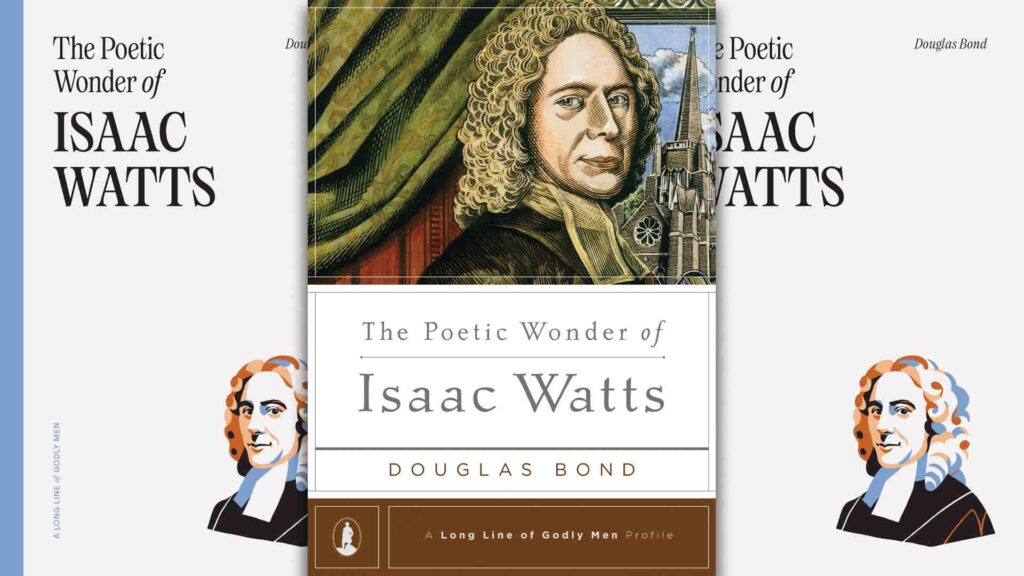
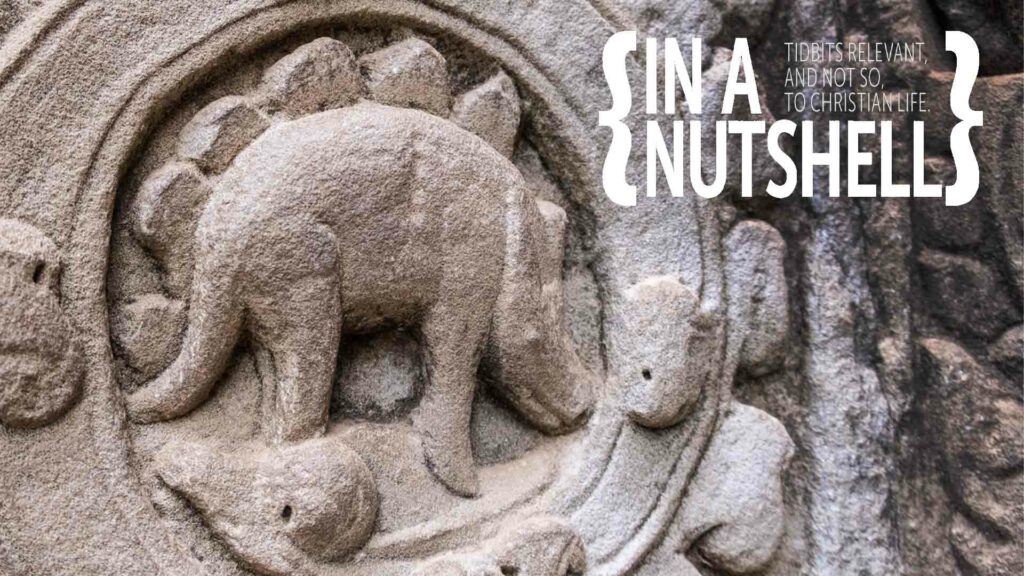
Trying to have your cake and eat it too A carving on a Cambodian temple built around 800 years ago seems to depict a stegosaurus. Christians know that dinosaurs and people lived at the same time, so this is no surprise for us. The artist might have seen a stegosaurus himself, or perhaps only heard a description passed on through the generations. But evolutionists say that dinosaurs died tens of millions of years before man appeared, and if that’s true then there is no way this artist could have seen a stegosaurus or had an accurate description of it passed on by word of mouth from one generation to the next – not if the span was millions of years! So evolutionists need to explain how this carving could have come to be. In an article on Smithsonian.com Brian Switek offers two possibilities that can be summed up as: 1. It doesn’t really look like a stegosaurus “If viewed directly, the carving hardly looks Stegosaurus-like at all. The head is large and appears to have large ears and a horn. The ‘plates’ along the back more closely resemble leaves, and the sculpture is a better match for a boar or rhinoceros against a leafy background.” 2. It looks so much like a stegosaurus it must be a hoax “There are rumors that it was created recently, perhaps by a visiting movie crew (the temple is a favorite locale for filmmakers), and it is possible that someone created something Stegosaurus-like during the past few years as a joke.” Watts was a wonder Isaac Watts (1674-1747) was a gifted poet and hymn writer, perhaps best known for Joy to the World and O God, Our Help In Ages Past. When he was a young lad, his gifts were already in full bloom, but they weren’t yet fully appreciated by those closest to Watts. In fact, as Douglas Bond recounts in his biography The Poetic Wonder of Isaac Watts, the poet’s mother didn’t even believe that the poems she was finding around the house were actually Watts’ own compositions. Sure, the boy said they were his, but what seven-year-old child could write like this? She assumed they must be poems he had memorized and then written down as his own. So, to put him to the test, she sat the boy down at the kitchen table and asked him to write her a poem. This is what he came up with. I am a vile polluted lump of earth; So I’ve continued since my birth; Although Jehovah grace does daily give me, As sure this monster Satan will deceive me. Come, therefore, Lord, from Satan’s claws relieve me. Wash me in Thy blood, O Christ, And grace divine impart. Then search and try the corners of my heart, That I in all things may be fit to do Service to Thee, and sing Thy praises too. After he showed it to his mother, she thought her suspicions were confirmed. This, clearly, was a copied piece, showing a theological depth far beyond the insight (let alone poetic ability) of any mere child. But then Watts told his mother to look at the first letter of each line for proof – the boy had crafted an acrostic that spelled out his own name, “Isaac Watts.” As Bond writes, "This was, no doubt, one of those moments that a mother cherishes and hides up in her heart. Imagine Sarah Watts’ wonder at her son’s gifting, but still more, the gratitude to God any Christian mother would have for so obvious a working of grace in her son’s heart." Credit card 101? Earl Taylor is an American high school principal who thinks it is vital our kids learn how to use credit cards responsibly while still at home. He proposed a two-step method that involved giving a son or daughter getting a card as soon as possible (16, 17, maybe 18) with two stipulations: 1) It has to be paid off in full each month 2) If there was ever a time when it wasn’t paid off in full, then the card would be cut up. And then the whole process could be tried again 6 months later. Let’s not whine John Piper wants us to know that sins aren’t something to complain about – whining isn’t the proper response. No indeed. As Piper puts it: "I hear so many Christians murmuring about their imperfections and their failures and their addictions and their shortcomings, and I see so little war! 'Murmur, murmur, murmur… Why am I this way?' Make WAR!" Great horrible puns • Class trip to the Coca-Cola factory. I hope there’s no pop quiz. • I did a theatrical performance about puns. It was a play on words. • Broken pencils are pointless. • They told me I had Type A blood, but it was a Type O. • It’s hard to beat a boiled egg in the morning. • The bride got a new name and a dress. • It’s hard to explain puns to kleptomaniacs because they always take things literally. • Someone left a pile of plastecine on my doorstep. I don’t know what to make of it. • Never trust an atom. They make up everything. • You want to know the key to being a successful mime? I’m not talking. • Can you think of anything nice about Switzerland? Well, their flag is a big plus. • While I usually refrain, I prefer to sing songs without their choruses. You can’t trust Hollywood?!? Hollywood tells us that there is one special someone, one soulmate, one person out there who, as Jerry Maguire put it, completes us. Blogger Matt Walsh sums up the Christian position in one sentence: “I didn’t marry my wife because she’s The One, she’s The One because I married her.” Why was Jesus silent? After he was arrested, Jesus replied to some of Pilate’s questions, and responded to a question by the high priest, but to their many false accusations he gave no reply – he stayed silent (Mark 15:5). The late Dr. D. James Kennedy, a popular American Presbyterian pastor last century, had an unusual thought as to why Jesus didn’t speak up. "Why was Jesus silent? Is it not often the case that a person is silent because he is giving tacit consent? Could that be the case? Many accusations were made against Him, and yet He denied none of them. Was He perchance guilty? In the answer to that lies the very heart of the Christian faith, and we must uncompromisingly declare that Jesus was silent precisely because he was guilty! He was guilty of everything with which He was charged. And He was guilty of many crimes for which He was not charged. He was guiltier than any man who had ever stood before the Sanhedrin. He was guiltier than the vilest miscreant who shall ever stand before the judgment bar of God. He was the guiltiest man who ever lived! But the guilt He bore was not His own. It was yours, and it was mine. 'The Lord hath laid on him the iniquity of us all (Isaiah 53:6).' God hath made Him to be sin for us. Guilty – as charged (2 Cor. 5:21)." Ouch! But…yeah “If any man thinks ill of you, do not be angry with him, for you are worse than he thinks you to be.” - Charles Haddon Spurgeon G. K Chesterton on repetition To a dad’s distress, kids never tire of being thrown in the air. G.K. Chesterton thinks that, as we’re in the midst of doing it again, and again and again, we might not be properly appreciating the wonder of it all. Might our son or daughter be reflecting something of God in their unending enthusiasm? "….children have abounding vitality, because they are in spirit fierce and free, therefore they want things repeated and unchanged. They always say, 'Do it again'; and the grown-up person does it again until he is nearly dead. For grown-up people are not strong enough to exult in monotony. But perhaps God is strong enough to exult in monotony. It is possible that God says every morning, 'Do it again' to the sun; and every evening, 'Do it again' to the moon. It may not be automatic necessity that makes all daisies alike; it may be that God makes every daisy separately, but has never got tired of making them. It may be that He has the eternal appetite of infancy; for we have sinned and grown old, and our Father is younger than we. The repetition in Nature may not be a mere recurrence; it may be a theatrical ENCORE."...

Red heart icon with + sign.
Christian education, Theology

Why biblical poetry matters

Skim through any modern Bible and you will notice something peculiar: many pages are laid out as poetry, with appropriate spacing and indents. But have you ever wondered what makes these verses poetic? For most people, this subject remains an enigma, and some will wonder why they should even care. Poetry seems like the wrapping around a present, or the envelope for a card — superfluous and largely decorative. It is the message that is important, and paying attention to the form may be a distraction. Of course, for a believer that should be a flimsy argument. Surely God loves beauty and complexity (Gen 1:31, Psalm 139:14), and although beauty is fleeting (Prov. 31:30), that is no excuse to ignore it.1 It does not make sense when Christians stand in awe of a gorgeous sunset, or we all hang the same poem about footprints on our walls, but we cannot be bothered to learn how the Psalms were composed. Beautiful in any language The astonishing thing about biblical poetry is that it generally translates into any language. The principal technique is not a matter of meter or rhyme: it has to do with the structure of the lines. In most cases, two or more lines run parallel to each other. Consider Psalm 122:7: May there be peace within your walls and security within your citadels. You can see that the terms run parallel. Peace and security mirror each other, as do the walls and citadels. The name for this type of poetry is Hebrew Parallelism. In what follows, we’ll explore how this poetic technique works and why it matters. Robert Lowth’s rediscovery of Parallelism It was the Anglican Bishop Robert Lowth who in the 18th century rediscovered Hebrew Parallelism. For centuries, Christians had been confused about how best to describe biblical poetics. According to Lowth, Hebrew parallelism typically follows one of three patterns: Synonymous Antithetic Synthetic2 Let’s take a closer look at each of these. The example we just looked at is a form of synonymous parallelism. In such cases, the same idea is repeated in similar language. One of the more famous examples of consistent synonymous parallelism is Psalm 114: 1 When Israel came out of Egypt, Jacob from a people of foreign tongue, 2 Judah became God’s sanctuary, Israel his dominion. 3 The sea looked and fled, the Jordan turned back; 4 the mountains leaped like rams, the hills like lambs. 5 Why was it, sea, that you fled? Why, Jordan, did you turn back? 6 Why, mountains, did you leap like rams, you hills, like lambs? 7 Tremble, earth, at the presence of the Lord, at the presence of the God of Jacob, 8 who turned the rock into a pool, the hard rock into springs of water. In this psalm, every verse consists of a mirroring of terms. Lowth felt that parallelism might be compared to the way two choirs can sing back and forth — a type of chant known as antiphony. Lowth speculated that the Jews might have incorporated something similar in their worship. Think of Psalm 136, where the refrain “His love endures forever” is a repeated response. Lowth’s second type, antithetic parallelism, involves a sharp contrast. It is particularly common in the book of Proverbs: A cheerful heart is good medicine, but a crushed spirit dries up the bones. (Prov. 17:22) The poor plead for mercy, but the rich answer harshly. (Prov. 18:23) The idea is that when we reflect on such contrasts, we can grow in wisdom. Finally, Lowth used synthetic parallelism as a catch-all category for anything that is not synonymous or antithetic. Synthetic parallelism typically involves a progression of ideas, so that one thing follows another. Take this passage from Psalm 84: 5 Blessed are those whose strength is in you, whose hearts are set on pilgrimage. 6 As they pass through the Valley of Baka, they make it a place of springs; the autumn rains also cover it with pools. 7 They go from strength to strength, till each appears before God in Zion. While the end of verse 6 may contain an element of synonymous parallelism, these verses are more about developing an idea. In keeping with the focus on pilgrimage, the emphasis is on movement. Two of Lowth’s examples of synthetic parallelism eventually came to have their own names. The first is now usually called staircase or climactic parallelism. Psalm 93:3-4 provides a dramatic example: 3 The seas have lifted up, Lord, the seas have lifted up their voice; the seas have lifted up their pounding waves. 4 Mightier than the thunder of the great waters, mightier than the breakers of the sea— the Lord on high is mighty. The repetition of phrases (like a staircase) creates a crescendo that builds to a climax. In this passage, we can imagine the waves growing in size! Another type of synthetic parallelism is commonly called numerical parallelism. This is a poetic use of counting, something that is used to great effect in Amos 1: 3 For three sins of Damascus, even for four, I will not relent. The same device occurs four more times in the rest of the chapter. The Sharpening Theory Robert Lowth established the basics of Hebrew Parallelism, yet his simple categories were not beyond criticism. Scholars objected that the synthetic category was ill-defined, that the term parallelism may imply too much similarity between the lines, and that parallel structures are not exclusive to poetry, but can be found elsewhere in the Bible as well. The most forceful critique came in 1981 from James Kugel, the author of The Idea of Biblical Poetry: Parallelism and Its History.3 Kugel developed what we might call the “Sharpening Theory” of Hebrew Parallelism. To understand what he meant, it is good to reflect on the nature of proverbs. Proverbs are a bit like riddles. When someone says, “the apple does not fall far from the tree,” it takes us a moment to figure out what that really means. A proverb makes us stop and think. James Kugel points out that in the Bible this quality is sometimes described as a certain sharpness. A proverb pricks our conscience and makes us reflect on the proper way to act. Unfortunately, the fool feels the prick, but does not benefit from it: Like a thornbush in a drunkard’s hand is a proverb in the mouth of a fool. (Proverbs 26:9) If we take these observations about proverbs and apply them to Hebrew Parallelism, then we see that the parallel lines also force us to slow down and consider their relationship. At first, we might observe mostly repetition, but a closer look reveals that there is more to the picture. The unique features of each line stand out in sharp relief. This makes reading the Bible exciting. The following verse provides a good example: Through love and faithfulness sin is atoned for; through the fear of the Lord evil is avoided. (Proverbs 16:6) Is the same thought expressed twice? Not really. Not only do the lines mention different, yet related actions (love and faithfulness; the fear of the Lord), but the verse makes us contemplate the connection between atonement and avoidance of sin. Atonement might make up for past transgressions, whereas avoidance is about future temptations. In this way, the proverb creates a complex picture that encourages the righteous to live wisely. Midrash James Kugel further pointed out that Jewish rabbis who interpreted the Bible preferred to focus on the differences between parallel lines. In the Jewish tradition, the word Talmud refers to a variety of rabbinic texts that came to supplement the Old Testament books. After the return from exile in Babylon (6th century BC), the Jews increasingly developed an oral tradition that interpreted the Torah (the five books of Moses) and added further regulations and customs. Written compilations of the Talmud stem from as early as the third century AD. The act of interpreting the Talmud and the Bible came to be known as Midrash. This word refers to both rabbinic interpretation and an actual written collection of such interpretations. Rabbis who practiced Midrash (especially during medieval times) often came up with ingenious ways to contrast poetic lines that seemed to say the same thing. Let’s look at a couple of examples that Kugel provides. First, we read in Genesis 21:1: Now the Lord was gracious to Sarah as he had said, and the Lord did for Sarah what he had promised . Sounds the same. But at least one commentator suggested that the last “he” might refer to Abraham. A couple of verses earlier (Gen. 20:17), Abraham had prayed on behalf of Abimelek: Then Abraham prayed to God, and God healed Abimelek, his wife and his female slaves so they could have children again. Taking this line into consideration, Gen. 21:1 might be interpreted to mean: Now the Lord was gracious to Sarah as he had said, and the Lord did for Sarah what he, Abraham, had spoken to God about in his prayer, namely to provide fertility. Suddenly the two lines become quite different in meaning. The second pronoun he now refers to Abraham. Here is another example, from the instructions for Passover celebrations: Do not eat it with bread made with yeast, but for seven days eat unleavened bread. (Deuteronomy 16:3) A midrashic reading might note that these are two different commandments—a negative and a positive one. Not only must bread with yeast not be eaten, but unleavened bread must be eaten. It is in part because medieval rabbis were so focused on the differences that a full understanding of Hebrew Parallelism was lost during this time and had to be recovered by scholars such as Robert Lowth. At the same time, the Midrash does remind us not to assume that parallelism is always about exact similarity. The differences are important! A dynamic movement Kugel’s Sharpening Theory has us examine each set of parallel lines on its own terms. Instead of reducing parallelism to a few main types, we look for a wide variety of features. For each verse, the question is, how does the second line (B) extend the first (A)? To use Kugel’s wording, it’s not “A=B” but “A, and what’s more, B.” Instead of Lowth’s three main categories, we can now have any number of relationships between A and B. It is up to each reader to meditate carefully on the subtle similarities and differences between the lines. The scholar Robert Alter, expanding on the work of James Kugel, provides a great description of this relationship between A and B. He talks about a “dynamic movement.”4 The second line should never seem predictable or merely repetitive. There’s something captivating about the way the thought is extended. For Alter, the second line often includes an intensification or focusing of the first thought. You can compare it to seeing something and then getting out the binoculars or microscope to take a closer look. The tricolon (a triple parallelism) in Psalm 100:3 provides a great example: Know that the Lord is God. It is he who made us, and we are his; we are his people, the sheep of his pasture. Each line zooms in a little. Each line makes the thought more specific. This dynamic movement between the lines requires our participation. As readers, we are drawn into the text. If that sounds like a lot of work, then recall that Hebrew Parallelism is also quite slow-moving and unhurried. Each idea is expressed in multiple ways. The effect is somewhat like hearing a choir sing in a cathedral, repeating phrases and letting their voices echo through the cavernous space. This is not to say that an Old Testament psalm is like a Bach aria, but that in both cases the speed and cadence is measured and controlled. Important phrases and ideas come back in new form, so that we do not only listen for individual lines, but we also gradually gain a sense of the whole piece. The big picture Speaking of the composition as a whole, the final step is to put it all together. It is one thing to spot parallel structures, but it requires more practice to discern how the lines work together. For example, Psalm 133 has quite a neat and tidy structure, with two similes (verses 2 and 3a) framed by an opening statement (1) and a conclusion (3b): 1 How good and pleasant it is when brothers live together in unity! 2 It is like precious oil poured on the head, running down on the beard, running down on Aaron’s beard, down on the collar of his robe. 3 It is as if the dew of Hermon were falling on Mount Zion. For there the LORD bestows his blessing, even life forevermore. Verse 2 is a great example of what Robert Lowth called staircase parallelism. This technique is all about movement and intensification. Just as the oil runs down the high-priest’s beard, so the lines flow on and on. The liquid imagery is extended in the comparison to dew. Clearly, the author of Psalm 133 thought carefully about best to match the form of the poem to the content. The poetry helps to express the message. In other words, not only should brothers live in harmony, but the psalm itself has to have a sense of “unity.” Conclusion In addition to Hebrew Parallelism (the main feature of biblical poetry), God’s Word displays many other poetic techniques (personification, chiasmus, etc.). For a long time, Christians have been content to ignore these features, whereas in reality the beauty of the Bible provides an incredible appeal. Why is a passage such as Isaiah 53 so moving? Why do we memorize Psalm 23 or 103? The poetry in these passages does not detract from the truth of scripture, but makes it resonate in our hearts. I imagine many conversion stories also include an element of awe at the sublimity of Holy Scripture. Mission work is enhanced by bringing out those qualities that make the Bible the Great Book. I would therefore encourage Christian parents and educators to know the basics of biblical poetry, not only for their own appreciation, but also so they can teach children to marvel at the beauty of the Bible. Psalm 19 describes how the heavens “pour forth speech” (verse 3), before adding, paradoxically, “They have no speech, they use no words; / no sound is heard from them.” Creation can speak of the glory of God, without using actual words. Indeed, we teach children that Nature displays God’s goodness and faithfulness. But Psalm 19 points out that God’s Word (the “law”) is likewise worth meditating on, and it does contain words and speech. The “precepts of the Lord” are “sweeter than honey” and give “light to the eyes.” The fact that the Psalmist used paradoxes, metaphors, and parallelism to describe his delight in the Word can only mean that biblical poetry is an equally nourishing and eye-opening experience. So, take the time to study and appreciate the poetry of the Bible, not just to know why some lines are indented on the page, but to truly savour the divine artistry of the Word. Dr. Conrad van Dyk is Professor of English at Concordia University of Edmonton, where he teaches everything from medieval literature to children’s classics. Recently he has started creating online literary courses from a Christian perspective (and for a reasonable price). The very first course is a detailed introduction to biblical poetry which you can find at LitCompanion.com. Portions of this course have been used in this article. He attends Immanuel Canadian Reformed Church in Edmonton. Endnotes 1) Quotations from the Bible are from the NIV, with one exception. For Psalm 133, I have reintroduced the word “brothers.” 2) I have used G. Gregory’s English translation (1753) of Robert Lowth’s On the Sacred Poetry of the Hebrews, which is freely available online. 3) See James Kugel, The Idea of Biblical Poetry: Parallelism and Its History (Yale UP, 1981). The examples of Midrash are taken from Kugel, pp. 98-106; the discussion of how A and B relate can be found on p. 8. Kugel’s ideas were developed by S. E. Gilllingham, The Poems and Psalms of the Hebrew Bible (Oxford UP, 1994), who suggests that we tend to see three patterns of parallelism, i.e., A=B (comparison and contrast), A>B (the second line is subordinated to the first), and A<B (where the second line develops the first, for example through intensification or comparison). A summary of Gillingham’s approach can be found in William W. Klein, Craig L. Blomberg, and Robert L. Hubbard, Jr., Introduction to Biblical Interpretation (Thomas Nelson, 2004), p. 289ff. Personally, I prefer Kugel’s less formulaic approach, where each set of lines is treated on its own terms. 4) Robert Alter, The Art of Biblical Poetry (Basic Books, 1985), p. 10....

Red heart icon with + sign.
Book Reviews, Children’s picture books

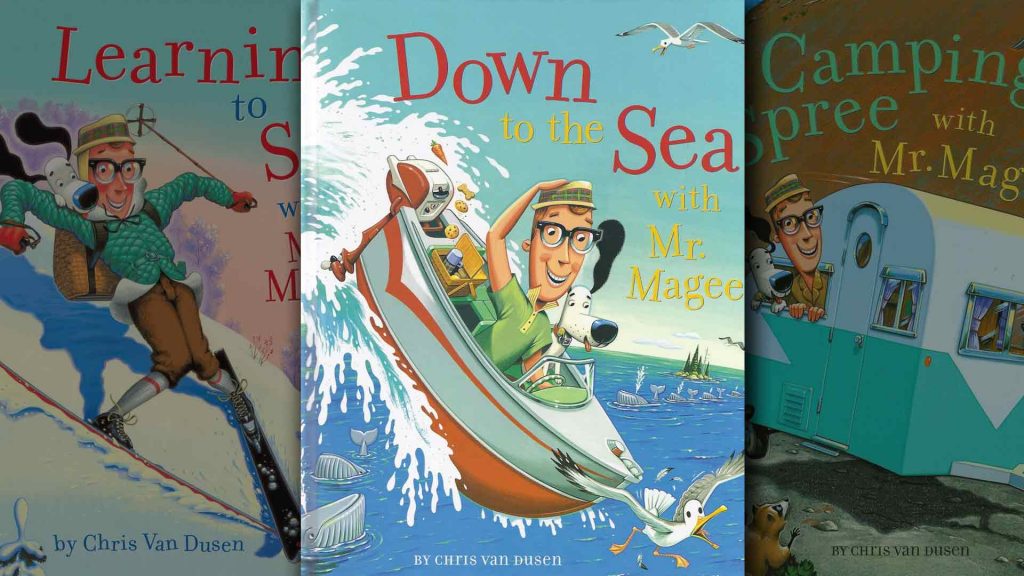
Down to the sea with Mr. Magee

by Chris Van Dusen 2006 / 36 PAGES Rating: Good/GREAT/Give Mr. Magee and his little dog Dee love camping, skiing, and sailing the sea They meet moose and birds and milkman and whales. These are certainly extraordinary tales! Preschool through Grade 1 will have such fun reading about the adventures of Mr. Magee and his little dog Dee. Down to the Sea, and the other two Mr. Magee adventures – A Camping Spree with Mr. Magee (2003) and Learning to Ski with Mr. Magee (2010) – are told entirely in rhyme, making these a fun early exposure to how poetry can sometimes be better than prose. I began this review with my best imitation of author Chris Van Dusen and now here a few "stanzas" from the man himself: MAGEE was downhearted. Just what could he do? They seemed hopelessly stuck, but little DEE knew. The secret to get the boat safely unpinned Was to rock back and forth and wait for the wind. So they rocked and they rocked for an hour or so. But the boat didn't budge 'cause the wind didn't blow. Just when they thought they'd be stuck there all night They spotted, far off, a spectacular sight. I won't let you know what the spectacular sight is - for that you'll have to check out the book youself. These are wonderful books. The one caution I'll offer is that years later, around 2024, the author decided to promote homosexuality, inserting a gay couple in a shot or two in his most recent works. But there's nothing like that here. If your kids are excited about Mr. Magee you can check out a lesson from the author, down below, about how to draw Mr. Magee's dog Dee. ...

Red heart icon with + sign.
Economics, Watch for free

It's A Wonderful Loaf: why free enterprise makes bread in abundance

In the illustrated economic poem below, the author shows how the free enterprise system – with supposedly no one in control – can deliver bread in a great variety, and more cheaply than a socialist system. A socialist system would have some "bread czar" making decisions about what sort, and how much, bread would be made, but then he'd also have to decide how much rye or wheat would have to be planted, and also what other crops would have to be curtailed to make room for the wheat crops. To keep everyone happy, from the rye lover to the white bread aficionado, to the gluten intolerant chap, the number of decisions this bread czar would have to make would be beyond the ability of any single human being – or even a government department – to manage competently. The video is fantastic, but it's missing something vital – the author, Russ Roberts, doesn't see the Christian connection. He says that the ability of the free enterprise system to deliver hot, fresh, affordable bread in an abundance of varieties each and every day is something "no one intends" and "no one has to orchestrate it. It’s the product of our actions but no single mind’s designed it." The truth is different. No human mind designed it, but the foundational principles of the free market system – what makes it work – are Christian principles given by God. Do not worship other gods – Whereas the 1st Commandment (Ex. 20:3) teaches us not to turn to other gods, Socialism is dependent on someone at the top being near-omnipotent, knowing all the right moves to make for the betterment of everyone. Don't steal – The 8th Commandment (Ex. 20:15) make clear God's intent for us to be able to own property, while Socialism takes away property rights. Don't covet – Socialism wants to know what everyone makes while the 10th Commandment (Ex. 20:17) forbids us from looking over the fence to see what our neighbor has got. This commandment frees us to develop what God has given us (Matt 25:14-30) instead of minding our neighbor's business. Other biblical texts could be highlighted and explored but the point is, the reason the free market works as well as it does is that, in these commandments and more, it better lines up with what God commands. And when we obey these commands, then His is the "invisible hand" guiding farmers, mills, bakers, and consumers to arrive at this wonderful loaf. (h/t to Albert Van der Linden)...

Red heart icon with + sign.
Humor, Satire

Ode to hurt...or why my tolerant nature can't stand your opinions

I’m hurting I am, and I want you to know, That the pain I am feeling, isn’t likely to go. I’m hurting I am, it’s your opinions you see, I just can’t accept them, I do not agree. D’you not pay attention, d’you not see the news? This post-modern world has no place for your views. They’re outdated, outmoded, outrageous no doubt, And lots, lots more words beginning with out. Reactionary, Dark Ages, Stone Age repression, And other assorted clichéd expressions. That’s what I think of your bigoted rants, Which contrast so starkly with my own tolerance. You’ve made me so angry, so hurt, even bitter, What can I do, but to go onto Twitter? Hashtag #BigotedIntolerantPhobe, Said something that hurt me, so I’m telling the globe. I’ll put it on Facebook, Instagram too, The world needs to know the pain caused by you. Pain that keeps giving and won’t find relief, For I simply can’t cope with a different belief. But being free-thinking, I’m perfectly fine, That others have thoughts that are different to mine. I must draw the line though, with views such as yours, Against which there really ought to be laws. Don’t get me wrong, I’m 100 percent, Committed to free speech and the right to dissent. But it’s Twenty-Nineteen and I can’t understand, Why opinions like yours still haven’t been banned. The law ought to treat them as Hate Crimes, it should, Then you’d have to keep them all up in your head, yes you would. And not only Hate Crimes, but Hurt Speech I say, On account of them really upsetting my day. Enough is enough, I’m really perturbed, My tolerant nature has been greatly disturbed. From now on I beg, keep your views well hid. Did I tell you they hurt me? Yes you hurt me, you did. Rob Slane is the author of A Christian and Unbeliever discuss Life, the Universe, and Everything. ...

Red heart icon with + sign.
Children’s fiction

Love That Dog: a novel

by Sharon Creech 2001/ 86 pages Rating: Good/GREAT/Give A review of a read-aloud book, to be read aloud. ***** As I started reading the very first page of this book, I thought it was dumb. I’ve never been a fan of poetry, particularly if it was the type of poetry that didn’t even rhyme. And that’s what was in this book. But I kept reading and found out, on that very first page, that the author agreed with me! The book is by Jack, a boy in elementary school, who doesn’t like poems either. Each day he writes a journal entry, for his teacher Miss Stretchberry, and there on the very first page, in his first entry, he tells her his thoughts on the poem they have just read in school. He writes: If that is a poem about the red wheelbarrow and the white chickens then any words can be a poem. You’ve just got to make short lines. It was a book of poetry, by a boy poet, who didn’t like poetry! So I kept reading, and I started learning. Jack’s teacher showed his class poems. Some did rhyme, some were by famous writers, and some weren’t very good at all. But I started learning, along with Jack, that poetry doesn’t always have to rhyme, or even have a set rhythm. Sometimes it can just be a different sort of way to express your thoughts, to lay them out, so people understand them better.  Poetry can be easier then teachers sometimes make it. And it can be powerful. And it can make you cry. I started reading this book, about a boy learning about poetry, and making poems, and expressing beautiful thoughts about his beautiful dog, and by the time I got to the end of it I realized it wasn’t dumb at all. Love that book....

Red heart icon with + sign.
Assorted

Age

Editor’s note: When Dr. Adams turned 90 this year, his colleague, Donn Arms, was reminded of a prayer Adams had written back in 1978 for a book titled, Prayers for Troubled Times. Adams was nearing 50 at the time, and the prayer is one that may inspire many middle-aged readers to speak something similar to our God. And for younger readers, it offers something to consider: what would an older you wish the younger you had done more of? **** I’m tired. _____As I grow older _____fatigue comes sooner. _____This worn and weary frame _____no longer functions _____as it once did. That I may continue to serve You _____and live the rest of my days _____to their full _____is my prayer. I know, Lord, that I must learn _____to recognize limitations, _____to choose among opportunities, _____to eliminate excess baggage. But that knowledge comes hard. _____I am not wise; _____I need to understand _____much more that I now know _____of the practical application _____of your Word _____to these matters. Forgive me Lord _____for not learning sooner, _____for wasting time _____and dissipating energy _____I now wish I had. _____I see the importance _____of these commodities _____now that I am beginning _____to run short of them. I want to serve You _____to the end, _____not in a lackluster manner, _____nor in weariness of flesh, _____but vivaciously, _____conserving and wisely using _____all my remaining strength __________for Your glory, _______________Amen. This is reprinted with permission from a February 6 post at Nouthetic.org....

Red heart icon with + sign.
Assorted

Hull humanity

“Hey, here’s your sandwich,” I called across the lunchroom to Caldwall, the kid we picked on. He was fat and unathletic, and we kept him in his place. Right in style, I threw the sandwich I had swiped from him. He reached, missed, and the waxed paper burst apart against the lunchroom window. A smear of mayonnaise streaked the glass, a flap of bologna hung over the back of the desk, a lettuce leaf and a tomato slice lay on the floor. I smiled triumphantly, the boys’ lunchroom laughed adoringly, and then we heard Mr. Leonard’s voice. He had stepped in without our noticing. “Caldwall, here is my sandwich. Enjoy it. Sietze, May I see you out in the hall?” “OH oh.” “Naughty Sietze.” “Now you’ll catch it.” I was afraid. In the hall, Mr. Leonard said quietly, “People throw food only at animals.” “Yes, Mr. Leonard,” I said. He did not need to tell me to go for Mop, cloth, and soapy water. From then on Caldwall was different for me and I was decent to him. Once or twice later I have felt as alienated as Caldwall must have then. Depressed, I can always find comfort in how efficiently a waitress pours my coffee, in how a check-out girl smiles as she makes change, in how you, dear, ladle me a bowl of cheese soup and wipe the inside of the rim so that the line of yellow-green soup will be sharp against the brown pottery, and I remember that people throw food only to animals, and I tell myself, “Sietze, you're not such a dog as you think you are.” From Sietze’s Buning’s “Style and Class,” copyright the Middleburg Press, and reprinted here with their gracious permission....