Transparent heart icon with white outline and + sign.

Life's busy, read it when you're ready!

Create a free account to save articles for later, keep track of past articles you’ve read, and receive exclusive access to all RP resources.

White magnifying glass.

Search thousands of RP articles

Equipping Christians to think, speak, and act

Open envelope icon with @ symbol

Get Articles Delivered!

Equipping Christians to think, speak, and act delivered direct to your Inbox!


News

Saturday Selections – Sept 27, 2025

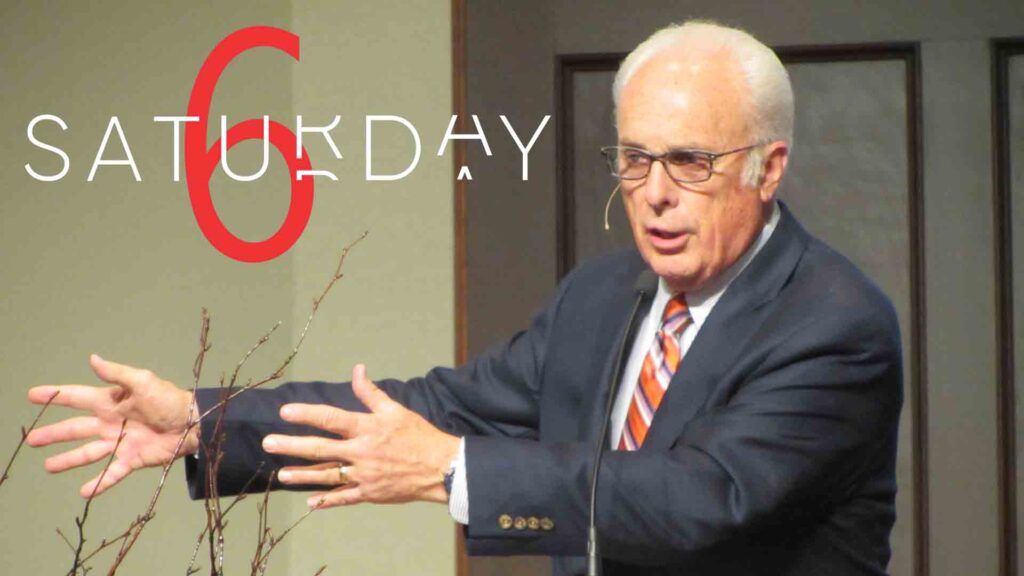
Voddie Baucham (1969-2025) spoke to Christian Nationalism shortly before his passing

This past week, Voddie Baucham passed away at the age of 56. A Reformed Baptist pastor, he was known for his powerful preaching, and his willingness to speak to cultural hot button topics.

In one of his last public events he appeared on the Founders podcast to advocate for a form of "discipleship of the nations" that he knew would make some Christians nervous. He never used the term "Christian Nationalism" – probably because the term has so many conflicting definitions – but could have, speaking to the need for government to submit to God. Some Christians (and unbelievers too) mistakenly presume that a call for such submission is a call for the government to be ruled by the Church. But no one (not even Douglas Wilson) is advocating for an ecclesiocracy.

Starting at the 24-minute mark in the video below, Baucham explained why these nervous Christian have made that mistake – it's because they've adopted the world's understanding of government as the holder of all power. They then presume that when any Christians talk about transforming culture they must be after the governmental levers of power. Not so, Baucham explains. What he was advocating for instead is akin to the public Christian witness ARPA Canada helps us offer in the political square, and the discipleship we receive via our Christian families, our Christian schools, and via the Bible studies and regular preaching in our churches. We can see the Holy Spirit already working through these means, and we should pray that His work will continue to be transformative, not just for us, but for millions and billions more in both our nation and our world!

Click the link for WORLD magazine's Baucham obituary.

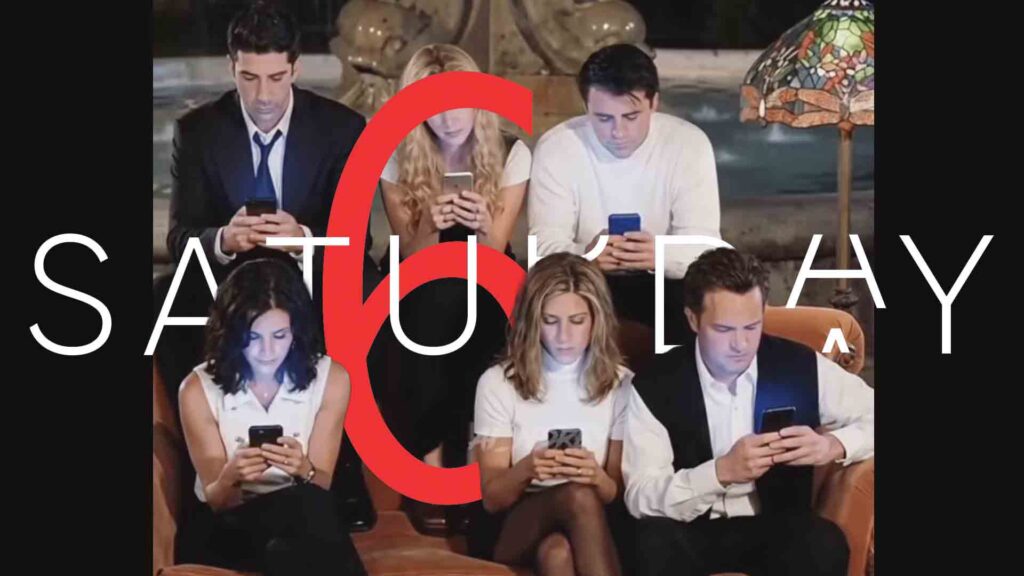
Take the tech exit: it's not too late to get your kids off their smartphones

"...nearly one-third of parents regret giving their child a smartphone or access to social media when they did. Only 1% say they wished had provided these devices sooner. Take the tech exit. Your kids may not thank you now, but they probably will later on."

Is this a Turning Point for the West?

"Sunday’s memorial service for Charlie Kirk may have been the largest evangelistic event in human history. Not every speaker at the event was in tune with the Gospel, but those who were stated it clearly and boldly...."

What the reaction of Canadian leftists to Charlie Kirk’s murder tells us

"...there is something different knowing that these journalists, professors, teachers, and others saw an incredibly graphic video of a young father getting shot in the neck and collapsing as blood gushed from the wound, and that their first reaction was glee – because he believed and said the very things that we believe and say. There is something jarring about knowing that if this happened to a Canadian pastor, or pro-life activist, or parental rights advocate, they would also rejoice..."

Jordan Peterson’s Achilles Heel

"The latest viral video of Peterson was not a video of him standing up to insanity but faltering over his faith. A live debate by YouTube channel, Jubilee, where Peterson took on more than 20 atheists was called, "1 Christian vs 20 Atheists," but only a few hours later it was retitled "Peterson vs 20 Atheists." Why? Because Peterson refused to be called a Christian by one of his interlocutors..."

Thousands of Methodist churches reject sexual license

Over 4,600 congregations worldwide have departed the United Methodist Church (UMC), most of them joining the Global Methodist Church, over the UMC embracing same-sex marriage and LGBTQ clergy, and the UMC questioning biblical authority. I didn't know anything about this, but how wonderful it is to hear what God is stirring up here.

What's curious is the Christian reporter's refusal to pick a side, sharing the story as if this is all just a matter of a difference of opinion over what kind of ice cream flavor they prefer.

Red heart icon with + sign.
News

The assassination of Charlie Kirk

A new era has been marked; Christians must tell the truth. Unsurprisingly, on September 11, 2001, I wept. I also wept, unexpectedly, on September 11, 2011. Perhaps it was delayed grief, but mostly, it was a delayed realization. Sitting that Sunday morning with my young daughters, only 6, 4, and 2 at the time, it struck me how different their world was from the one I wanted for them. The same sense struck this week, on September 10. The assassination of Charlie Kirk seems to mark a new era, a world no one wants but may very well be here. Calling the murder a “tragedy for all of us,” U.K. comedian and commentator Konstantin Kisin wrote: "I hope I’m wrong. But tonight feels like some sort of invisible line has been crossed that we didn’t even know was there. … o murder a young father simply for doing debates and mobilising young people to vote for a party that represents half of America? This is something else. "Charlie’s death is a tragedy for his wife, his children and his family. I don’t pray often. I am praying for them tonight. But I fear his murder will be a tragedy for all of us in ways we will only understand as time unfolds. "I hope I’m wrong. I fear I’m not." Kisin is not wrong about lines being crossed, though the Christian must not fear. We must, however, squarely face the sober realities of this moment. Kirk’s murder followed another this week, in Charlotte, of a young woman from Ukraine riding a public train. Iryna Zarutska was stabbed by a man who should have been in prison or at least institutionalized, and she was then left to die by people too engrossed in their screens to notice or too jaded to care. Together, these atrocities reveal realities about our culture and how it has shaped those within it that many will find unthinkable. But we had better think about it anyway. Zarutska’s killer is a terrible example of the mental and social brokenness that permeates modern life. The bystanders who did not come to her defense or to her aid are, like the social media commenters and media personalities who callously commented on Kirk’s assassination, examples of the rabid and pervasive dehumanization that infects the Western world. In a recent Breakpoint commentary, released prior to the atrocities of this week, Abdu Murray argued that this “post-truth world that elevates feelings and preferences above facts and truth has collapsed the distinction between a person’s ideas and their identity. And so, the social erasure of cancel culture has calcified into something darker.” That something darker, he argued, is “assassination culture.” He continued, “Unmoored from that objective standard for human value, we have made gods of ourselves and therefore justify eradicating any who dare to have other gods before us.” This is precisely what Os Guinness warned of in the new film Truth Rising, that the West is squandering a unique heritage. A civilization built upon the ideal of human dignity, with a mixed and troubled history of working out that ideal, has now replaced it with something else. But racialized, sexualized, and politicized conceptions of human dignity only produce victims. George Orwell is often credited as saying, “In a time of deceit, telling the truth is a revolutionary act.” Charlie Kirk was a committed truth teller, with a remarkable gift for exposing and answering deceit. And yet, as he did this, he treated the deceived with the dignity they had as image bearers of their Creator, recognizing that they too were victims of their own bad ideas. There is a cost to telling the truth. Our Lord has told us to count this cost. If Kisin is indeed correct, that cost is higher than we have imagined. This is indeed a civilizational moment. It is to this moment that we have been called as His people. As His people, we know that this moment is not some fatalistic inevitability, nor does it determine or define the Story of which we are part. In a video circulating on social media, Charlie is asked why he went on campuses to talk with and try to persuade those who disagree with him. Charlie responded, “Because when people stop talking, that’s when violence happens.” It was a prophetic moment, but Kirk also demonstrated that we need not accept that. He showed that the conversation can be had; that it must be had. He showed that the truth still wins hearts and minds, and that lies can be opposed. And that it can all be done with a big smile. It takes courage to tell the truth and to, as Paul wrote, “regard no one from a worldly point of view.” As Murray wrote, only the “ancient biblical truth about what it means to be human can heal our contemporary malady.” It can be healed. This is not wishful thinking. This is the hope Christ secured for us all. As the banner on the Turning Point USA website proclaims, Charlie Kirk has been “received into the merciful arms of our loving Savior, who suffered and died for Charlie.” For more resources to live like a Christian in this cultural moment, go to Breakpoint.org. This is reprinted with permission from the Colson Center. Picture by Gage Skidmore and used under a CC BY-SA 2.0 license....

Red heart icon with + sign.
News

Quebec to ban public prayer and advance secularism

The government of Quebec announced in August that it intends to introduce a law this fall to outlaw public prayer in the province. As Jean‑François Roberge, Quebec’s “Secularism Minister” explained in a statement on X: “The proliferation of street prayers is a serious and sensitive issue in Quebec. Last December, our government expressed its unease with this phenomenon, which is becoming increasingly common, especially in Montreal. The Premier of Quebec has given me the mandate to strengthen secularism, and I firmly intend to fulfill this mandate diligently…. This fall, we will, therefore, introduce a bill to reinforce secularism in Quebec, notably by prohibiting street prayers.” Roberge was indirectly referring to how Muslims have been gathering in prayer for months outside the Notre Dame Basilica in Montreal, leading to a growing counter-protest. “In recent months, Islamic prayers have also spilled into parks and downtown streets, with worshippers rolling out mats outside shopping districts and public offices,” explained Leslie Roberts, writing for the National Post. “What began occasionally has become a regular source of tension.” All government laws in Canada are required to align with Canada’s highest law, our constitution, which enshrines the freedoms of religion, expression, and assembly as “fundamental freedoms” in the Charter of Rights and Freedoms. As such, it is expected that Quebec will make use of Section 33 of the Charter, also known as the “notwithstanding clause,” which allows a legislature to override some of the rights in the Charter, though for only five years at a time. However, this override can be renewed indefinitely. Quebec already made use of this clause in 2019, when it banned public employees from wearing religious symbols while on duty. Roberge's announcement came on the heels of a report from a Quebec government committee tasked with providing advice on how to strengthen secularism. The committee gave 50 recommendations, including to phase out funding of private religious schools, eliminate religion as a charitable purpose, prohibit religious symbols in government advertising and create a National Day of Secularism. The definition of secularism is that the state is neutral in matters of religion. The Quebec government isn’t actually interested in neutrality. It is interested in using the power of the state to undermine religions that it disagrees with. This is simply another example of one religion (secularism) opposing other religions. As the Preamble of the Charter reveals, our rights and freedoms are based on “the supremacy of God and the rule of law.” Quebec, and Western society in general, is experiencing tension in the streets because the religions of secularism and Islam both fail to respect this. The constitution doesn’t work so well when the foundations beneath it are ignored or denied. The inevitable result is conflict, with one religion warring against another. The very concept of rights and freedoms did not, and could not, originate from a Muslim or secular worldview. Our "rights" come largely from God's prohibitions – we have a rights to property and life because God forbids theft and murder. Freedom of conscience finds a foundation in God's hatred for hypocritical worship (Amos 5:21-24) making legislated, compelled worship not just pointless but blasphemous. A biblical understanding of freedoms brings with it, however, a corresponding set of responsibilities. So, in this case, we ought to be able to pray both publicly and privately, but that also means that our praying shouldn’t cause a public disturbance that prevents others from exercising their rights and freedoms....

Red heart icon with + sign.
News

Were the 215 soil abnormalities actually graves? 37% of Canadians think we should just presume so.

Allegations of mass graves outside of Canadian residential schools was one of the top news stories in the world in 2021. Ground-penetrating radar was said to have found evidence of the remains of as many as 215 children on the grounds of the former Kamloops Indian Residential School. But these soil anomalies have not been investigated since, and no exhumation has been done, and consequently, no actual bodies have been found. And today, for many Canadians, the lack of proof is seen as irrelevant. The results from a survey released by Angus Reid this summer revealed that 63% of respondents would only accept the initial claim if further information from exhumation was made available. However, more than a third of respondents will accept these are unmarked graves, even if nothing is done to verify whether these are actually graves. Among indigenous respondents, 44 per cent accepted the claim without more evidence. The numbers who don’t need evidence increases to 56% of young women, aged 18-34. A few years ago, Christian apologist Abdu Murray argued that we have transitioned from a post-modern world to a post-truth world. “Post-Modernism says there’s no such thing as truth, but Post-Truth mindsets say, ‘Truth is important, but only in so far as it feeds and satisfies my feelings and my preferences. So truth exists, but I don’t care unless it happens to conform with what I like.’” How do we engage with a world that acknowledges that truth exists but is happy to ignore it? In his book Saving Truth: Finding Meaning & Clarity in a Post-Truth World, Abdu Murray concludes that “the answer is Jesus – the truth who is personal. He is the Saving Truth.” In other words, Christians must communicate truth, but we must also introduce our neighbours to the person of Jesus – the “way, the truth, and the life” (John 14:6). Christ alone speaks to the head and the heart....

Red heart icon with + sign.
News

Saturday Selections – Aug. 9, 2025

Four guys, one piano, doing a One Direction cover The Piano Guys, getting clever... Anything can be an idol "I have worshiped an hour of uninterrupted sleep. I have worshiped a number on the scale. I have worshiped a number in my bank account. I have worshiped a pregnancy test, a tidy to-do list, a stocked pantry, a nicer vehicle, a certain number of social media followers, my reputation, positive book reviews, the way I look or didn’t look, perfect obedience from my kids, a certain home aesthetic. And on and on the list goes. I have a heart that loves to produce idols, and unfortunately, so do you..." Keep our kids from the public school Kool-Aid "The world wants our children to buy into poisonous ways of thinking. These ways of thinking are destructive and dangerous. They’re Satanic." How voting with your feet helps "You vote every day when you go to the grocery store or the gas station, pay your rent, purchase a washing machine or buy a latte. You are voting with your feet and sending important messages about your preferences and desires to the folks who are trying to give you what you want... The private voting we do through economic exchange is possibly the most important voting that we can do: It brings about change, it helps us express our values and it serves the public good in awe-inspiring ways." AI and the threat of Mutually Assured Boredom "The great danger is that we increasingly find real, flesh-and-blood people boring. It’s already the case that many ordinary human interactions, filled with quirks, annoyances, and complexities, struggle to compete with nonstop entertainment from our devices. AI promises to exponentially expand our options for distraction, drawing us even further from genuine relationships, but this time by successfully imitating human conversation." Union leaders oppose family and life values Reformed church leaders have, over the years, had several different reasons to oppose union membership, including the Marxian ideology that underlies adversarial negotiations, and the claims that are made on employment that amount to theft – i.e., when strikers prevent others from doing the work they've abandoned, they are acting as if they (and not their employer) own the job. Then, as the article above highlights, in Canada, compulsory union dues have been used to promote "abortion, euthanasia, special rights for LGBTQ, same-sex marriage and transgenderism." Fortunately, in some jurisdictions in Canada, there is an option – on the basis of religious conscientious objection – to have your union dues redirected to an agreed-upon charity. What about the higher wages that are supposed to come with unionization? That happens. But as the video below highlights, that often comes with a cost, too. ...

Red heart icon with + sign.
News

Canada just about had a ballot as tall as you

On August 18, voters in the riding of Battle River–Crowfoot will go to the polls to elect one of the 214 candidates on the ballot. This is the largest number of candidates in Canadian history to compete for a single parliamentary seat, far surpassing the previous record of 91, which last occurred in the Carleton riding during the 2025 election. Pierre Poilievre was one of the 91 names on the 2025 Carleton riding ballot. Why are so many people running? Well, 201 of the candidates share the same official agent, Tomas Szuchewycz, and seem to be part of a protest group, called the "Longest Ballot Committee” (LBC). While the LBC may have some connections with the old satirical Rhinoceros Party (best known for its pledge to repeal the law of gravity), this time they are at least pretending to make a serious point. I say pretending because if they wanted to make a serious point, you’d think they would try to get the word out. But only 24 of their 201 candidates bothered to submit a website to Elections Canada, half of which linked only to YouTube music videos about the candidate. Another candidate's page stated, “I’m doing this out of spite” and said little else. Only a half dozen or so attempted a policy statement. And the LBC’s Bluesky page vaguely stated they wanted “decisions on election law” passed on to “an independent, non-partisan body, such as a citizens’ assembly to decide.” And how might someone get onto such a body? Appointed? If so, by who? Or elected? By what process? No ready answers could be found. The real reason for this flood of candidates can be traced to a 2017 ruling that struck down the $1,000 deposit requirement. The government defended the requirement as a way of heading off frivolous candidates, but Justice Avril Inglis rejected that argument. She pointed to the 27 Rhinoceros Party candidates who had run in the 2017 federal election and “apparently caused no harm to the integrity of the electoral process.” But 27 joke candidates spread across the country is very different from 200 running in one. The 2025 Carleton riding ballot, with 91 candidates (see picture), was one meter long. With the prospects of a two-meter long ballot this time, Elections Canada has gone with a write-in ballot. As a National Post article put it, “what would have been Canada’s longest-ever ballot has become its shortest-ever.” Conservative Party leader Pierre Poilievre, running in this riding and now up against Long Ballot Committee candidates for the second time this year, made three suggestions that would stop the LBC from running hundreds of candidates again: Raise the bar for candidate nominations by requiring 0.5% of the population in any given riding to sign, not just 100 people (that would work out to about 400 people on average) Require that each signature in support of a candidate be exclusive, with no signatory permitted to endorse more than one candidate in the same election Restrict official agents to representing only a single election candidate at any given time While the LBC’s fuss is worth reining in, we shouldn’t want a lot of restrictions on who can run – too many restrictions could become a means for already organized big parties to squelch any smaller challengers from getting off the ground (like the Reform Party back in the late 80s). The third suggestion could hurt the Christian Heritage Party, which has a serious message to share, but not a lot of staff to go around. So, what’s the smallest change that could be made and still be effective? What could help, but not squelch? All that would be needed is Poilievre’s second suggestion. The 201 LBC candidates likely used the same 100 voters’ signatures again and again, but this change would have required them to get a total of 20,100 different people to nominate their candidates from a riding in which there are only 85,000 eligible voters. Ballot photo is adapted from a photo by Harry Kusumah Hidajat, and is used under a CC BY-SA 4.0 license. Editorial cartoon at the top was created with ChatGPT...

Red heart icon with + sign.
News

Can you track all the ways you’re taxed?

Each year the Fraser Institute observes a “Tax Freedom Day” – this year it happened on June 8 – that tracks Canadians’ total tax burden when you add up all the municipal, provincial, and federal tax burdens. Across the country, the average Canadian spent up until June 8 earning money to cover their taxes, and it was only June 9 going forward that what they earned was what they could keep. So Canadians need to work nearly half the year just to pay our taxes. The average Canadian family with two or more individuals (i.e., this isn’t tracking individuals living on their own) is said to earn $158,533 a year, and pay $68,266 in taxes, or 43% of their income. This Tax Freedom Day differs from province to province, depending on their tax burden. In Manitoba, it arrives May 17 (37.5% of their income), the very earliest date in Canada, with the latest occurring in Quebec, on June 21 (47%). Do those figures strike you as higher than expected? They did to me, so I dug a bit deeper. The biggest tax we’re all hit with is income tax, but it is far from the only one. The government taxes us all sorts of niggling ways, which has the result of hiding from us the cumulative total. Just consider all the different ways you get taxed when you earn a dollar. The amounts below are based on the Fraser Institute’s purported $158,533 average family income. Payroll taxes: $16,199 – Before you even get your cheque, both you and your employer will have to contribute to the Canada Pension Plan, Employment Insurance, and some provincial Health Taxes. Income taxes: $23,100 – The federal and provincial governments each have their own income tax on the money you take home. Sales taxes: $10,091 – When you spend any of your remaining income, both the federal government, and all provinces except Alberta (and the territories) will charge you a sales tax. Capital gains tax: $6,656 – If you invest your money hoping to make it grow, you’ll be taxed on any gains you make. Property taxes: $2,310 – If you used your money to buy property, then every year you’ll be taxed on that too. Sin taxes: $2,310 – All taxes make things more expensive, but sin taxes are specifically geared to do so, to discourage consumption. They are placed on alcohol, tobacco, and cannabis. Tariffs and fuel could fall under this category too – both are meant to punish consumption – but the Fraser Institute placed them in other categories below. Fuel/vehicle/carbon taxes: $2,267 – There are additional taxes placed on gas, and while the Trudeau carbon tax is now hidden from consumers, it is still applied to industry, which will, of course, have to then pass it on to their consumers. Other miscellaneous taxes: $1,136 – These include import duties (i.e., tariffs), amusement taxes, natural resource fees, etc. and etc. So, that’s how it all adds up. And, to make matters worse, the Fraser Institute figure doesn’t even include what we should call the hidden inflation tax. Over the last 4 years, prices in Canada have risen, cumulatively around 17.5%. If our average Canadian family spent what income remained, that rise in inflation would amount to another $13,000 worth of impact from this “tax” – their $90,267 of remaining income would now have only $77,000 worth of purchasing power, compared to just four years previous. But to a fiscally profligate government that’s piled up a huge debt, inflation can be attractive. It not only deflates the value of the dollar, but deflates the value of the country’s debt too, easing the pressure on the government to curtail their spending. In other words, inflation really is a tax, raising revenue of a sort for the government, at the expense of citizens. And we’re still not done tallying yet, because our governments are planning on spending more than they even collect, which, if that additional sum had to be paid now, would require another $5,500 from our average Canadian. Instead, our federal and provincial governments are borrowing it to a cumulative projected deficit of $84.9 billion in 2025, saddling future generations with repayment, making this a tax on our children. Why so many different and even hidden taxes? Well, if everyone knew just how much we’re paying, would we stand for it? The more important point might simply be the enormous amount. God says that where our treasure is, there our hearts will be also (Matt. 6:21), and the amount of treasure we’re investing in our government – half of everything that families make – shows where Canadians’ hearts are turning. We’ve made a god out of government, and that needs to stop (Ex. 20:3). So next election, when the politicians come knocking, we need to demand less from them. And we need to explain why they don’t need nearly so much money, because, after all, God has called on other levels of government, including the Church, families, and even self-government, to fill so many of the roles that our political leaders have tried to take over....

Red heart icon with + sign.
News

Saturday Selections – Aug. 2, 2025

Josiah Queen's Dusty Bibles As a tribute to everyone who participated in RP's just-complete screen-fast challenge, Josiah Queen's newest. Lunar tales: what's going on here? Even kids are confronted with conflict between what the world says about our origins and what God says. "What’s going on here?" That was the question a perplexed fifth grader asked me during a recent church service. She’d been learning about the Moon in her public school science class — and was confused. What she heard in class didn’t align with what I had recently presented to the church...." WiFi companies can track movements in your house In George Orwell's 1984, citizens are monitored in their own homes via a "telescreen" that brings new into the house – the government-approved news – but more importantly, allows them to look through it at you. Today, we're not far off of this same 24/7 oversight. We live in a world where our online presence is being monitored by tech companies, and even the US government's NSA (as whistleblower Edward Snowden disclosed back in 2013). And, now it turns out, you can be monitored when you are offline, in your own house... as a security feature. As one person tweeted: "it blows my mind how many conspiracy theories turn out to be true." We are all late bloomers It can be downright depressing to think of all we could have done and accomplished for the glory of our Lord, if only we hadn't been so slow to respond, or so quick to turn to sin. It's depressing because there is no denying the truth of it. But God forgives. And He most certainly can be glorified too, by us late bloomers. How Jacob Arminius effectively said no one would be saved If you sinned right before you died, you would then be dying unrepentant of that sin. So... would your unrepentant sin send you to hell? Is God's grace dependent on you repenting of every sin? Christless conservatism saves no one Matt Walsh, Donald Trump, and to a more limited extent, Pierre Poilievre have made the case that guys in dresses aren't girls. But... so what? Tearing down one lie without pointing people to the Truth they can actually stand on only leaves them falling for the next lie. The world needs God, which means the world needs God's people to speak as God's people. ...

Red heart icon with + sign.
News

You now live on šxʷməθkʷəy̓əmasəm Street

“911, I need an ambulance at 232 šxʷməθkʷəy̓əmasəm Street, and quickly please!” “Sorry, I didn’t get that. Can you repeat the address?” “The first letter is an s with a hat on it, followed by an x with a w above and to the side of it… BUT CAN YOU PLEASE COME? WE NEED HELP NOW!” This exchange may sound like something from a bad dream, but it is a new reality for about 100 residents who live on what was once called Trutch Street in Vancouver. Vancouver’s city council made a unanimous decision in June to change the name to this indigenous word, which means “Musqueamview,” even though it recognizes that there are no fluent speakers of the language remaining in the world today. Trutch Street was named after Joseph Trutch, BC’s first Lieutenant Governor. Trutch is now seen by many as a colonialist oppressor, particularly because he didn’t recognize aboriginal land title. Those who work for emergency services shared their concerns that the new name will make it difficult for people to get help when they need it, but the city decided that it is sufficient to add “unofficial” signs that read “Musqueamview St.” When the English version is used in writing, city staff clarify that it should include a footnote that says “Musqueamview St is a translated name available for use while colonial systems work to accept multilingual characters.” The city also provided a QR code in a letter, which residents can scan to hear the proper pronunciation. The decision also means that those who live on the street will need to update their licences, insurance, registrations, land titles, credit cards, and more. The city of Vancouver is planning “education opportunities” and invited residents to a “community celebration” to commemorate their decision. Yes, this is another example of woke activism and critical theory at work: stepping on those whom we deem to have been oppressors while justifying today’s oppression as deserved. But it is more than that. It serves as a very clear example of how a secular system, divorced from God, is so enthusiastic about its own religion that it is willing to descend into absurdity. It isn’t enough to remove a name they don’t like, nor to replace it with a name that is politically correct today. It has to go one step further by adopting a language that we aren’t actually capable of speaking or understanding, and then asking the public to celebrate this. Like changing the pronouns “him” or “her” to “them,” the secular worldview is demanding that we ignore logic, truth, and reality, and simply conform to whatever we are told is justice today, even if that changes next year. If others don’t like this, the strong-arm of the state is used to coerce and fine transgressors and celebrate those who conform. What a contrast this is to God’s unchanging will for our lives – it is based on the truth, and our lives are blessed when we live accordingly!...

Red heart icon with + sign.
News

Government quietly disbands inquiry into residential school graves

Allegations of “mass graves” of indigenous children at residential schools in Canada was one of the top news stories of 2021, making ripples around the world. Those same allegations have inspired annual “every child matters” community events. They may also have triggered the vandalism of over 100 churches since. In response, the federal government established the National Advisory Committee on Residential Schools, Missing Children and Unmarked Burials to investigate the allegations. Three years, and 216.5 million dollars later, the committee has quietly been disbanded. The CBC’s coverage of the decision provided extensive criticism of the decision but failed to mention that not a single grave has been verified in the years since the “discoveries.” To add to this, reputable reports have been published which question the “findings” that sparked the allegations of mass graves. But due to the political narrative that has evolved, seeking the truth could have you labelled a “residential school denier.” A private member’s bill was even introduced in Parliament last year that would have made it an offence to “downplay” the harms caused by residential schools. There is no doubt that inexcusable harms were done at residential schools. Scripture speaks strongly in defence of the vulnerable. The young boys and girls at residential schools, separated from their parents, and under intense pressure to abandon their culture, definitely qualify as vulnerable. And Christians of all kinds now publicly recognize that it was wrong, even wicked, for the government to forcibly separate children from their parents. But the fact that evil was committed at these schools does not mean that the only appropriate response to new allegations can ever be an assumption of further guilt and evil at these institutions. Justice can only be achieved when built on truth. When truth is verified, trust is built, and then a foundation exists for genuine justice and reconciliation....

Red heart icon with + sign.
News

Are you still able?

A nation-wide challenge to experience life without screens ***** It used to be different, not all that long ago. Carrie is a teen who always had the kind of contagious smile that would get her friends smiling right back, no matter their mood. She used to shoot hoops with her younger sister after dinner. She enjoyed heart-to-heart chats with her mom while doing her hair. And she treasured many of the devotionals that her dad read to her by the glow of her small bedside lamp. George, a mechanic and all-around handyman, has always counted himself blessed to be married to his wife of 26 years. He was the kind of dad who’d get down on the ground to play with his kids. While three of his kids have moved out, his two youngest children still live at home. George has served as a deacon in his church, where his love of tinkering was a help not only to his own family but to some of the older couples in his ward. Liz’s life changed after losing her husband eight years ago. But she did an amazing job doting on all five of her children, her 23 grandchildren, and the seven great-grandchildren. She’d always make it out for every one of their milestones to give out hugs, and to remind her growing clan of God’s goodness and love. Then, not right away, but over the weeks and months and years, things changed. Carrie’s sister, mom, and grandparents now don’t see much of Carrie. OK, they see her, but not her eyes. Carrie is mostly head down, scrolling on her phone and messaging with people they don’t even know. Her mom has a hard time remembering when they last shared a good chat, or when she last saw her daughter’s beautiful smile. Dad’s devotionals were replaced by someone Carrie follows on Instagram who posts short reflections… which Carrie reads when she has time. George’s wife knows that her husband is still committed to their marriage. But she is having a hard time competing with the attention he gives to his various YouTube subscriptions. His ward doesn’t see him much outside of church, and he seems to spend more time watching clips about fixing cars than actually fixing them. And lately his scale seems to be out by at least 10 pounds. Instead of dropping by with a card, Grandma Liz now sends a WhatsApp message when her children and grandchildren celebrate a birthday. She has become very hesitant to head out her front door. It’s all the nightly news she’s been watching, which is making the world look like an ever-scarier place. Even when she makes a grocery trip, she stays out for as short a time as possible. Carrie, George, and Liz all go to the same church, and share this in common too: they have all slowly become dominated by their screens. None of them think it’s a real problem, but, if pressed, they will agree that they spend more time on their screens than they did a couple of years ago. But isn’t that just life today? Increased screen time may well be one of the biggest changes our world has experienced in the past half-century, with one estimate putting the global average for daily Internet usage at 6 hours and 38 minutes. The correlation between screen time and anxiety, mental health challenges, and weight gain is well-known now. What isn’t so well documented, or discussed in church, is the impact that screens are having on our pace as we “run with perseverance the race marked out for us, fixing our eyes on Jesus” (Heb 12:1-2). Putting screens in their place When Reformed Perspective did a deep dive into this topic last spring, we promoted The Tech-Wise Family by Andy Crouch. Crouch correctly shifts the focus from whether a particular type of technology can or can’t be allowed, to instead how these technologies can be put in their proper place, so that priorities like family, friends, and faith remain priorities. But how is this going for you? Screen time, like money and sex, has become a sensitive topic – okay to talk about in generalities, but don’t get personal! We’re all quick to be defensive and shut down the discussion if anyone dares raise the topic of our own usage. That’s why we challenged our readers to a 10-day screen fast in the last issue. The goal of such a fast isn’t to eradicate screens from our lives. But don’t we all see wisdom in implementing a reset? Let’s test it out, to determine just how reliant we are on our devices, and what sort of impact this dependence may be having on our relationships, including with our LORD. Last month our Assistant Editor Marty VanDriel gathered a group and gave the challenge a go, and you can read about how their screen fast went. Now we’re issuing the challenge again because some generous supporters have presented us with quite the offer. For every person that commits to, and completes, a ten-day screen fast from July 21 to 30 they will donate $100, split between two charities (Word & Deed and Reformed Perspective). They will give up to $20,000! Could you do it? Do you have what it takes to put your screens aside for 10 days? (The screen challenge allows exceptions for necessary activities, like your job and making a phone call.) It may be hard to do this by yourself, so would you consider asking some of your family, friends, and siblings in the LORD to join you? If you can get a group of 10 together, that can serve as a great accountability and encouragement. Plus, it will lead to $1,000 going to two very good causes. And if you don’t think screens are much of a challenge for you, we encourage you to ask your loved ones if they think you should give this screen fast a try. This challenge isn’t so much about saying no to screens as it is about saying yes to other priorities. That’s why we’ve put together 35 ideas for fun, productive, and meaningful activities you can challenge yourself to do during these 10 days. Enjoy some time travel Can you remember not having your phone in your pocket, or not hearing the ping of a new message on your tablet? Although we think screens are essential, we have the power to make necessary changes in our lives. A screen fast can serve as an important reminder to yourself that you don’t have to keep living the way you have. Instead of scrolling, Carrie can shoot some hoops with her sister again. George can go for a walk with his wife, and drop by the home of the young man in his ward who hasn’t been coming to church much lately. And Liz can write a card and deliver it in person to her granddaughter. Yes, you can ignore this screen fast, and hope that your family members and friends don’t bring it up either. But before you brush it aside and reach for your phone, consider for a moment what you want your legacy to be at your funeral. Which Carrie, George, and Liz do you want to be? The one before the screen addiction, or the one after? To register for the screen fast click here. Let’s do this together!...

Red heart icon with + sign.
News

Saturday Selections – July 5, 2025

On boys, and not failing to launch As singer Brian Sauvé wrote of his song Old Neptune, He's Roaring, "I wrote this... for my boys: Ari, Ira, Cyril, and Alfred. It's a call to go and run the race to win the prize, to do what Paul urged in Romans 2, to live for glory and immortality through the Lord Jesus Christ. It's for your sons, too." N.T. Wright gets it wrong on abortion and the unborn A recent public gaffe by this famous Christian intellectual highlights how few seem to understand the basic argument for the unborn's worth. Even the linked article, by two great Christian thinkers, John Stonestreet and Shane Morris, only gets it right in part. Yes, it is wrong to kill any innocent human being, but why? What makes a tiny human being of the same value as a big one? From where do we get our worth, and from where do we get this notion of equality? The secular world has no answer. But Christians know that there is one thing we all share, and in equal measure. What sets us apart from the animals, but not the unborn, is that we are all made in the very Image of God (Gen. 9:6). It's this foundational truth that N.T. Wright forgot, and that many other pro-lifers neglect as well. But it is this distinctly Christian point that is the only foundation for equality, and in raising it we highlight the antithesis – God's truth vs. the world's emptiness – to the glory of God. So ridiculous, it has to be God A husband whose wife has had to endure 98 surgeries shares how, in the midst of the craziness, they've been reassured that, "God is good. "Christ is near. "Grace is sufficient. "Even when nothing else makes sense. "Maybe especially then." An amazing, encouraging story... God's guidelines for sex aren't arbitrary This is a longer read, but it might shake how you think not only about sex, but how you think about politics, and conversations over the office cooler. Trevin Wax talks of sin as "our hearts bending inward, turning away from God." "The Latin phrase is incurvatus in se – a curving in on ourselves, where we grasp for God’s blessings but push away God himself." Does that not strike you as the popular Christian, Jordan Peterson-esque approach to public debate? We try to teach our world about how they can get some of the blessings of God by following His laws – turning away from pornography, envy, and adultery are all good for us and for our society – even as we pitch it to them completely separate of God Himself. It's what we do because we think our world isn't interested to hear what God has to say. But Trevin Wax seems to call this sin! The massive lies ChatGPT might be telling you A longer read, but this real conversation with ChatGPT takes increasingly bizarre turns. Even if you've already been regularly catching ChatGPT lying to you, this'll be the eye-opener! Would you rather be colonized by Aztecs or Christians? "The right of conquest" is the centuries-old (and longer than even that) notion that if a country conquers and manages to hold an area of land for a length of time it should then be understood as theirs. But many are rightly suspicious of this tradition, and Christians should be in particular, because this tradition runs right up against the 8th Commandment. Or, it would require the commandment be modified such that it says "Do not steal... unless you are bigger and stronger and can hold onto what you've stolen for at least so long." But if we don't like that kind of modification, we should also object to another alteration that's been proposed, though never explicitly: "Thou shall not steal what I stole." As Michael Knowles highlights in this video, we're all immigrants and "colonizers," even including the tribes that were supplanted. As Nathaniel T. Jeanson also highlights in his They Had Names: Tracing the History of North American Indigenous People, tribes fought against tribes, and one supplanted the next. In a very real sense, there are no original owners to give the land back to. Does that mean that it's okay then, to have taken land from the tribes that were here before? No. But it does recast them as, not simply victims, but also victimizers – what was done to them, their ancestors did to others to gain this same land. Let's get that into the land acknowledgements we hear so often: "Before we begin, I'd just like to acknowledge we are on the traditional hunting grounds of the --- tribe, who took these grounds from the ---- tribe, who in turn took them from other tribes, and so on, down through time immemorial...." Where does that leave us with treaty negotiations? I don't know, but I do know more honesty is better than less. If it is wrong for the Western world to have taken what they would by force of arms, then it is no less wrong when it was done by the tribes who were here before us. ...

1 2 3 4 5 6 7 8 9 10 11 12 13 14 15 16 17 18 19 20 21 22 23 24 25 26 27 28 29 30