Transparent heart icon with white outline and + sign.

Life's busy, read it when you're ready!

Create a free account to save articles for later, keep track of past articles you’ve read, and receive exclusive access to all RP resources.

White magnifying glass.

Search thousands of RP articles

Helping you think, speak, and act in Christ.

Open envelope icon with @ symbol

Get Articles Delivered!

Helping you think, speak, and act in Christ. delivered direct to your Inbox!

Parenting

The Golden Rule: the biblical response to self-pity

Sin is devastating. An eight-year-old tries to be kind to his older sister. She responds with, “That was stupid!” Michael is crushed. He tried so hard to be nice and got trashed in return. Michael is tempted to engage in self-pity.

Thankfully, Michael’s mom observed the confrontation and took quick action. After Mom addressed the poor response of his sister, she asked Michael this question: “How cool would it be if you and your sister were happy with each other?

Michael responded, “I would love that.”

“Michael, that’s wonderful! Did you know that Jesus wants you to ask him for that very thing; that you two would be happy with each other?”

“I guess, but that would never happen!”

A two-step strategy

“Michael, I get why you think that, but Jesus has two really cool things he wants you to do to make that happen.”

“Are you sure, mom?”

“Absolutely!”Mom then reads Matthew 7:7-12 with Michael:

“Ask and it will be given to you; seek and you will find; knock and the door will be opened to you. For everyone who asks receives; he who seeks finds; and to him who knocks, the door will be opened.

“Which of you, if your son asks for bread, will give him a stone? Or if he asks for a fish, will give him a snake? If you, then, though you are evil, know how to give good gifts to your children, how much more will your Father in heaven give good gifts to those who ask him! So in everything, do to others what you would have them do to you, for this sums up the Law and the Prophets.”

Mom warmly explains to Michael Christ’s two fold-strategy for bringing about a better, happier relationship with his sister. First, he has to ask God for that to happen. Since getting along well with his sister is a good thing, Michael can ask in confidence that God will honor his request.

Then Mom says, “Okay, asking God is the first step. But the second step is really important. And it can be kind of hard at first. Jesus says you are to love your sister the way you would like to be loved.”

“Really, mom?”

“Really!”

“So, you are telling me I don’t have to wait for her to be nice to me first?”

“Exactly, Michael! Jesus says this is the theme of the whole Bible; loving other people first!” Mom understands that the “Golden Rule” of Matthew 7:12 is connected to asking God to help us do the good things he has called us to do. This focus on loving others first is what should mark us as Christians. Jesus emphasizes this same truth in Matthew 22:37-40 where he teaches that all the Law and the Prophets hang upon loving God and our neighbor with our whole heart.

The “Golden Rule” was never meant to be read in isolation. These few words come at the end of the Sermon on the Mount. Jesus says they are the summary of everything the Bible teaches. The message of Matthew 7:12 is this: love others the way that you want to be loved; the way God loves you.

Instead of self-pity, love

Following Christ’s plan has huge, epic blessings. For Michael, it will be the means that the Holy Spirit uses to rescue him from the trap of self-pity. Instead of feeling devastated by his sister’s poor response, he can confidently ask God to help him love her first. This is what the “Golden Rule” is really about. This is how Michael will be free from self-pity and alive to the immense blessing and privilege of loving others first, just as Jesus does!

Live a life of sensitivity with your children. Show them the selfless love of Christ.

This article was first published in November 2018. Jay Younts is the author of “Everyday Talk: Talking freely and Naturally about God with Your Children” and “Everyday Talk about Sex & Marriage.” He blogs at ShepherdPress.com, where this article (reprinted with permission) first appeared and where you can find a complimentary article titled Self Pity: the subtle sin.

Red heart icon with + sign.
Parenting

The part about parenting I didn't find in any parenting book

I tend to be a fairly methodical person, so what does a methodical person do to prepare for parenthood? Why, read a small library of biblical child training books, of course. But after going through those books (as helpful as they were), I wanted to compare what I had read with the source of all that godly wisdom: the Bible itself. While studying Scriptural passages on child training, I encountered a principle I had not read before. Maybe there are books out there that do mention this principle and I just haven’t read them. It’s even possible that the books I read mentioned this principle, and I just somehow missed it. Whatever the case, I was amazed that I hadn’t heard it before. I’m convinced it may be one of the most important tools in one’s parenting arsenal. Tell your kids what God has done What is this hidden, or overlooked, parenting secret? Simply put: share your testimony with your children. This involves not just the story of how God brought you to faith, but also the countless instances where God delivered or strengthened or encouraged or provided for you. The first several verses of Psalm 44 give us an example of how personal testimonies can affect the lives of future generations. This psalm is actually a lament (see the second half), but it begins with declarations of unwavering trust in the Lord, based largely on the writers’ knowledge of what “our fathers have told us” (verse. 1). Stories from the “days of old” have led the sons of Korah to trust in God’s saving power and not their own strength. Notice how often, in just the first two verses, they point away from themselves and toward God (emphasis mine) …our fathers have told us The work that You did in their days, In the days of old. You with Your own hand drove out the nations; Then You planted them; You afflicted the peoples, Then You spread them abroad. A parent’s testimony is a powerful means of grace for children, because it points to tangible expressions of God’s faithfulness. Sharing is a privilege Sharing one’s testimony isn’t a burden or a chore; it is a privilege and a joy. As C. S. Lewis has pointed out, an enjoyment of something often isn’t complete until that enjoyment is shared. You know you really enjoyed a movie or a book when you tell everyone else about it. The telling itself is the consummation of your enjoyment. Consequently, the writer of Psalm 71 begs God not to let him depart until he has had the opportunity to declare God’s strength and power to the next generation: Now also when I am old and grayheaded, O God, do not forsake me, until I declare Your strength to this generation, Your power to everyone who is to come (vs. 16-18). Sharing stories of how God has worked in our lives is a great way to help our children see the manifold effects of the gospel. It helps them see how mercifully and graciously God treats us, even as we struggle with our own sins and inabilities to live up to His perfect standards. The design of this God-centered focus is so that our children may set their hope in God – not in their own ability to obey Him. As Psalm 145:4 puts it, “One generation shall praise Your works to another, and shall declare Your mighty acts.” The narrative of our stories involves innumerable instances of God’s saving and sanctifying work. This practice of sharing our testimony needn’t be turned into a legalistic pursuit. Rather, our testimony is simply the story of what God has done; instructing our children is no more a “work” than me telling my wife about my day at dinnertime. Our testimony is all about who God is, what He has done, and what He has promised to do. It is the overflow of past grace that points us all toward future grace. For our children’s benefit – as well as our own – may we remember and recount God’s faithful deeds to our children. May we vividly paint a picture of our Father’s awesome wonders in action. May our stories draw the hearts of our children toward God’s loving embrace. May we delight in His wondrous works so that we relish each and every opportunity to share them. And may our sharing be the consummation of our own delight in the Treasure of our souls: God Himself. Cap Stewart blogs about movies and the arts at CapStewart.com and his substack. This article was first published in 2017....

Red heart icon with + sign.
Parenting

The importance of risky play

“Make sure you're home by suppertime... and don't get your feet wet!” Mom called out as my brother and I hurried to our bikes. We were about 9 and 11 years old at the time. “Have you got the matches?” I asked. “Yes,” he said, patting his pocket and jumping on his hand-me-down bike. Our plan was to use the matches to light birch-bark torches so we could see properly inside the cave we wanted to explore. It was pitch black in there, and last time the battery in our old flashlight had died right away. To get to Kelly's Cave we first had to cross the multiple sets of train tracks that were two blocks from our house. But this time out, a long train of coal cars blocked the way. Thankfully they were just coming to a halt, so we waited until they stopped, then glanced up and down the tracks looking for any adults, and quickly crawled under the middle of one of the cars, dragging our bikes behind us. We knew that it took a long time for railcars to start moving after coming to a standstill, and we’d have plenty of time to scramble out if they did begin going again. Biking briskly down the service road, then veering off onto the old trail at the base of the mountain, we soon arrived at the bottom of a pile of loose rocks that had been carved out about 70 years earlier to form the cave. Before we scrambled 100 feet up the steep slope that led to the entrance, we first found a nearby birch tree and stripped off several sections of bark, then broke off some branches. Arriving at the cave’s mouth we wrapped the bark around the end of our sticks and pulled out the matches. When the bark was lit it curled tightly, allowing it to burn slowly and steadily, while giving off a wonderful aroma. Quickly, we moved to the end of the first 25-foot stretch of tunnel, where the daylight still reached. Then we turned right, keeping our heads down, looking at the ground ahead of us; soon we came to the pack rat’s nest of shredded paper and random objects we’d seen last time. I’d spotted a ball-peen hammer in the mess and really wanted it, but I was convinced that, should there be an angry and cornered rat in there too, he was liable to jump for, and bite at, my throat. So, I worked up my courage, shielded my neck with my hand, and then lunged for the hammer – thankfully this time the nest seemed empty, so I came away with a great prize which I could proudly take home! Then we continued on, shuffling along deeper into the mountain. It was very cold and damp, and the only sound was the crackle of our torches and the steady dripping of water hitting the cave floor. We were very careful not to brush the walls since we'd once seen a large clump of spiders clinging onto them. Our dad, who’d been in the cave with us before, had warned us about a water-filled pit further in, so we moved slowly and carefully, and we soon saw some logs and branches which spanned an ominous pool, which was who knew how deep? After testing the strength of this wooden span, we slowly crept across, imagining a bottomless crevice filled with icy water. A few years later I learned that it was only about two or three feet deep, but at the time we assumed it was bottomless – better to be safe than sorry! Our torches were burning down, so we pushed ahead, promising ourselves we’d turn around shortly, since we didn't want to end up stranded in the pitch dark! Soon enough, there it was – the end of the tunnel. We’d made it! Somewhat disappointed that there wasn't a treasure chest or other artifact (I was reading The Hardy Boys and The Three Investigators books at the time!), we shuffled quickly, but carefully, back the way we’d come... over the bridge, around the corner, past the nest, one more 90° turn, and then we could see daylight. We emerged just as our torches were flickering out – we’d finally made it out again! Thrilled at our conquest, we slid down the scree slope (this is why we always changed into play clothes after school), discarded our torches (making sure they were completely out so, as not to start a forest fire), and pedaled down along the trail, elated and ready for another adventure. So much to explore The author zipping around in his younger years. We knew this forested area well, having spent many hours exploring and playing in the bush, and near the tracks. Over here was where we’d spent many days chopping small trees down with a hatchet, attempting to make a log cabin. We learned that this was harder than Farley Mowat’s books made it seem, and we often came home tired, and with scrapes or bruises. Once, when we were pushing over dead trees, a top snapped off and smashed to the ground right beside us – a close call! Farther down the trail was the site of the old ski jump where you could still see some outdoor lights attached to trees. In the winter many hours were spent climbing up this hill, and sliding down on inner tubes, toboggans, and even a homemade sled. A few hundred yards off in another direction was an old dump site where we had explored and found many rusty objects, and well down the other way was a railway siding where we could clamber into boxcars and pretend we were hobos. Halfway between, under that one spruce tree, was where our dad had shot a grouse with his old .410 shotgun. His catch motivated us to try to go after grouse too, or rabbits, using our homemade bows and arrows or slingshots, but without any success (although my Boy Scout manual did explain how to snare rabbits, so that was a plan for later in the fall). During those childhood years we spent many hours roaming, playing, and trying not to get hurt or get wet feet in those forests, trails, and caves. On other days we biked around town, explored the alleys and dumpsters behind businesses, looking for treasures, and collecting cans and bottles to exchange for quarters which we quickly spent in the arcade games in the back of the seedier stores. We rubbed shoulders with the local youth in these places and even had to turn down the offer of drugs because we knew that they were bad for us. But what about… Maybe you’re wondering, “What about the risks and dangers?” Yes, we got plenty of minor injuries and had some close calls and moments of genuine fear, but these became excellent learning opportunities and helped us grow in confidence and wisdom. Also, we were very aware of the consequences of foolish actions, and knew that recklessness, and endangering ourselves, was wrong. However, there is a big difference between fun adventures and recklessness, and a kid can do some exciting and even foolish things without crossing this line. Kids learn from the direct instructions of their parents, by watching others, and from reading about or experiencing the consequences of dangerous or reckless choices. They learn quickly from their own mistakes and accidents, and will develop a strong sense of self-preservation. Thankfully, rarely do minor childhood mishaps have serious consequences (and let’s not forget that “safe” and sedentary lifestyles comes with their own health hazards!). By learning to manage the risks and cope with the results, our kids can increasingly be empowered to make good decisions, and to take care of themselves. The reality is, Mom and Dad only vaguely knew where we were when we went out on our adventures, but they trusted and prayed that we wouldn't do anything foolish, dangerous, or illegal. Besides, they were very busy working, and looking after the younger siblings, and they didn’t live in constant fear of the world or other people. They also modeled an outdoor playful lifestyle (including taking risks), and encouraged us to get outside and entertain ourselves. Over time, these factors fostered confidence and bravery in us, while still showing us that recklessness was both wrong and foolish. For example, my dad was actively involved in my late-November childhood birthday parties, taking my classmates and me on hikes, exploring and making fires, and crafting equipment like slingshots or bows and arrows, and doing all of this despite the snow and the darkness that came early in northern BC. When the climate or other factors discouraged outdoor play and adventure, we would busy ourselves with indoor forts, Meccano, electronics kits, and reading. Oh, the books we devoured by the hundreds! We were going on adventures with the Bobbsey Twins, Tom Swift, Wambu, Scout, and many others. Their exploits were recreated in our imaginations, as we pictured ourselves with them in the jungle, desert, tundra, or under the sea. Our knowledge and understanding of the world, and of people, broadened, and our worldview solidified as we incorporated these stories and experiences with the Christian perspective with which we were raised. Many lessons were also learned about safety, and taking risks, as we experienced, vicariously, the exciting exploits of the books’ characters – lessons that were often useful and realistic, thus also helping to prepare us for life in the real world. Tech takeover Screens and technology were lurking on the horizon though, already way back then in the 1980s. As the decade progressed, more and more parents would rent a VCR and videos to entertain the kids at birthday parties. It was so much easier, less messy and tiring, and sure kept the partygoers happy. Within a few years we had a Commodore 64 computer in our home, and by the time we were adolescents many hours had been spent on Test Drive (1!), Winter Olympics, and other games. Our play-based childhood was being affected by screens, and in the next decades this transition only accelerated for others in my age group. Thankfully we all had a solid grounding in the outdoors, and TV and technology were still regarded with suspicion by the older generation. However, as the years and decades have passed, the temptation to spend time on screens has only increased. There are other dangers… Three of the Penninga boys up on Hudson Bay Mountain. So, how much do these childhood experiences matter? And what’s been the cost for the children who are not allowed to explore and have adventures, and who spend way more time on screens than reading? No doubt these kids are a lot safer physically (and cleaner!), and parents probably worry less, as their children are shuffled between adult-supervised activities like after-school programs and sports, or are quietly gaming, or scrolling through social media on their phones. Does this trend towards supervision and screens have significance? According to lots of careful research it has become very clear that the cost of replacing a play-based childhood with a screens-based one has been enormous, especially on kids’ mental and emotional well-being. In his book, The Anxious Generation - How the Great Rewiring of Childhood is Causing an Epidemic of Mental Illness, Jonathan Haidt makes just that case. Its first section outlines the impact smartphones and social media have had on children and adolescents in the last 15 years. Data conclusively shows that rates of anxiety and depression have greatly increased (depression for girls rose 145% between 2010 and 2020; for boys 161%), as have suicide rates and visits to ERs for self-harm. These destructive trends occurred across many different countries around the world, and correlate directly to growing up with smartphones. Haidt’s theses are backed up by data that is both scholarly and current. While the author has evolutionary, atheist presuppositions, his book is still an excellent research-based overview of the damage that Internet-enabled devices (especially smartphones) have done to the Millennial and Gen Z generations. Thankfully, Haidt also addresses what can be done about it all. He points to play, the sort that is unsupervised and unstructured and has elements of genuine risk – the kind of play that most kids all around the world naturally engaged in prior to the recent explosion of fears and screens. According to Haidt: “Unsupervised outdoor play teaches children how to handle risks and challenges of many kinds. By building physical, psychological and social competence, it gives kids confidence that they can face new situations, which is an inoculation against anxiety... a healthy human childhood with a lot of autonomy and unsupervised play in the real world sets children's brains to operate mostly in ‘discovery’ mode with a well-developed attachment system and an ability to handle the risks of daily life. Conversely, when there is society-wide pressure on parents to adopt modern overprotective parenting, it sets children's brains to operate mostly in ‘defend’ mode with less secure attachment and reduced ability to evaluate or handle risk.” He goes on to explain how being in discovery mode means you are curious and excited about life, and eager to explore and move ahead. Those who operate in defend mode are careful and suspicious, and “tend to see new situations, people and ideas as potential threats, rather than as opportunities... being stuck in defend mode is an obstacle to learning and growth in the physically safe environments that surround most children today.” A play-based childhood, Haidt argues, encourages the positive discovery mode while a screen-based one promotes a more fragile and restrictive defend mode. Overprotective parents, trying to guard their children from risks and conflicts, actually harm their kids who need to experience thrills, fear, and conflict to learn how to manage it in the real world. Children are thrill-seekers who need adventures and risks to overcome their fears and develop resilience. How does Haidt stack up against the Bible? This rings true because it lines up with Biblical principles. For example, in Proverbs 28:1 it says, “The wicked flee when no one pursues, but the righteous are bold as a lion.” King David trusted in God to protect him, and, consequently, took on bears and giants with confidence. Meanwhile, in the list of curses for covenant disobedience God says “…those who hate you will rule over you, and you will flee even when no one is pursuing you” (Lev. 26:17b). Godly leaders need to be brave to stand up against threats and deal with challenges. For example, God tells Joshua, “Be strong and courageous. Do not be terrified: do not be discouraged, for the LORD your God will be with you wherever you go” (Joshua 1:9). In the knowledge of God’s providence, we can face life and the future without fear and can be confident that nothing will separate us from His love since nothing happens by chance (Lord’s Day 10). Since our eternal future is secure, and we can trust that God will be with us, we do not need to live in fear of catastrophe or death like the unbelievers do. Yes, bad things do happen in a fallen world, and we need to accept that sometimes, even with abundant caution and care, people will get hurt or even die in accidents. But this should not scare us or make us elevate safety to the status of an idol, thinking that somehow we can control everything. If we love the Lord and live according to His will, we can trust that He will provide and care for us, and gives us what we need to face life’s challenges and dangers with confidence. As those who live with a view to eternity, our spiritual health should be our main concern (1 Tim. 4:8). We must live in fear of God, who controls our eternal destiny, and not of man (Luke 12:4-5). Recklessness and foolish behavior is an evil on one end of the spectrum, but living in constant fear of injury or death, and thinking we can control everything also is sinful. The balanced Christian life lies somewhere in the middle. What does this sort of play look like? So, what does this beneficial play look like? It usually happens outdoors when there is free choice, and not when supervised or structured by adults. Researchers have found that play needs to be thrilling and exciting with a real risk of physical injury and an element of uncertainty (think merry-go-rounds, exploring forests, and bike jumps!). Six factors characterize this kind of play: 1. heights (climbing, trampolines, haylofts); 2. high speeds (sledding, swings, racing down hills); 3. dangerous tools (axes, saws, knives); 4. dangerous elements (waves, fire, ice); 5. rough and tumble play (wrestling, tackling, “king-of-the-hill”); and 6. disappearing (hiding, exploring and wandering, not fully knowing where you are). Roller coasters, zip lines, and other thrill rides are a good example of combinations of these things. Kids need, and seek out, these factors but too often parents, teachers, and other adults try to deter them. The adults are overly afraid of injuries, abductions, or lawsuits, and treat even minor scrapes and bruises as akin to serious harm. Many adults have an unrealistic sense of danger and are too overprotective, and they don't trust other adults to intervene, or don’t trust their kids to know their own limits. A growing culture of litigation, insurance, and well-meaning but harmful “safety police” work together to counter these important parts of childhood play. In the August 11, 2025 entry on the After Babel Substack, Haidt and his two co-authors of “What Kids Told Us About How to Get Them Off Their Phones” wrote: “Since the 1980s, parents have grown more and more afraid that unsupervised time will expose their kids to physical or emotional harm. In another recent Harris Poll, we asked parents what they thought would happen if two 10-year-olds played in a local park without adults around. Sixty percent thought the children would likely get injured. Half thought they would likely get abducted. These intuitions don’t even begin to resemble reality. According to Warwick Cairns, the author of How to Live Dangerously, kidnapping in the United States is so rare that a child would have to be outside unsupervised for, on average, 750,000 years before being snatched by a stranger. Parents know their neighborhoods best, of course, and should assess them carefully. But the tendency to overestimate risk comes with its own danger. Without real-world freedom, children don’t get the chance to develop competence, confidence, and the ability to solve everyday problems. Indeed, independence and unsupervised play are associated with positive mental-health outcomes.” Children who were raised on screens need more freedom out in the real world. Organized sports have their own dangers Unstructured and risky outdoor play is actually safer for kids, with fewer injuries per hour, than participating in adult-guided sports teams, according to play researcher Mariana Brussoni of the University of BC. Unstructured and unsupervised physical play also has more developmental benefits for the children since these kids “must make all the choices, set and enforce rules, and resolve all disputes. Brussoni is on a campaign to encourage risky outdoor play because in the long run it produces the healthiest children” (Haidt, writing in The Anxious Generation). In their paper “What is the Relationship between Risky Outdoor Play and Health in Children? A Systematic Review” published in the International Journal of Environmental Research and Public Health, Brussoni and her co-authors found that risky play had overall health benefits for children aged 3-12. “Specifically, play where children can disappear/get lost and risky play supportive environments were positively associated with physical activity and social health, and negatively associated with sedentary behaviour… There was also an indication that risky play supportive environments promoted increased play time, social interactions, creativity and resilience. These positive results reflect the importance of supporting children’s risky outdoor play opportunities as a means of promoting children’s health and active lifestyles.” As an example, despite my adventurous childhood, I only ended up in the local hospital once for an injury, and that was a broken foot I got in an indoor-soccer PE class at school! One of the main messages of these books? Put away the screens and kick your kids outdoors! A sudden shift In general, children born before 1980 were much more likely to grow up engaging in risky play and were allowed and encouraged to roam out and about, away from parents, by age 7 or so. Kids had more freedom to walk to school, play with neighbor children, get into and resolve conflicts, and generally have a more exploratory lifestyle. But, as Haidt details, in the following decades parenting became more intensive, protective, and fearful, resulting in kids who were more sheltered, coddled, and unable to roam freely until much older (age 10 or 12). Safety became paramount, as a fear of strangers, abductions, injuries, and death, skyrocketed. At the same time, technologies like computer games, DVDs, and phones made it much easier to keep kids from playing and exploring. Haidt goes on to provide other reasons why this change occurred, including more intensive parenting, more supervised and structured sports and programs for kids, and a renewed focus on academics. When it rains in the world, drips are felt in the Church As is often the case, Christian parents are swept up in these changes and can too easily accept them without thinking critically about the disadvantages. After all, isn’t it better to be safer? To provide more structured and supervised activities for the kids? To supply a tablet or phone to keep them quiet? And do we speak out when the merry-go-rounds disappear from the playground and are replaced by much safer (and more boring) equipment? Do we read books or articles that feature research about factors that affect our children? For example, a very good book that addresses many current challenges to parenting came out in 2019 entitled Gist: The Essence of Raising Life-Ready Kids. It was by child psychologist Michael W. Anderson and pediatrician, and the book was featured as a Focus on the Family Resource. This very practical manual discourages parents from always trying to protect and control everything, and it encourages them to back off and let their kids sort out way more of their own problems. In this sin-tainted world life is full of challenges, difficulties, and disappointments, and children need to learn how to face and overcome these to prepare them for managing in adulthood. Although the book is not overtly Christian, Gist is clearly grounded in Scriptural principles and displays a nice balance between truth and grace. It’s the kind of book I wish would have been available sooner, so I could have read it when my children were small! What’s to be done? The final section of Haidt’s book provides many more examples of what schools, parents, and governments can do to promote a return to a play-based childhood, and a turn away from a screen-based one. Several of these ideas are already being implemented, such as more rugged playgrounds, and banning phones in schools. It seems that the pendulum is swinging back towards a healthier balance again, from the safety paranoia, and excessive screen time, back to how it was more in previous decades. Conclusion God’s people do not need to live in fear, since we know we have a Father in heaven who watches over us and protects us. As it says in Proverbs 1:33, “whoever listens to me will dwell secure and will be at ease, without dread of disaster.” We must also heed what the Bible teaches about this topic, as it is found in the Sixth Commandment where we are told “you shall not murder.” In Lord’s Day 40 of the Heidelberg Catechism, it explains that this commandment means we are not to “injure my neighbor, personally or through another… or harm or recklessly endanger myself” and we must “protect our neighbor from harm as much as we can.” To takes risks is different than being reckless. Also, Proverbs 27:12 tells us, “The prudent sees danger and hides himself, but the simple go on and suffer for it.” We need to use or heads. Since his childhood adventures, Kelly’s Cave has been all boarded up. And let’s consider also the Fifth Commandment, where we are taught that authority needs to be obeyed, like wearing seat belts and bike helmets, and not trespassing (including on railways!). But we also need to speak out against and resist the multiplication of safety rules imposed by overly-zealous authorities and companies. As an example, the entrance to Kelly’s Cave was blocked by a thick cement wall in the late 1980’s (as were other caves around here), closing another door to adventure. Of course, many children do not live near forests, caves, or railway tracks, or attend schools that have any forest or brush land. Families are smaller and there don’t tend to be packs of kids roaming around outside together. Still, there are many things that can be done to encourage healthy play: parents need to model fun and adventurous behaviour, screens need to be avoided or severely limited, and it’s helpful to have spaces where kids can explore and which contain materials they can use. It can start small with pillow and blanket forts inside, wooden blocks and other basic items for toys, trips to nearby parks or bush areas. But then parents need to be brave and begin to pull back from constant supervision and intervention and let the children explore and figure things out for themselves. It’s also important to understand that the world is not nearly as dangerous a place as the media suggests (yet another reason to avoid too much media), and that disallowing adventurous and risky play comes with very serious negative consequences (anxious teens and young people who struggle to cope with the demands of adulthood). So set a good example by confidently getting out into the yard or neighborhood and finding adventure and fun! It takes more effort but is far better for you and makes better memories, too! Be wise and discerning but not fearful, and remember that we have a Father in heaven who watches over us and blesses us, also as we seek to do what is best for our children....

Red heart icon with + sign.
Parenting

Why it’s good for teens and kids to do chores

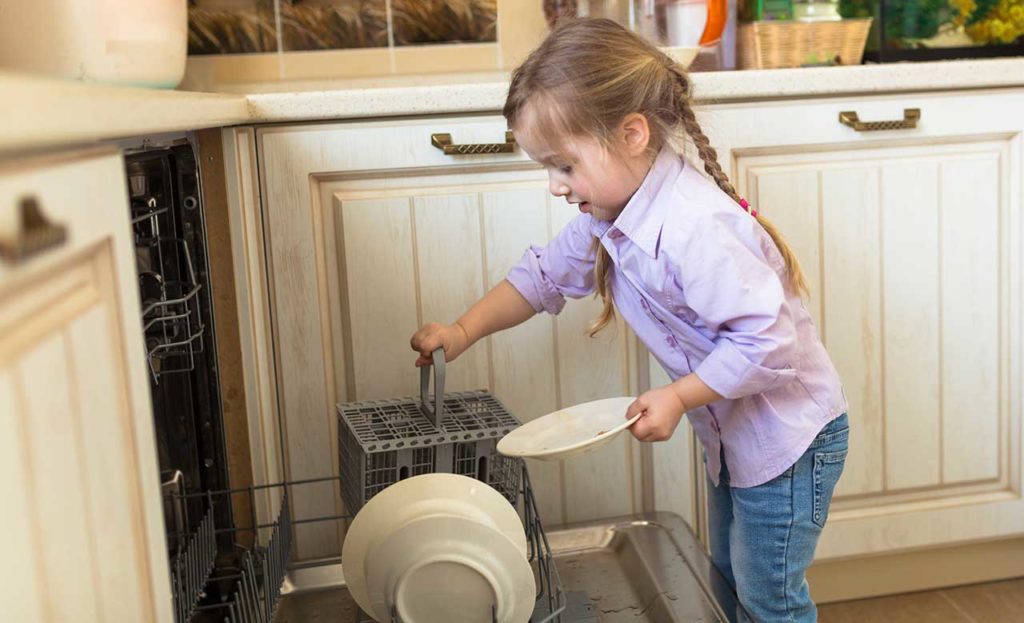
We should do chores for the same reason we go to school – preparation ***** Chances are, as a part of the family, you are asked to do various menial (or not so menial) tasks about the house or yard. “Son, will you take out the trash?” “Sweetheart, would you dust the house for me?” “Will you mow the lawn?” “Will you start the laundry?" “Would you put away the dishes?” Or, if, like myself, your mother decides to finish writing a fifty-lesson Bible study in a week flat, then you find yourself generously helping her keep the house running by taking over the role of “housewife” for a week. This should be easy. Now, to most of us, the word “chores” sends us running to our bedrooms where we promptly take solace under the bed where nobody can find us (unless that’s always the first place you go when you’re trying to avoid doing something. Too predictable, mate. Find a new spot). Your parents assign you chores from an early age because you are a part of this family, and so it is your duty to contribute to the running of the house. What if I told you that chores will inevitably prepare you for being an adult? And if you hope to be married, you need to be doing chores for along the same reasons why you do school. It’s imperative that we all learn how to read, write, and calculate arithmetic so we can be better prepared for what the world has in store for us. It would be a bummer if you were not able to read your Bible because you had never learned how to read. Same with chores. What if you had never learned how to load the dishwasher until after you moved out? Any roommates wouldn’t be impressed. Or what if you never learned how to fold clothes until you were finally forced to do it after your marriage? Your husband would come home and find his clothes smelling awful from not being washed, and all his shirts wrinkled after being stuffed carelessly into the bureau (hang them up – Braendlein men’s shirts should be hung up in the closet!). What if you had never dealt with the trash in your life, and now you watch helplessly as your roommate drags the overflowing garbage bag to the apartment hallway, where he leaves it for no other reason than “I don’t know what to do with it!” …and you don’t know either! What if you had never learned how to make a decent peanut butter and jam sandwich, and you starved? Or your kids starved? Or you starved your husband of the nutrition he so sorely needs in order to support his growing family? What if you never learned how to scramble a decent egg, and all you could do, to surprise your wife with breakfast in bed, was bring her the box of Cheerios? Doing chores and learning how to manage a household will get you off on the right foot as you prepare to leave your home and someday get married. And if you think that women should learn how to do women’s chores, like dishes and laundry, while men should learn how to do men’s chores, like mowing the lawn and taking out the trash, then think again. Both sexes should learn how to do all of the aforementioned chores, regardless of whether or not the wives will spend their married days mowing the lawn and the men folding the clothes. You might find that your husband is great at folding laundry, and that you actually love mowing the lawn. My father is terrible at folding laundry and figuring out the difference between his boxers and his son’s (what an awkward day it was when he tried on my brother’s boxers and found that he had put the wrong ones in his own drawer). But he will do it if it blesses my mother (actually, scratch that; he will willingly make his four children fold the laundry if it blesses his wife). So if your mother asks you to move over the laundry and start a load of delicates, or your father asks you to take out all the trash in the house (how many trash cans are there, seriously?), do it with joy, and know that knowing how to do chores will save you a lot of pain when you finally move out or get married. And besides, you get to do all the chores when you’re a grown-up! Pictures by Hannah Penninga....

Red heart icon with + sign.
Parenting

J.C. Ryle on teaching our children to pray

In his book "Duties for Parents," J.C. Ryle encourages parents to take seriously the admonishment in Proverbs 22:6 to “Train up a child in the way he should go" because, as the verse continued, "when he is old, he will not depart from it.” Ryle explained that this promise applied both for good and for ill – early training would help the child right into adulthood, but bad habits fostered by parental neglect would also have a lasting impact. Now, this might seem an ominous verse, knowing that we parents are far from perfect. But God is not calling us to perfection here. He is, however, making it plain that He has given us an awesome and wonderful task, to be taken on with great seriousness. In the excerpt below from his book, Ryle urges parents to train their children to pray. **** Prayer is the very life-breath of true religion. It is one of the first evidences that a man is born again. When the Lord sent Ananias to Saul, He told Ananias: “Behold, he is praying” (Acts 9:11). Saul had begun to pray, and that was proof enough. Prayer is a key to spiritual growth. When there is lots of private communion with God, your soul will grow like the grass after rain; when there is little, all will be at a standstill – you will barely keep your soul alive. Show me a growing Christian, a strong Christian, a flourishing Christian, and I will show you one that speaks regularly with his Lord. He asks much, and he has much. He tells Jesus everything, and so he always knows how to act. Prayer is the mightiest engine God has placed in our hands. It is the best weapon to use in every difficulty, and the surest remedy in every trouble. It is the cry He has promised to always be listening for, even as a loving mother listens for the voice of her child. Prayer is the simplest means that man can use to come to God. It is within the reach of all of us – the sick, the aged, the infirm, the paralytic, the blind, the poor, the unlearned – everyone can pray. You don’t have to be academic or an intellectual to pray. So long as you have a tongue to tell God about the state of your soul, you can and you ought to pray. Those words, ” You do not have because you do not ask God” (James 4:2), will condemn many on the Day of Judgment. Parents, if you love your children, do all that lies in your power to train them up to a habit of prayer. Show them how to begin. Tell them what to say. Encourage them to persevere. Remind them if they become negligent and slack about it. This, remember, is the very first step in religion that a child can take themselves. Long before he can read, you can teach him to kneel by his mother’s side, and repeat the simple words of prayer and praise which she puts in his mouth. And as the first steps in any undertaking are always the most important, so is the manner in which your children’s prayers are prayed, a point which deserves your closest attention. Few seem to understand how much depends on this. We must beware of our children saying their prayers in haste, or carelessly, or irreverently. You must be cautious too, of leaving your children to say their prayers on their own, without you in the room. We must make certain they are actually saying their prayers. Surely if there’s any habit which your own hand and eye should be involved in forming, it is the habit of prayer. If you never hear your children pray yourself, then for any negligence on their part, you are much to blame. You are little wiser than the bird described in Job 39:14-16: For she abandons her eggs to the earth And warms them in the dust, And she forgets that a foot may crush them, Or that a wild beast may trample them. She treats her young cruelly, as if they were not hers; Though her labor be in vain, she is unconcerned; Prayer is, of all habits, the one which we remember the longest. Many a grey-headed man could tell you how his mother used to make him pray in the days of his childhood. He’ll have forgotten so many other things. The church where he was first taken to worship, the minister he first heard preach, the friends he used to play with – all may have been forgotten and left no mark behind. But you will often find it is far different with his first prayers. He will often be able to tell you where he knelt, and what he was taught to say, and even how his mother looked all the while. It will come up as fresh before his mind’s eye as if it was but yesterday. Reader, if you love your children, I charge you, do not let his early years pass without training him to pray. If you train your children in anything, then train them, at the very least, to make a habit of prayer. This is a modernized excerpt from J.C. Ryle’s article (and then book) “Duties of Parents” first published in 1888. This article was first published in Reformed Perspective in December 2018....

Red heart icon with + sign.
Parenting

Raising a family to hunt

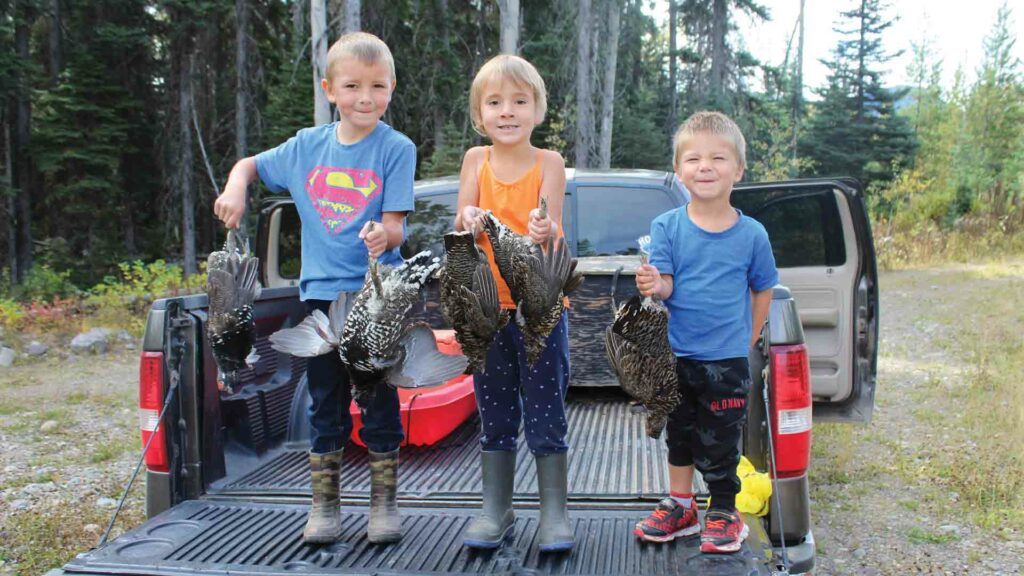
What hunting can teach a family about life, death, and keeping things in their proper place ***** I put my vehicle into four-wheel drive before attempting to climb the driveway to the home of Rick and Chelsey Ewald, perched on the side of Tyee Mountain, just outside of Smithers, BC. Their property is steep and treed, but they carved out a large enough area to build a home and establish a hobby farm. They’re raising a small herd of goats with a new batch of kids set to be born any day. With their own kids tucked in bed, the Ewalds seated me in their living room. A large shelf of flower seedlings was growing under lights next to the window, a clue to me that the plant’s owners were eagerly anticipating spring. Looking up to the vaulted ceiling, my eyes were drawn to a mounted Canadian lynx that seemed almost alive, as well as a set of moose antlers and a remarkable mountain goat mount. Since moving back to this part of the province over ten years ago, I have been struck by how many homes display antlers and animal mounts of all kinds, a reminder of the important role that hunting has played here for generations. Hunting was the reason I met with the Ewalds that evening. I knew that it was important to both Rick and Chelsey and I wanted to understand why they valued it and why they wanted to instill a similar love in their children. But the interest wasn’t just for myself. I’m aware that most Christians growing up in Canada today live in urban or suburban areas and associate guns and weapons with trouble, something to keep a healthy distance away from. In an age where we can get plenty of food at Costco or Superstore, isn’t it time that we moved beyond those old redneck ways? Living back in the north and raising my own family here, I have seen many examples of individuals and families that I greatly respect who are hunters. I have also noticed that hunting has been making a comeback in popularity, even in the cities, thanks in part to YouTube channels like MeatEater, and an increased yearning to go back to the basics. Similar to my story about living in a tiny home, my hope with this story (and hopefully more to come), is that the body of Christ seeks to understand why others choose to live as they are, even if it looks quite different than what we are used to. From an early age Although Rick hunted most of his life and even worked as a professional hunting guide for nine years, the couple agrees that Chelsey is the most committed hunter of the two. This started already as a little girl. “We grew up on moose meat. That was our staple,” shared Chelsey. “The importance of dad going out and hunting and getting a moose was huge for our family.” Chelsey said she was given many opportunities to hunt as a girl and would always jump on it. She met a lot of other hunters through her dad and her brothers. She was given a coonhound by one of these friends and invited to join them when they hunted bears and wild cats. “That’s my lynx up there,” she pointed to the beautiful cat that I noticed when I first sat down. “I cherish adventures. That’s a part of who I am. And I think that plays into it. Those are such strong memories from our childhood, that were so positive and so exciting,” she explained. “It could easily take over my life if I let it.” It was a similar story for Rick. “I started pretty much as soon as I could walk,” he shared. He and his siblings would hop in the vehicle with their dad, or go for long walks in the wilderness, on the lookout for wild game. “Starting out, we would just watch my dad and he'd be the one who would shoot the grouse. And then we got to help clean them and then eat them.” Grouse are wild birds that are a little smaller than a chicken, and tend to be the easiest animal to hunt. It is common for boys in the area to grow up with a pellet gun (a type of air rifle that doesn’t require a licence to buy or use) to hunt rabbits and grouse. Training required In BC, you have to be ten years old to hunt legally, and be accompanied by an adult. Around that age Chelsey learned how to shoot for sport. Since their family lived in town, her dad Willie Hofsink and his friend Joe Hamelink would take a bunch of kids into the bush where they would set up targets and practice for hunting season. The adults would shoot their big guns, and set up some pop cans for the kids to practice on with theirs. In addition to being old enough, in BC you also need to pass a Conservation and Outdoor Recreation Education (CORE) course, which involves rigorous study about the animals, outdoor ethics, government regulations, and the safe handling of a wide variety of firearms and ammunition. This requires an experienced teacher and usually takes a couple of weekends, followed by both a written and a practical test. Chelsey’s dad organized a CORE course for her and a bunch of other youth while they were still in elementary school, so that they wouldn’t have to take it on Sundays. I took the same course and look back on the experience with very fond memories. Although I never really became a hunter myself (besides taking my kids out to look for grouse), I believe that everyone would benefit from the education. It further instilled a deep respect for God’s creation and taught me the safe handling of a firearm, something that I would not have received training in otherwise. To be able to purchase a gun or ammunition in BC, you also need a Possession and Authorization Licence (PAL), which is similar to the CORE course but involves more hands-on training with the firearms. Each province has different requirements for obtaining a permit to hunt and use a firearm. Getting the right licences is just the start. To then hunt animals requires getting a permit for most species (called a tag). Depending on the animal, that can either be purchased for a nominal fee, or requires entry in a lottery system, to manage the number that are harvested. And even when a tag is obtained, there are a host of requirements that a hunter needs to be aware of relating to the sex, age, location, and quantity of the animal. “You have to have the wisdom and the knowledge,” explained Chelsey. “And then there’s a lifetime of experience that you have to grow into,” added Rick. That is why it is so important to find a mentor or “hunting buddy,” which can be the most challenging and rewarding part of becoming a successful hunter. Providing sustenance, fresh air, and life education Talking with Rick and Chelsey, I was reminded that there are many different reasons why someone would want to hunt, and this also leads to different choices about what kind of animal to hunt. For their family, a primary motivation is simply to feed their family. “Generally the animals that we hunt are the animals that we eat,” said Chelsey. “One moose for our family will last us for a full year” and results in a freezer full of meat. “It’s probably 80% of our yearly eating and usually five out of seven meals.” This includes moose, bear, mountain goat, and grouse, which “is basically like our chicken.” They recognize that this doesn’t save them money. Between the costs of hunting and the time it requires, they figure they probably come out even with those who buy all their meat from a store. A deeper motivation is to get their family outdoors, “enjoying creation,” explained Rick. “The different places and things we get to see, and we get to share it with our kids.” “And every time you go out it’s different,” added Chelsey. “It’s just pretty out there.” Hunting provides a reason to get their family into creation. Their children join them on the drives, taking their toy binoculars to look for animals. “The experience of going to the Babine River when the fish are spawning, and the kids seeing the grizzly bears fishing is pretty awesome,” noted Rick. Rick was away when Chelsey shot their last moose, with all her children with her. Her youngest was just four months old at the time, and she carried him on her front in a pack. Thankfully, Chelsey’s dad was with her, so he took care of cleaning the moose. Her children Milo and Cassie helped their grandpa, each holding one of the moose’s legs while he dressed and cleaned the carcass and got ready to load it up and take it home. This made quite the impact on the children. “It’s great bonding,” she reflected. “Cassie and Milo still talk about how much fun they had with Grandpa and the moose. For us, it’s definitely multigenerational for our family and we’re praying and hoping that hunting continues for our family.” It isn’t only the adults who reminisce. Even their three-year-old son Luke points excitedly down the road to where he and Grandpa go to see the grizzly bears, often recalling the experience. “He gets so excited about this one-on-one time,” commented Chelsey. The family is intentional about taking a lot of pictures to preserve these memories, posting them on a large bulletin board that spans from their floor to their ceiling. They see their outings as adventures rather than just a hunting trip. Their motivations for hunting go beyond their own family. Rick gave the example of wolf hunting. “Most hunters are pro shooting wolves because wolves have a high kill rate for moose,” he explained. There have been more and more wolves, and they don’t have any animals that prey on them. “So it's on us, if we want to help keep a balance, you do have to target the predators as well.” For Rick, Chelsey, and many others, hunting wolves is considered a wildlife management strategy. “There’s whole branches of the government that are supposed to be doing that job,” Rick explained. “And so then we try to work with that.” Wildlife management also dictates the numbers that hunters are allowed to harvest. The government then surveys hunters to see how many animals they actually harvested. Understanding life and death I asked Rick and Chelsey how they would respond to a reader who lives in a city like Toronto and finds the idea of owning a gun and killing an animal hard to understand or even repulsive. “For us it is a lifestyle choice,” acknowledged Chelsey. “You don’t have to hunt.” But she proceeded to explain why she believes it is okay for people to hunt, going back to creation and how God made humanity different from the animals. “And we were given the task to manage and use,” added Rick. When God was blessing Noah after the flood, He specifically gave the animals to mankind as their food (Gen. 9:2,3). Chelsey clarified that a biblical ethic also means that they are going to be careful not to wound an animal if at all possible. “It is part of doing a job well,” added Rick. “Guns are a tool we use. And we have to take responsibility for storing them well and using them well,” noted Rick. “You follow the rules and keep them locked up where they need to be locked up. And as well we teach our kids responsibility when they are around them.” I didn’t expect the conversation to then take a turn into something much deeper. “There are consequences,” explained Chelsey. “ understand death already…They know what life was and they know what death is from hunting.” This is something the children also learned from helping out on their hobby farm. “Their life is immersed in life and death and the full understanding of it. And I find that to be huge on our kids just to understand that it’s not something to take lightly. And it does hurt when things don’t go well.” Chelsey shared that the first time their daughter Cassie saw a shot grouse, she cradled it and was walking around with it and wouldn’t let it go. “You’re allowed to,” she told Cassie. “But we are going to eat that. But if you feel the need to snuggle it for a little while, you’re allowed to do that.” “That is a blessing of living in the country, on a farm and hunting,” added Rick. “The idea of life and death is a lot more real. In some ways, if you live in a city, there’s a lot of protective shields.” In contrast, “whether you’re hunting or just living in the country, you’re a lot more on your own. And you have to understand things a little bit more. There are less protected areas. And I think that is a blessing in some ways, but it is also in some ways more dangerous.” Buying a box of frozen hamburgers or getting an order of chicken wings doesn’t evoke the same visceral reaction in the minds of most readers as the idea of killing an animal in the wild, even though the animals are killed for our consumption in both instances. The difference is simply that a few layers of separation exist between the person buying the meat from a supermarket. To take this a step further, although it is easy for people to speak about being “environmentally conscious,” and to look down on hunters and those working in the forest industry, my experience from living in a rural community is that the hunters and forestry workers are some of the most environmentally conscious and caring people I know because there aren’t so many “protective shields” between them and nature. Eating a chicken burger and living in a wood-framed home requires that someone else is harvesting the animals and wood on your behalf. Putting hunting in its proper place As much as they care about the activity, the Ewalds have learned that for it to be a blessing, it needs to stay in its proper place, with firm boundaries to protect aspects of life that matter more. Rick learned this lesson after serving as a hunting guide for nine years. “A big part of the reason why I quit guiding was that I didn’t have a good purpose in my life…It was all about hunting, and that was it.” This came to a head when he got married to Chelsey, as he didn’t appreciate the competition between hunting and his marriage and family. He also came to see that it was even competing with his faith, as he was working seven days a week through the hunting season. Rick acknowledged that it wasn’t a healthy way to live, and he now sees that it is an issue that others struggle with too. He brought up the example of some avid fishers who fished so much that they got to the point where they had to quit it altogether. “If they would have figured out a way of regulating themselves properly, they would have enjoyed it way more and would have been able to continue.” Chelsey added that they have seen examples where some men push aside their family life during hunting season, making hunting their identity during that time. “And that’s something that neither of us want to happen.” They hold each other accountable and keep the focus on their children and family. “Taking our faith life seriously requires a certain amount of boundaries,” she added, pointing specifically to their firm rule to not hunt on Sundays. “God will provide for us one way or another, whether we get that animal or not. Trust really comes into play.” Rick proceeded to point out a very large sign on their wall with the verse from Joshua 24:15 “As for me and my house, we will serve the LORD.” “We use that as a reflection on ourselves to guide what we are going to do,” emphasized Rick. Chelsey explained that is why they made it so big and bold. “It has become a staple in our house…and really helped to focus us, especially in times where we seem to struggle.” The hunting guides knew that they too needed to be guided....

Red heart icon with + sign.
Parenting

How well are we fulfilling God’s original command?

When God created the world, he gave man a foundational command commonly known as the creational mandate: “Be fruitful and multiply and fill the earth and subdue it, and have dominion” over it (Gen. 1:28). There are five imperatives in this creational mandate, but the first three – be fruitful, multiply, and fill the earth – all have to do with reproduction. It is striking that the very first three commands given by God to His image-bearers have to do with having children. So how well are we as humanity in general, as Canadians, and as Christians fulfilling this command? Well, not very well. And, compared to an earlier version of this article, we are getting even worse at fulfilling this calling. How badly are we doing? Although Christians and demographers might have some debate on when or if the earth is “full,” it is difficult to argue that Canada is “full.” Canada has one of the lowest population densities of any country on the planet, with an average of only 4 people per square kilometer. By comparison, the Netherlands, one of the most densely populated countries (excluding islands and city-states) has a population density 130 times that of Canada, or 518 people per square kilometer. Although much of Canada’s landmass is not suitable for human habitation, Canada still has the third most arable land per person in the world, with 1.00 hectares (0.01 square kilometers) per person. That’s 17 times as much farmland per person than the Netherlands (0.06 hectares per person). Relating to the command to be fruitful and multiply, Statistics Canada tracks the fertility rate of Canadians each year. It just published its data for 2022. Although the total fertility rate – the number of children that the average woman can be expected to have in her lifetime – has been declining for decades, the birth rate hit an all-time low of 1.33 in 2022. What does this statistic mean? Well, the fertility replacement rate is 2.1, meaning that if the average woman in Canada had 2.1 children, Canada’s population would remain the same. This makes intuitive sense. Each woman would have to have two children to replace herself and her husband. Since not every child lives long enough to, or is able to, have children, the natural replacement rate needs to be just a little bit higher than two. So if the fertility rate exceeds 2.1, then Canada’s population would grow, and if fertility rates are below 2.1, the Canadian-born population will decline. The current fertility rate of 1.33 means our Canadian-born population is guaranteed to decrease in the long-term as more Canadians will die each year than will be born. This trend is not unique. The fertility rates across the G7 countries (a group of Canada’s wealthy and democratic peers) are all below the replacement rate of 2.1 according to the Statistics Canada report. Why aren’t we fulfilling this command? Fertility rates have been falling across the developed world for a number of reasons. The Institute of Marriage and Family, which joined the Christian think tank Cardus in 2016, identified three main reasons in a past report on Canada’s Shrinking Families. 1. Children aren’t a top priority First of all, a Cardus report conducted by researcher Lyman Stone entitled She’s (Not) Having a Baby reveals that having children aren’t on the top of the list of desires for women. Two of the most common reasons and strongest predictors for not desiring to have a child in the next two years was the desire to grow as a person and to focus on a career. Personal and professional growth is increasingly prioritized over familial growth. That said, women do still desire children but because of these competing desires, most women aren’t having as many children as they ideally would desire. According to the Cardus survey, almost 60% of women would ideally like to have more children, and only 7% of women would ideally like to have fewer children. While the fertility rate (the likely number of children a women will actually have) in Canada is currently at 1.33, women, when asked, express a desire to have closer to 2 children. Right now there is a “fertility gap” of women not having as many children as they would like. 2. Budgetary concerns Second, economic factors are incentivizing smaller families. Raising children is becoming increasingly expensive, with the Chartered Professional Accountants of Canada estimating that raising a child under the age of 18 costs $10,000-$15,000 in direct costs each year, plus the opportunity costs of lost wages. Given that the median after-tax income of Canadian families was $66,800 in 2020, children take up a substantial portion of a family’s budget. Women have also increasingly decided to pursue a full-time or part-time career not only to find personal fulfillment but simply to make ends meet. The desire to save money or to spend more money on leisure were also common factors cited in the Cardus study about why women were unlikely to choose to have children. These changing preferences have led many women to decide not to have children or to have a smaller number of kids than their parents or grandparents did. 3. Broken families don’t get big Third, Canadian families are becoming less stable, prompting fewer couples to decide to have children. Cardus’ Canadian Marriage Map demonstrates how, of the total number of families with children, the percentage of married couples has declined while the percentage of common-law couples and lone-parent families have increased. As of 2016, approximately one third of families with children lack a married couple at the helm. Almost half of all couples – common-law and married – do not have children. 4. Kids can be killed Finally, the prevalence of contraception and abortion has enabled Canadians to choose when to have children and how many children to have. Contraceptive pills, approved in Canada in 1960, as well other forms of contraception have become widely used. When contraception fails, many Canadians turn to abortion. Although the number of documented abortions has been declining over the past decades (87,595 abortions were reported in 2021), there is little data on the number of abortion pill prescriptions, which have become increasingly common in recent years. But if you consult Statistics Canada fertility data, the authorization to sell the contraceptive pill coincided with a dramatic decline in fertility rates in the 1960s. What are the consequences of not fulfilling this command? The major consequence of a low fertility rate is an aging and possibly declining population. Statistics Canada’s 2021 census report documents how the Baby Boomer generation (the uncommonly large age-cohort born in the decades after the Second World War) is retiring from the workforce. In 2016, the number of people over the age of 65, the age traditionally associated with retirement, exceeded the number of people under the age of 15 for the first time in Canada. Five years later, approximately one fifth of the Canadian population (19.0%) is over the age of 65 while 16.3% of the population is below the age of 15. This trend is projected to continue, as the number of retirees grows faster than the number of children, for the foreseeable future. The number of people in the labor force compared to the number of retirees is also declining, meaning that there are increasingly fewer workers paying taxes to support our retirees each year. The economic impact of an aging population is significant. In 2006, the Senate of Canada released a report on demographics forebodingly entitled The Demographic Time Bomb: Mitigating the Effects of Demographic Change in Canada, documenting how transfers to seniors and the health care costs of seniors would eat up an increasing percentage of government spending. This is a major consideration of whether federal or provincial finances are sustainable in the long-term (over the next 75 years). According to the Parliamentary Budget Officer’s 2023 Fiscal Sustainability Report, the federal government’s finances, provincial governments’ collective finances, and public pension plans are sustainable over the long-term. However, the “rising health care costs due to population ageing” are placing great strain on provincial health systems. How might we better fulfill this command? One way to reverse this demographic decline and at least fill our corner of the earth is through an increase in immigration. And that is precisely what Canada has done. Despite having a fertility rate well below the replacement rate (meaning that Canada’s population should shrink in the long-term) Canada’s population continues to grow, primarily through immigration. In 2023, Canada welcomed more immigrants and non-permanent residents than any other year in its history – over 1.1 million. While the populations of other G7 countries declined (Japan and Italy) or grew slowly (Germany, France, United States, and the United Kingdom) in the past five years, Canada’s population grew relatively quickly at over 1% per year. While immigration may help mitigate our aging demographics and help Canadians collectively fill their country, God’s command to be fruitful and multiply applies to individuals too. Even Pope Francis pointed out this issue, arguing that too many people are choosing to have pets instead of children. Changing the cultural conversation about children isn’t primarily the task of the government. Given the economic, cultural, and technological factors that are encouraging Canadians to have fewer kids, the ultimate fix isn’t a governmental policy but a renewed understanding of and appreciation for the goodness of children. Children are not primarily a financial burden, a drag on career aspirations, or an unwelcome source of work, but a joy and a heritage from the LORD (e.g. Ps. 127:3-5). Nevertheless, government policies certainly can help raise the domestic fertility rate. Cash transfers to parents such as the Canada Child Benefit and generous parental leave policies alleviate some of the economic cost of children. Reforming Canada’s laws on marriage and divorce could help support stable marriages that are conducive to having children. Restricting abortion, both surgical abortions in hospitals and clinics and abortion pills taken at home, would increase the fertility rate as well. Conclusion Canada as a country, with a fertility rate of 1.33, is not fulfilling God’s command to “be fruitful and multiply and fill the earth” well. And it’s getting worse. A growing prioritization of personal and career growth, economic factors, cultural attitudes towards marriage, contraception, and abortion are all pressuring or enabling Canadians to have fewer and fewer children. Canada’s low fertility rate is leading to a rapid aging of our society, a trend that is only partially offset by increased immigration. Although changing cultural attitudes towards children is better led by the Church rather than the government, government policies can certainly also be reformed to encourage citizens to be fruitful and multiply. This appeared in the March/April 2024 issue....

Red heart icon with + sign.
Parenting

Preparing to inherit the earth

Does slow and steady growth have Christianity primed to take over the West? **** First published in the November 2013 issue. Current events make it appear that Christianity is on a downward slide in North America, as well as all the other Western countries. But are appearances deceiving? This is the surprising conclusion of a book by University of London politics professor Eric Kaufmann in his book Shall the Religious Inherit the Earth? His answer to that question is “yes.” He's come to this conclusion despite being a liberal who doesn't like what he sees. Kaufmann has carefully studied demographic trends and thinks the coming increase in the influence of Christianity in North America (and other religions in different regions) basically amounts to a return to the Dark Ages. He wrote this book to warn fellow liberals that the sky is falling. Despite the dramatic gains for secularization over the last four or five decades, those gains are about to be lost. Kaufmann summarizes his thesis thusly: “this book argues that religious fundamentalists are on course to take over the world through demography.” Demographic direction What’s going on here? Well, to make a long story short, secular people don’t like having large families. Many don’t have any children at all. As a result, for many years, most Western countries have had below-replacement birth rates. That is, the average number of children born to each child-bearing-age woman is below 2.1, the number necessary to keep the population stable. This is the result of what demographers are calling the “second demographic transition” (SDT). (The first demographic transition occurred decades earlier when urbanization and the improvement in medical care decreased infant mortality and led to a decline in the fertility rate.) The SDT is a result of the 1960s sexual revolution and the rise of feminism, when the values of many people in the Western countries changed. Individualism became much more important and the ideal of getting married and raising children was severely diminished. As a result, the desire for many people to have a traditional family has declined dramatically. There are fewer marriages, more divorces; fewer children, more abortions – you get the picture. The bottom line is that most women are having fewer (if any) children. Relatively robust This trend is affecting conservative Christian families to a certain degree as well. The average Christian family is having fewer children than in previous generations. However – and this is a big “however” – the fertility rate of secularist women fell much further than the fertility rate of conservative Christian women. Christian women still have a relatively robust fertility rate. For example, one 2002 study placed the fertility rate of evangelical Protestant women at 2.5 compared to 1.5 for women without religion. Thus the proportion of conservative Christians in the United States relative to the secularists is growing through the natural increase of child-bearing. There is no reason to believe that this trend will stop, and the long-term consequences are enormous. According to Kaufmann, the influence of conservative Christians will increase: "After 2020, their demographic weight will begin to tip the balance in the culture wars towards the conservative side, ramping up pressure on hot-button issues such as abortion." Kaufmann refers to the population growth of conservative religious people as “demographically turbo-charged piety.” Demographic change, then and now Interestingly, there’s a precursor in history to a rise in Christian influence through demographic growth. Some scholars believe that the success of Christianity during its first two to three hundred years was partially the result of demographic factors. Christianity had a more family-centered ethos than paganism and therefore attracted a disproportionate number of female converts. Thus the Christians likely had a higher fertility rate than the pagans. Christians also cared for their sick during plagues, so they had a lower morality rate. "Higher fertility, lower mortality and a female skew in the childbearing age ranges endowed Christians with a significant demographic advantage over pagans." In addition to evangelism, this contributed to the rapid growth of Christianity in the Roman Empire before Emperor Constantine became a Christian himself. Demographic change takes time, so the results don’t become evident immediately. Nevertheless, it will ultimately have a large impact. For example, the so-called “mainline” Protestant churches which abandoned the Bible decades ago are part of the secularist trend. This contrasts sharply with the conservative Protestants who still uphold the Bible as the Word of God. Kaufmann notes the effect on demography: "Between 1960 and 2000, liberal Protestant denominations saw their share of the American religious market cut in half from 16 to 8 per cent, while conservative Protestants doubled in size from 7 to 16 per cent." Although not as pronounced as in North America, the higher fertility of conservative Protestants in two European countries is notable. According to Kaufmann, "In Europe, the roughly 100,000 Conservative Laestadian Lutherans of Finland and more than 1 million Dutch Orthodox Calvinists have both bucked secularizing trends. These high fertility endogenous growth sects are starting to make an impact: there are now more Orthodox Calvinist church attenders than those of its liberal parent, the Dutch Reformed Church, whose parishioners once outnumbered them six to one." In various regions of the world conservative religious believers have a higher fertility rate than secular-minded people. Thus Kaufmann discusses the high fertility rates of Muslims in the Arab world and parts of Europe, as well as the high fertility rate of Orthodox Jews in Israel. So the complete picture offered in his book is not all good news for Christianity. But for North America, certain regions of Europe (and hopefully places like Australia and New Zealand), conservative Christianity has the upper hand demographically. Ideas have consequences In obedience to God, Biblical Christianity strengthens the family, encourages married couples to have children, forbids abortion and frowns on divorce. This leads to high fertility and the growth of the church over time. In contrast, the modern secularist mindset emphasizes individualism: focus on yourself, not others. Having children will tie you down, especially if you are a woman, and prevent you from reaching your potential. You could be the president of a corporation or a high-flying lawyer – but only if you don’t have children. People who believe this way will not leave many descendants – they and their ideology have a barren future. It shouldn’t be surprising, then, that the proportion of conservative Christians in North America will grow relative to secularists. Ideas have consequences, and since the secularists (generally speaking) emphasize their own personal and individual ease and happiness, having children won’t be an important part of their lives. Thus they are beginning to lose the demographic race with conservative Christianity. Because of these demographic trends Kaufmann laments, “In effect, secularism must run to stand still and sprint in order to succeed. In America, as in the world, it looks destined to fail in the long term." Even more to the point, due to its emphasis on individualism at the expense of having children, “Secular liberalism lies hoist on its own petard.” Conclusion The pervasiveness of pornography, the legalization of abortion, the invention of no-fault divorce and gay marriage, and the spread of euthanasia, are just a few of the events that might make it seem as if Christianity is on the wane in the West. But the day-to-day faithfulness of conservative Christians in their families, bearing and raising children, is the tortoise that will win the race against the child-avoiding secularist hare. There’s a common saying that “demography is destiny.” That might be somewhat overstated, but the basic point is sound: significant change in the size and structure of populations determines the future of nations. With this in mind, current fertility rates give conservative Christians in North America a reason to be optimistic for the long-term future....

Red heart icon with + sign.
Parenting

Kids and alcohol: parents are more influential than they may know!

Your teen is at a party with some of the “coolest” young people he knows. He’s encouraged to have a drink (“Come on, it’s only one!”)… and then another. Peer pressure doesn’t really allow for a negative response and, reluctantly, he downs the alcoholic beverages. After several, he’s not only lost count, he’s also lost his sense of reasoning and restraint. He’s a good boy, a nice boy, but what’s he going to do now that he’s drunk? Studies done in Australia, the United States, and Canada show that many parents feel they have no control over how their son or daughter behaves in social drinking scenarios or simply do not believe their children consume alcohol. However, over 90 per cent of research supports the opposite: parents' behavior and attitudes are indeed powerful tools when it comes to teaching a teenager the do's and don'ts about drinking. A father or mother, convinced that Johnny or Jackie doesn't partake in alcohol use, may be in denial. Perhaps that’s the easiest way to deal with the issue, but it’s hardly an effective method. Another view that occasionally shows up among parents is the attitude that alcohol abuse is part of growing up: “you are only young once.” Yes, drinking alcohol is part of life, but not the abuse of it. What did Jesus do? There is nothing wrong with having a drink. Alcohol was present in the Bible and Jesus Himself drank alcohol (Luke 7:33-35) and approved of its moderate consumption. Also, studies have shown that having a glass of wine each day is a healthy practice. So alcohol itself is not the problem. It’s what you do after you’ve had that drink that counts. This is where parental support and guidance comes in. Survey after survey proves that teenagers are much better equipped to handle social drinking and peer pressure when they have been raised to respect powerful drugs such as alcohol and are introduced to it in the home environment. An introduction to alcohol in this setting delays the onset of regular usage and most often produces people who are only light drinkers. The saying, “The grass is always greener on the other side” comes to mind: if a child has access to the occasional glass of liquor at home to be enjoyed as a family, chances are he or she won’t go looking for it elsewhere. A teenager’s developing sense of responsibility is in need of molding by the loving hand of a parent to arm them for future decisions. On the other hand, research indicates that harsh parenting or harsh discipline and high levels of conflict are connected to adolescent alcohol abuse. As in so many other settings, communication is crucial. Explain your actions to one another and talk about it with love and respect. Parents influence peer pressure A report, by researchers at Columbia University and Queens College and published in Adolescent and Family Health, found that young people select friends who share their attitudes about drinking. And these attitudes have been shaped by observing their parents. Therefore, the peer group largely reinforces what young people have already learned from their parents. Parents are more influential than they may know. Learning from Europeans? David J. Hanson, Professor Emeritus of Sociology at the State University of New York has put together a website called Alcohol: Problems and Solutions. On this site one article explains that: In spite of the fact that most Europeans promote responsibility and moderation by introducing alcohol to their children within the protective and supportive environment of the home, we ignore their successful example by denying children meaningful alcohol education in the false belief that young people can't handle alcohol. Our actions lead them to drink in uncontrolled environments, such as in cars, hanging around street corners with their friends, at unsupervised parties, and similar undesirable situations. These are the worst possible environments in which to learn appropriate drinking behaviors. When our unprepared young people subsequently fail to drink appropriately, we see that as "proof" that young people shouldn't drink. In this way, our society is creating the problems it fears. In another article on the site he notes: When children are served alcohol by their parents, drinking problems are generally low. When children are prevented from drinking until an older age, drinking problems tend to be high. The evidence is overwhelming. Another pertinent piece reads: Instead of stigmatizing alcohol and trying to scare children into abstaining, we need to recognize that it is not alcohol itself but rather the misuse of alcohol that is the problem. Hanson adds: "We need to prepare our children to live in a largely drinking world." Resisting peer pressure Saying “no” under pressure isn’t easy, but it becomes easier with time and practice and is a true character builder. We can teach our children to practice refusing drinks politely. They can turn it into a joke and say something clever like “No thanks, I'm performing neurosurgery in the morning” or “It sloshes too much when I jog,” or an honest and simple “no thank you.” They’ll be happy you prepared them; if not right away, then certainly in the future. As Thomas Jefferson once said: “In matters of style, swim with the current. In matters of principle, stand like a rock.” Drinking responsibly is a sign of maturity and good judgment. The medical case It may also be worth telling your children about some of the detrimental effects caused by overuse of alcohol. It affects the brain, especially if in a growing child; it is a leading cause of many kinds of cancer, and can lead to psychological issues, not to mention injury, assault, and road accidents. Investigations published by the American Medical Association shares the following: Adolescent drinkers scored worse than non-users on vocabulary, general information, memory, memory retrieval and at least three other tests. Verbal and nonverbal information recall was most heavily affected, with a 10 per cent performance decrease in alcohol users. Significant neuropsychological deficits exist in early to middle adolescents with histories of extensive alcohol use. Adolescent drinkers perform worse in school, are more likely to fall behind and have an increased risk of social problems, depression, suicidal thoughts and violence. Alcohol affects the sleep cycle, resulting in impaired learning and memory as well as disrupted release of hormones necessary for growth and maturation Alcohol use increases risk of stroke among young drinkers Humanly speaking, reason enough to know your limits. Don’t be naive Doing research on this topic, I came across the website of Christianity Today, where I read the following: Statistics show that many Christian kids experiment with alcohol in much the same way as their non-Christian peers....Libby, a mother of preteens who was raised in a churchgoing home, recalls drinking heavily when she was in high school and college. "I’m not really sure why I did. All of the kids were doing it, even the church group," she remembers. "My parents never said anything; I don’t think they realized I was drinking." Libby says her parents didn’t discuss alcohol with her. "I wish they had. I would at least have had a value or a moral context. I look back and feel such remorse about the danger I put myself and others in by driving and drinking." Alcohol abuse is indeed present in Christian circles. We cannot turn a blind eye to it. The Bible frequently mentions how God hates drunkenness and its effects (i.e. 1 Cor. 6:10). It gives us a clear picture that abuse was present then too. In Nelson’s Where To Find It In The Bible, the topic pertaining to alcohol has over 30 referrals such as “Noah’s drunkenness,” “Festive Wine,” and “False joy.” God has given us alcohol to use, not to abuse. Being blessed with children in a Christian setting is no guarantee for a positive outcome: we are human and make mistakes, and so will our children. However, our struggle to live as Christians should set us apart from those who have turned their backs on faith. Let’s encourage one another to limit our alcohol intake. The future is so much brighter being sober! This article first appeared in the June 2016 issue under the title "Alcohol and your kids."...

Red heart icon with + sign.
Parenting

Children's games that mom & dad can play without going batty

I grew up with board games of all sorts, playing 5-6 hour "train games" with my brother and his friends, or Settlers of Catan back when it was only available in German. So when my wife and I were blessed with children I was already looking forward to playing games with them. But if my kids and I were going to play games, I wanted to be able to actually play them. I was on the hunt for games which would involve some skill, and yet allow for a bit of competition between a dad and his preschool daughters. It wasn't like I was going to try my hardest, but I also didn't want to just be pretending to do my turn. I wanted games where I could try, at least a little, or perhaps level the playing field by attempting tougher moves than my daughters. I wanted to play too. I soon found out that was a tall order. Most children's games are entirely chance, or either mind-numbingly simple, or even more mind-numbingly repetitive. But after some searching I was able to find five games that proved to be a challenge for both dad and daughters. ANIMAL UPON ANIMAL by HABA 10-20 minutes to play 2-4 players Ages 5 and up This is a stacking game, with the wooden pieces all shaped liked various animals. The variety is interesting: it has penguins, snakes, sheep, and monkeys – not animals that normally hang out – and at the bottom of the pile is a big long alligator that everybody piles on. Players start with seven pieces and take turns adding one or two animals to the stack, trying to make sure not to knock any down. The first one to get rid of all their animals wins. Of course the little beasties are going to come tumbling down, so one nice feature of the game – especially for youngsters whose fingers aren’t yet so nimble – is that if you do end up starting an animal avalanche you only have to put a maximum of two of them in your own pile. So no player is going to fall too far behind. Our oldest daughter really enjoyed this, but while the game says it is for 4 to 99, our four-year-old found it just a bit too hard and frustrating yet. However, I'm thinking that by the time she hits five this will be a real hit. Animal upon Animal is a good one for the whole family. COOCOO THE ROCKING CLOWN by Blue Orange 5-10 minutes to play 2-5 players Ages 4 and up This is a balancing game, with players taking turns adding a “ball” (actually a wooden cylinder) to one side or the other of CooCoo’s outstretched arms. Put too many on one side and he’ll tip over! That’s all there is to it – simple enough for 4 years olds to play, but there’s still enough here to keep adults challenged too. I can play this with my kids and try my best; I just leave the easy spots for them and challenge myself by going for the harder ones. Though it isn’t in the rules, it works both as a competitive game (placing your ball so it will be hard for the next person to find a good spot) and as a collaborative effort (How many balls can we work together to get on CooCoo?). All the pieces are wood, which is wonderful. The only downside to this solid construction is that CooCoo himself is heavy enough that, if he manages to fall off the table, he may well chip (our CooCoo has a few bits broken off from the tips of his fingers). So don’t place him near the edge of the table! This is great fun in half hour doses, and mom and dad may even find themselves playing it when the kids are in bed. QWIRKLE by Mindware 30-45 minutes to play 2-4 players Ages 6 and up Qwirkle is a great strategic game, which takes less than a minute to explain. It comes with 108 solid wooden tiles, coming in six different shapes, in six different colors. Points are scored by laying out a line of tiles that match each other either by color or by shape. So, for example, I could lay out a line of three that was made up of (see the left side of the back of the box picture): an orange sun, an orange star, and an orange diamond. That would get me three points. Next turn someone could expand off of my orange diamond by laying a yellow, green and red diamond beside it. Simple, right? True, but this is also an intriguing enough game for MENSA to endorse too. I’ve tried this with my four-year-old, and while she enjoyed it, I had to help her every turn – I was essentially playing against myself. Six seems the lowest age for a child to be able to play on her own. It says it’s for groups of two to four but we’ve done it with as many as six successfully. Everyone we’ve played this with seemed to enjoy it. That’s probably why it has sold millions, spawned several spin-offs and even has its own app for Apple products. SPOT IT JR.! by Blue Orange 5 minutes to play 2-6 players Ages 4 and up On a turn the dealer will lay down two of the round cards and then players race to spot and call out the name of the one animal that is shown on both cards. Every card has pictures of six different animals, shown in various sizes, and somehow they’ve managed to arrange it so that whenever you flip two cards over there will always be one, and only one, pairing. The first to name it gets to keep the set, and the person with the most sets at the end wins. This is a simplified version of the adult Spot it!, with the only difference being that the adult game has more items per card. I found I did sometimes have to go a bit easy on my kids – I couldn’t try my hardest – but already my six year old is hard to beat. It says it is for 2-6 players, but I’ll add that with my younger daughter this is a fun game only if it’s just me and her. In the larger group she just can’t compete and it’s no fun. I appreciate how fast it is – five minutes or less – which means there’s always time for at least one round! GOBBLET GOBBLERS & GOBBLET by Blue Orange 2-5 minutes to play 2 player AGES 5 AND UP Our oldest, on account of being the oldest, wins most games our girls play. She’s a fairly gracious winner, but I wasn’t so sure she was a gracious loser. To give her some practice I picked up Gobblet Gobblers, a quick game that takes some skill that I could play with her. That way she would get lots of practice at losing. Or at least that was the plan. This is tic-tac-toe with the added feature that some pieces can eat others. Each player gets three big gobblers, three medium sized ones, and three small gobblers. The big ones can stack on top of (or "eat") the medium and small gobblers, while the medium gobblers can eat only the smaller ones. And the smallest gobblers are stuck at the bottom of the food chain: they can’t eat anyone. It’s a very fun and very short game: it takes just a couple minutes to play. That means in just ten minutes of competing against her dad my daughter got a chance to lose – and practice doing it the right way – a half dozen times. It is a children’s game, but not a childish game – parents don’t have to turn their brains off to enjoy playing it. In fact I’ve played this with my wife. Some of my nephews and nieces, ranging in age from 5 to over 20 have all found the game quite addictive too. It’s about $25, with solid wood pieces that will stand up to good use. I should add that my 6-year-old happened upon a winning strategy that, if she starts with it, will win every time! It took her dear old dad quite a while to figure out why she had started winning every time, so I also got some good practice at losing graciously. (This was not going quite as planned!) So, we later upgraded from the 3-by-3 Gobblet Gobblers board to the adult version, Gobblet, which features a 4-by-4 board, and 12 pieces per player instead of 9. And it seems to have no guaranteed way to win. Both games are being put to regular use in our home even now more than a year after we bought. All these games are readily available through Amazon or other online stores. This article first appeared in the May 2016 issue....

Red heart icon with + sign.
Parenting

The high cost of fatherhood: being a blessing to your children is hard work

Sociologists and politicians on the right of the political spectrum often tell us that one of the biggest problems facing society is the lack of fathers. Very often they will present the problem merely in terms of sheer numbers and statistics: “The number of households where there is no father present has risen from X to Y in 40 years.” “The number of teens with their parents still married is now just X, compared to Y just 30 years ago.” “Children who grow up in homes with a mom and dad are X times more likely to get better grades than those children who grow up in homes where this is not the case.” These sorts of things are perfectly true and valid. It’s perfectly true that there has been a massive increase in fatherlessness and that this has had devastating consequences for children, families, and society as a whole. It’s perfectly true that the explosion in the divorce rate over the last half century has sown a vast number of problems which are perhaps only just coming to fruition. Not simply a matter of more, but better However, there is a danger with this kind of statistical approach that can lead us to believe that the problem is simply one of a lack of fathers. Or to put it another way, we can come to see the problem of fatherlessness as simply a quantitative problem – lack of fathers – and then tend to see the solutions in the same terms – more fathers needed. Yet much as the quantitative side of the fatherlessness problem is true, it is not the be-all-and-end-all of the issue and in fact it only really scratches the surface of the fatherhood problem. In addition to the quantitative issue of fatherhood, there is also a qualitative issue that often seems to pass conservative analysts by. Of course a father is better than no father (unless of course the father in question is actively abusing his children, in which case the child will be better off in a home where he is not present), but there is more to it than this and we ought not to suppose that fatherlessness, per se, is the only problem that needs solving. Rather, there is also a much deeper issue of what fatherhood actually is. Here’s another way of looking at it. You will no doubt have heard politicians and employers bemoan the fact that there is a skills gap in the workforce. Often, it will be in areas such as engineering, and they will claim that we need X amount of engineers to fix the engineering skills gap. No doubt we do need more engineers, but the question that rarely gets asked is “which type of engineers do we need?” In other words, although there may be a shortage of engineers in the workforce, if we were to train up masses of civil engineers in a region, only to find that the real needs of that regional economy are actually for chemical engineers, we wouldn’t have solved the problem. A similar principle is true in the realm of fatherhood. The problem isn’t just one of a lack of fathers in homes – crucial as this is – rather, it is also about the type of fathers we have. I think it almost certainly the case that one of the many reasons we now have an epidemic of fatherlessness is that back in the day, when fatherlessness was not the problem it now is, many fathers failed to grasp what fatherhood should really look like. Certainly most men grasped that being a father meant providing for their family and protecting their family – which is well and good – but unfortunately many men didn’t go beyond a superficial interpretation of what this means. Failing fathers and feminism While children are the obvious victims of fatherlessness the damage isn’t limited to them. Their children’s mothers, and women in general, are also hurt when men won’t take up their role as family head. Now, I have no desire whatsoever to defend feminism. It is an unbiblical ideology, “liberating” men from their responsibilities as the heads of their families. Yet it must be recognized that its success did not appear out of a vacuum. It came from somewhere. Where? Many answers might be given, and the role of Government and Big Business – with their promises of a better, more fulfilling life for women via career success – are certainly well worth a study or two in themselves. But behind all this, feminist ideology is at heart basically parasitical, feeding on the discontent of women. Where does this discontent stem from? Unfortunately, much of it grew out of the failure of many – perhaps even most – men to fulfill their roles as husbands and fathers, above and beyond the basics of providing and protecting. As a general rule – and I do emphasize the word general – a woman who has a self-sacrificial husband who loves, devotes, and really gives himself to their children, is not going to be discontented enough with her lot to want to embrace an ideology that sees marriage and motherhood as a curse. Yes, there might be exceptions, but they will be rare. As I say, none of this is to defend feminism one iota, but it is simply to recognize that it has its origins in something, and that something is to a large extent due to the failure of men. Don’t look to the government All this is to say that simply fixing the numbers – upping the number of fathers – if that were possible, won’t work… although of course it would be way better than the train wreck we have now. Nor is there any no point in looking to government solutions to fix fatherlessness either. The State is both parasite and host in all this, feeding off the discontent of women to grow fatter and fatter. One way the State has done this is by embracing egalitarianism, and aggressively promoting it everywhere. So they talk about a glass ceiling in the workplace. They continually pump out statistics on men getting paid more than women, without ever being honest enough to bring the word "baby" into the conversation. On a more general level, they have legislated for no-fault divorce, the very existence of which is bound to lead to people allowing their discontent to drive them to divorce, rather than seeking to address it. All these things have helped to create a situation where women are no longer content with raising their own children. They want another life. And when this causes them difficulties or problems, who comes riding in on the white stallion again? Why the State, with it's promises of free childcare. I should add that I am in no way blaming the State for everything. The other big culprits are Big Business, Media and Advertising. But it is the State we turn to for solutions, and we need to understand why there will be none coming from that direction. They have no motivation – they sow discontentment among women, and then reap the reward of more taxes and more control of our day-to-day lives. The high cost So State is not the solution. The real answer is to be found on the micro level and it involves every father out there striving every day to become a better father. It involves every father out there not contenting himself with being merely provider and protector on some superficial level, but rather having a deep desire to bless his children through his words, his character, and his way of living each and every day. It involves every father out there striving to understand what God – the Father – is like and through His grace striving to reflect this towards his children. To extend the last point, Doug Wilson has brilliantly argued that all fathers are images or reflections of God the Father to their children. Each and every father is constantly speaking to his children through his words, character and behavior about what fathers are like, and thus are constantly teaching their children about the Father all the time. So, in the way he acts, a father will either be speaking the truth or telling a lie to his children about the Father. That’s a challenging mirror for those of us who are fathers to look into. Of course we are not going to see perfection, but are we telling the truth about God the Father in our life towards our children, or are we telling a lie? Are we telling the truth about the Father by reflecting His generous, benevolent, loving, forgiving, just, merciful, gracious nature? Or are we teaching our children a lie about the Father through our harshness, our indifference, our aloofness, our coldness or our absence? We could put it this way: True Fatherhood is costly. The cost of God’s mercy and love being shown to His children was the death of His only begotten Son at Calvary. If you are a father, how much does fatherhood cost you? Generosity, benevolence, love, forgiveness, mercy and grace are far costlier than harshness, indifference, aloofness, coldness or absence. They require daily prayer and struggle against sin. They require humbling ourselves to say sorry to our children when we’ve wronged them. They require listening patiently to them and taking pleasure in what for us may seem trivial, but what for them are really important. And a whole lot more. I don’t know about the fathers who are reading this, but I struggle with these things. They are not easy requirements for a sinful and selfish human being. Yet they are part of a struggle that all fathers should delight to be in the midst of, since victory in this struggle means blessing to your children. And if enough fathers engage in the struggle, ultimately it will bring blessing to our society too. Paul on engaged fathers The Apostle Paul has the uncanny ability to pack more into one sentence than most of us can pack into several thousand words. How does he instruct fathers to behave towards their children? Fathers, do not provoke your children to anger, but bring them up in the discipline and instruction of the Lord (Ephesians 6:4). Is that it Paul? Is that all you have to say to fathers? Don’t make our kids angry and bring them up in God’s ways? Not really. Paul’s one-liners are like the opening of a treasure cave and we need to dig deep if we are to get to the heart of his teaching and mine the gold. As he often does, Paul begins with a negative, moves it to a neutral, and then takes the whole thing over to a positive. An example of this is Ephesians 4:28 where he says this: Let the thief no longer steal, but rather let him labor, doing honest work with his own hands, so that he may have something to share with anyone in need. Imagine a dial with three markings. On the left hand side is stealing. In the middle is not stealing. And over on the right hand side is laboring to give. Moralistic Christianity only sees the need to turn the dial from the left to the middle. “Don’t do this,” and “Don’t do that.” As if the absence of stealing is all that is required. But Paul says no, that’s not all that’s required. God doesn’t just want “non-stealers”; He wants cheerful givers. Paul does the same with the father passage. The notch on the left is marked Provoking, Exasperating, Frustrating, Angering your children. And there’s a whole range of different ways that this can be done. Paul says to turn the dial. Where to? To the “no longer provoking, exasperating and angering my children” spot in the middle? No, he says, dial it all the way to the right hand side. So just as the antidote to stealing is not “not-stealing” but rather giving, the antidote to provoking our children is not “not provoking our children,” but rather nurturing and admonishing them (some versions have this as training/discipling and instruction/correction, but the sense is roughly the same). Berating vs. admonishing What might sound odd here is that having turned the dial from the negative notch – provoking to wrath – to the positive notch, we find Paul speaking of admonition (or correction). But isn’t admonishing (or correcting) a negative action? Of course it can be, and I’m sure we can all think of examples of ways fathers can rebuke their children in a wholly negative manner (if you’re anything like me, you will have done this yourself). And if such a way of rebuking becomes the norm, then it can clearly lead to exactly what Paul tells us to avoid – exasperating and provoking our children to wrath. So how can admonition or correction be positive? It’s surely a question of why we do it and how we do it. If our whole wholehearted desire is to see our children corrected and restored, and if we deliver the admonition or correction in a way that reflects that, then it is an undoubtedly positive thing and our children will generally respond positively to it. What does nurturing look like? What of nurturing? That has a more positive ring to it than admonition, but what does it mean? Perhaps an illustration might help. At a home education co-op recently, some of my children and their friends did an experiment where they put six different seeds into six different jars, subjecting each seed to different conditions. The first was given air, water, soil, light and warmth, whilst the others had one of these elements missing. Some didn’t grow at all. Others grew a little, but very weak and stunted. No prizes for guessing which one grew properly! Just as the nurturing of plants needs all the elements in order to grow properly, so too do our children. And just as the seed that is deprived of one or more of the elements will either not grow at all, or perhaps produce stunted growth, so is the case with our children. Although I don’t want to labor the analogy too much, there is a fairly close correspondence to some of the elements that are needed for the seed to grow, and that which we need to be nurturing our children with. For instance, it is possible to give them the light of God’s word, both in the home and at church, and think that this will suffice. But if the environment at home or in the church is frigid, or if we so stifle their characters, gifts and creativity that they feel suffocated, they may well come to despise the teaching. There are countless “testimonies” out there of people who have gone through that. Nurturing is about making sure our children have all the elements they need to so that they thrive and grow up into men and women who really love God and who have a genuinely loving, servant spirit. So we need to aim not just to teach them from God’s Word, but to do so in an environment that is warm and wholesome. We need to produce a home where Christ is honored, both in teaching and example, but we need to do so making sure that we do not stifle our children or place heavy burdens on them. They need air to thrive, and I’ve seen a good many people reject the faith of their parents chiefly because their parents tried to squeeze them into a particular mold of what they thought Christians ought to look like. Fathers, can I urge you to strive to get closer to your children? Cuddle them more (especially girls). They need to feel wanted and secure, even the ones that don’t communicate this very well. Talk to them more. Be interested in them and their lives. Speak kindly to them and well of them. Get rid of any hindrances in your life which might be a stumbling block for them, or which might breed resentment and create a distance between you and your children. Strive to teach them from God’s Word, both by words and example. Seek their forgiveness, not just God’s if you have wronged them, or shouted at them, or failed them. Make them know that you would give your life for them. Fill your home with love and with grace. When we fail… Having said that, the wind seems to be taken out of my sails somewhat. Thinking of what nurture and admonition ought to look like is one thing, but if your house is anything like mine, the reality is often a far cry. Occasionally I might approximate to some of these things, but there are too many times of miserable failure to recall. What then? The things I have listed above are hard things which require self-sacrifice, determination and above all the Spirit of God. We are bound to mess up; bound to fail. But this should make us press on, not give up. Christianity is not a religion of beating ourselves up over such failures. Rather, it is a religion which says get down on your knees, seek God’s free and full forgiveness through Jesus, and then ask for his Spirit to enable you to be a better father to your children. Fatherhood is the most important social issue of our day, and the lack of good fathers is behind so much of what has gone wrong in our society. So if you don’t already, will you join me in making it a regular prayer to pray for fathers? Pray that every child in the land would know their father throughout their childhood. Pray for every child to know the love and the warmth of a good father. Pray for fathers in your church to be enabled to lead their families, and to “nurture and admonish their children in the Lord” with love and grace. Pray for good fathers to become better fathers. Pray for absent or poor fathers to repent and be given God’s grace to succeed where they have previously failed. And above all pray that God would reform our churches, our communities and our society by turning the hearts of the fathers to the children and the hearts of the children to the fathers. Rob Slane is the author of A Christian and Unbeliever discuss Life, the Universe, and Everything....

Red heart icon with + sign.
Parenting

Chores are good for our kids, and the earlier the better

Something parents have long suspected but few children have believed has been verified by research: chores are good for kids. The research that backs this up isn’t new. According to a Wall Street Journal article by Jennifer Breheny Wallace, these findings came in 2002 when Dr. Marty Rossmann of the University of Minnesota analyzed data to discover that: "young adults who began chores at ages 3 and 4 were more likely to have good relationships with family and friends, to achieve academic and early career success and to be self-sufficient, as compared with those who didn’t have chores or who started them as teens." Yet, as Wallace notes, a survey of US adults in 2014 found that while 82% grew up doing regular chores, “only 28% said that they require their own children to do them.” Why? It seems like parents are making piano lessons, and homework, and dance recitals and hockey practices the priority, and letting their children slide when it comes to pulling their weight at home. We think these others things are important, but they don’t compare to the joy of having a helpful daughter or son who becomes a responsible young lady or man. One other reason we tend to put off training our children to do chores is because the payoff for parents is very long term. A three-year-old who helps empty the dishwasher is going to cause much more work than she saves (especially when she drops a dish every now and again). But then we need to remember that the point of getting them to do the dishwasher is not to help us, but to help them become good helpers....

Red heart icon with + sign.
Parenting, Soup and Buns

“Mom, where’s my toothbrush?” 9 packing tips for before and during the trip

The well-circulated belief that "moms are supposed to know where everything is at every given moment" was humorously illustrated for me two years ago when we attended our son’s out of state wedding. Another son, who was a groomsman, was lodging for two nights beforehand at a separate location from us and yet he still called me on the morning of the wedding to ask if I knew the whereabouts of his dress pants! On a trip, a few organizational plans can keep Mom from going crazy from hearing constant requests for favorite t-shirts, swim suits or Sunday shoes. It’s also a good way for the rest of the family to learn responsibility. The following ideas will make the “suitcase living” a little easier. 1. Pack a “motel bag”: If there is a stopover on the way to your destination, pack a “motel bag” to significantly reduce the amount that gets carried in and out. Include a change of clothes and pajamas for each person, and toiletries. 2. Plan your vehicle-packing strategy: Take your empty suitcases out to the vehicle a day or two beforehand and determine the best way to fit them all inside.  Some families find that plastic bins or pillow cases or trash bags fit better than suitcases. Remember to make the “motel bag” the easiest to reach. A rooftop luggage pod or trailer might ease the crowding of the “stuff” also. 3. Give your husband his own suitcase: He will be out of his usual element too, and having his own space will make it easier for him to find his razor without having to dig through the baby’s onesies or your extra shoes. The goal is for no one to have to ask Mom questions.  (You won’t ever reach it, but you’ll get closer.) 4. Number your suitcases: Use masking tape or adhesive labels to number them, for easier recognition and accountability.  Even a four-year-old will be able to remember who uses which one.  When Mom needs something out of a suitcase, she can easily direct someone to #5 instead of “the small blue one…no, no, the small blue one.” 5. Give everyone 3 and up a list of what to pack and let them pack it… but be sure to inspect: Determine the general list:  five shirts, two hoodies, 2 pairs of jeans, 6 pairs of underwear, etc. Our 12 year old daughter Julie gladly made a pictorial list for her 3-year-old sister; Amy was thrilled to be able to pack her own suitcase and confidently mark off each item as she found it. Make photocopies of the lists to save for next time. Of course, you must inspect, because there’s always one who still completely forgets his underwear or his toothbrush. But their work saves you a lot of steps, teaches them how to do it, and puts all their pre-trip excitement to good use! Actually it’s a good time to buy new toothbrushes for everyone; that way you can pack them up and not have to wait until morning to finish packing all the suitcases – they can use their old one before they leave in the morning. 6. Write it down, don’t try to remember it all: While packing, if you are missing an item or two or three from someone’s case, write it down and tape it to the suitcase so that you don’t have to try to keep all those details inside your brain. And when you go to bed, put a pad of paper and a pen on the floor or nightstand next to you so that when you think of something that wasn’t packed you can write it down instead of jumping up to go and retrieve it “before you forget.” 7. Use ziplock bags for daily sets of clothing: When the kids are young, place a shirt, shorts, socks, and underwear in a gallon size ziplock bag and write “Amy – Monday” on it, etc.  This is especially helpful for Sunday clothes which might be kept in a separate suitcase.  Dad can just hand out the packets and everyone can dress.  8. All packed: Once a suitcase is declared “All packed,” close it up and stand it in line in a designated place, and make a rule that no one except you is allowed to open it again. They are numbered, so everyone will know when they are all there. I always like to pack them all into the car the night before, and let the children place their bookbags in the first seat they will sit in.  We lay out the clothes for the next day. Some families who are leaving in the middle of the night just have everyone sleep in their travel clothes. In the morning, we just use our old toothbrushes and share a comb or two, pack up the food and water and hit the road. 9. Packing to head home: To pack for driving home, you may need your “motel bag” as before. You should also appoint a suitcase or two to be only for “dirty clothes” and combine the clean clothes into other suitcases, taking note of the numbers on them. Now #1 and #2 can be left in the laundry room, #4 taken to the girls’ room, and so forth. This article first appeared in the February 2010 issue....

1 2 3 4