Transparent heart icon with white outline and + sign.

Life's busy, read it when you're ready!

Create a free account to save articles for later, keep track of past articles you’ve read, and receive exclusive access to all RP resources.

White magnifying glass.

Search thousands of RP articles

Helping you think, speak, and act in Christ.

Open envelope icon with @ symbol

Get Articles Delivered!

Helping you think, speak, and act in Christ. delivered direct to your Inbox!

Assorted

Blessed are the caregivers

For they will be given care

*****

Although we don’t get a diploma and cap, many of us graduate from the role of caregiver when our youngest child spreads their wings and leaves our home.

For Ed and Alice Hoogerdyk, their caregiving journey began in 2000, when God blessed them with their one and only child: Zach. Two decades later, shortly after Zach spread his wings and became engaged to a wonderful girl named Megan, a sudden illness and anoxic brain injury changed everything. Ed and Alice were called back to full-time caregiving.

Ed and Alice aren’t alone. Ed shared that 160,000 Canadians sustain brain injuries each year and a quarter of older adults are family caregivers, with projections that this will increase significantly in our lifetime.

Although we may have other plans for our lives, the LORD’s plan is sovereign. We then must decide whether we will run alongside the Zachs in our lives, or run away from them.

Zach ran hard as a little guy. He’s running just as hard now.

A string bean becomes a man

Ed and Alice were married on August 1st, 1998. Ed was a school teacher, and after they married, took a position in Alice’s hometown of Carman, Manitoba. On July 23, 2000, God blessed them with the joy of their life: a healthy boy whom they named Zach. Two years later, they moved to Calgary as Ed took on a new role as school principal, and they have made that city home since then.

Zach was shy. “He didn’t leave my side,” said Alice. She tried to make him more social, but he preferred to stay close and sit on her lap. Someone from her church reminded her to treasure this time, because it doesn’t come back. “He wasn’t Mr. Popular in the class. You could tell he was an only child,” she added.

But he had a caring heart, looking out for kids who were left out. This carried on as he became a teen and then a young adult. He despised cliques and was intentional about spending time with young people on the margins. Although he wouldn’t have put the label on himself, Zach was a caregiver.

As he grew, so did his love for sports, particularly ball hockey, and then running. He got his love of running from watching Ed. “He came to all my races, or most of them,” said Ed. “The next thing you know, he starts running. His goal was to beat my best running times.”

As a young adult, Zach got his friends off their couches, organizing activities like skiing and, you guessed it, running races.

He didn’t know what he was going to do as a career until he met a gentleman at a school career fair who pointed him to the masonry trade. “He went for an interview, and as he drove off all the other guys at the masonry industry laughed and said, ‘That kid ain't gonna last a week. He's such a little string bean,’” Ed shared. But Zach ended up flourishing in the trade, to the point that, when his boss had to downsize his crew from 40 to 5 not long after hiring him, Zach made the cut.

Ed reflects that this was a stage where the whole family was thriving: Alice was enjoying her job as a controller at a construction and building supply company, Ed was experiencing a “whole new lease on life” with a position as Grassroots Director of ARPA Canada, and Zach was flourishing in his new career as a brick layer, with a boss commenting that “people like you come only once every 25 years.”

That is also when Zach met Megan at a young adults’ conference in Calgary on a February long weekend. The two clicked, and in due time they were engaged, looking forward to a life together.

But the LORD had different plans.

From full of life to life-support

In March of 2024, Zach made a trip to Megan’s hometown of Winnipeg. When he left, he had a really sore throat and was losing his voice. Ed encouraged him to go to the doctor, but Zach didn’t think it was necessary.

“We dropped him off , and I still have the vision of him walking through the doors, pulling his little carry-on,” recalled Ed.

That was the last time they saw him walking.

Zach spent the weekend at the home of Ed’s brother and sister-in-law, but he wasn’t getting better. On Monday, Megan took him to a clinic, but by that point he could hardly walk out of the house. From the clinic he went straight to critical care in the hospital, and immediately needed assistance with his breathing.

At this point, Alice was at home in Calgary, unaware of any issues, and Ed was just starting a two-week speaking tour in southern Ontario. Megan let them know that Zach was checked into the hospital, and Alice was able to talk with Zach on the phone. He told her he was all right, would likely stay overnight, but would be just fine.

An hour later a phone call came that Zach had just had a cardiac arrest. Alice immediately went to the airport and was able to catch a flight to Winnipeg because it was delayed. Ed dropped everything and joined her at the hospital soon after. The news they received wasn’t good. “The doctor put his hand on my shoulder and Megan’s and told us to prepare for the possibility that Zach may lose his life.’”

Ed and Alice later learned that Zach was going through a combination of strep pneumonia, influenza A, septic shock, bacterial infection, and then the cardiac arrest.

The following hours were a blur of medical care, as the team worked hard to get Zach’s temperature down and his oxygen up. They packed bags of ice all over his body.

“I still sometimes do it where I go to my phone and scroll up to the 2024 pictures,” shared Ed. “When you look at March, I'm at this gig and that gig. It’s all go, and lots of hype, and all of a sudden there's a picture of Zach laying in this bed.”

“Your whole life perspective changes in a second,” added Alice. “You hear stories from other people. You don't know what it's like until you have it yourself.”

Although their life changed in a blink, their Foundation didn’t.

“It's amazing. Amazing how the Lord held us up through all of that,” Alice testified. She proceeded to share how they were surrounded by loving care from family, friends, and the church community. “It was always just at the right time to build you up again.”

The nurses and others asked “how are you handling this?” To this they replied: “Only by the grace of God.”

In the proceeding days, weeks, and months, as Zach’s life hung in the balance, there were points when Ed and Alice asked the LORD to spare him from further suffering and take him home. Zach was still on the ventilator, intubated, and endured multiple instances of septic shock.

Eventually his hand was amputated, followed by both his feet. He hadn’t spoken since the cardiac arrest, and it was difficult to know the extent of his brain injury and how aware he was of what was happening around him. But when they wheeled him off to surgery to have his feet amputated, Zach was very emotional.

Through this journey the family kept loved ones updated through a blog, titled “Running with Zach.” It didn’t take long before countless people from across the country were journeying with them, reading the health updates, meditations, and accompanying Scripture verses, praying for Zach and his loved ones.

A new calling

He won’t let go of his mama!

It wasn’t just Zach’s life that changed, Ed and Alice were given a new calling: caregiver.

Ed knew very quickly that he couldn’t carry on with his job, as it required him to travel regularly. He recalled calling his boss and informing him that “it's obvious to me that this is my new calling. It's as simple as that.” Alice, meanwhile, was able to carry on with her bookkeeping work, as it could be done remotely.

Ed admits that they went through some dark valleys in the weeks and months following the hospitalization. “But when the time came, we had to be up at Zach's unit and be there for him.”

And just like the early years when he needed his mom close by, Zach needed them in the same way now. “If he needed to get changed, or any kind of care, he needed one of us there,” shared Ed. When Zach no longer received one-on-one medical care, he needed Ed or Alice to be close by. “So, we took turns sleeping in his room. And he definitely needed it. He would look, to make sure I wasn’t leaving, then he would lay down and sleep.”

When Zach’s health stabilized, it took Ed and Alice some time to find a good care home for their son in Calgary, as some of the care homes for “young adults” (under age 55) were sketchy, filled with rough music, rough language, and even drug trading.

A successful physio session sitting up in the prone position.

The Hoogerdyks found something special at AgeCare Seton, particularly with the staff. “If you want to learn about care from a culture, look to the Filipino culture. These people get care. They just live care. Young or old,” explained Ed. “They love Zach and a lot of them go to church. They talk about God and faith.”

Zach also receives great care from the rehabilitation he is getting at the Association for the Rehabilitation of the Brain Injured (ARBI). “It is a great place. The team is very, very caring,” Ed commented.

“He's gained a lot of muscle back,” Alice said. “I can't put my fingers around his arm anymore. He can ‘beat us up,’ and he takes great joy in that.” Lately, Alice has been challenging Zach to give better hugs, and he squeezes her hard, “laughing his head off.” “That’s not good, Zach,” she responds. “That is not loving your mother,” she jokes and then Zach responds with a laugh.

Although he remains non-verbal, Zach is now using a tablet to communicate with his caregivers.

“The best time of each day is 4:30-5:00, giving him supper, until we leave between 8:30 or 9:00,” explained Ed. “It is almost as if the family memories are all back. You can say certain sayings we used to say at home and he starts to laugh. So he is in a good mood, with lots of laughs.” They always read a devotional together and pray before leaving for the night. “He is dialed in when you’re reading. I try to keep my finger on the words.”

He is also able to make it to church some Sundays. “He is listening,” Alice explained. She gave an example of the pastor sharing a one-liner joke and “Zach was even laughing without prompt, where it’s like he sort of gets it.”

Blessed is he who considers the poor

Having a good laugh with his pappy.

Ed and Alice testified that their loving Father has been caring for them every step of the way. “God gives you strength for every day. Not for the next year, not for the next…. No, he gives it for today. It is a real thing,” emphasized Alice.

Both Ed and Alice see God’s hand particularly in how He prepared Ed for this new role with his recent career. A lot of Ed’s work was related to protection for the vulnerable. The transition was from advocating for this protection, to actually providing it themselves.

But the work experience had deeper application. It didn’t take long and Ed was convicted, particularly through a family member, to advocate for other caregivers through setting up a platform called “Running for Zach”. “We aren’t the only ones doing this. There is a brain injury every three minutes in Canada and it is the leading cause of disability and death in adults under the age of 35. There is a real, real need.”

Ed pointed particularly to Psalm 41:1: “Blessed is he who considers the poor.” He explained that the word “poor” means much more than those without financial means. It is the vulnerable, the weak, those who can’t help themselves.

“To consider the poor means to pay close attention to them and then to spend significant time and energy changing their lives.” Always one for a quip, Ed proceeded to connect this Psalm to a quote from Dr. Seuss: “Unless someone like you cares a whole awful lot, nothing is going to get better. It’s not!”

This goes beyond the Zachs of the world. “We are all vulnerable in one way, shape, or form. We’re all weak. The church should be a haven of caregivers and a haven for caregivers. It should be caregiving central.”

I asked Ed and Alice how we, as a church community, can better care for caregivers. Ed said the first step is to overcome the fear of approaching and speaking with the caregivers. “It’s fear. Fear that you are going to say something stupid, fear that you are going to cry. If you are exiting church, don’t try to find a different route to bypass the caregiver.”

“Quit stewing too much over ‘I’m not sure what to say’ or ‘I’m not sure what to do.’ Doing something or saying something is better than nothing.” He added that “if you can go to the fellowship hall and talk to somebody about your fishing trip the previous week, surely you can go to a caregiver and find out what’s going on in their lives.”

Ed and Alice are grateful to be part of a church community where the leadership led by example in this regard, with an elder or deacon coming to visit them every week. Ironically, it has often been the elder or deacon who leaves feeling lifted up.

Kion Foundation

First trip back to the mountains since the injury.

Ed is now working on building a charitable organization called “The Kion Foundation.” Kion means pillar, and the foundation hopes to be a pillar of hope for families navigating acquired brain injuries.

Beyond awareness, the goal is to help fill the care gap between a hospital discharge and home, providing things like centralized therapy and support spaces for caregivers to go to and receive help.

Ed shared that it would take 2.8 million full-time equivalent workers to replace the 5.7 billion unpaid hours that family caregivers provide each year in Canada. That is a lot of people, including Christians, who are humbly serving outside the medical system. They need support.

The Kion Foundation’s board includes Ed’s brother-in-law, Ed Tams, an entrepreneur, as well as Dr. Stephen Neal; Alisa Lieuwen, whose brother was diagnosed with a rare neurological condition that resulted in him becoming quadriplegic and non-verbal; and Wanda Knol, a business owner and volunteer serving the vulnerable.

Designed to be a burden

Although we can look forward to a world without the effects of sin, we can trust that God has a good purpose for where we find ourselves today. That includes the burdens He gives us.

Ed quoted pastor and theologian John Stott: “We all are designed to be a burden to others. You are designed to be a burden to me, and I am designed to be a burden to you.” Instead of doing everything possible to run from these burdens, we can take to heart our LORD’s calling to “carry each other’s burdens and in this way you will fulfill the law of Christ” (Gal. 6:2).

Zach isn’t running like he used to. But he is running the race marked out for him.

Running alongside him, we can look forward to crossing the finish line, where we will not just run, but soar like eagles.

“Let us run with perseverance the race marked out for us, fixing our eyes on Jesus, the pioneer and perfecter of faith.” (Heb. 12:1-2)

“Even youths grow tired and weary, and young men stumble and fall; but those who hope in the Lord will renew their strength. They will soar on wings like eagles; they will run and not grow weary, they will walk and not be faint.” (Is. 40:30-31)

Red heart icon with + sign.
Assorted

Busyness in the home

If you have a family, you know that your loved ones are greatly affected by your decisions around time management – and your children are watching and learning, too. Here are a few insights from wise Christians, including the women I talked to. Emotional impacts of busyness As Kevin DeYoung shared in Crazy Busy, “Busyness attacks joy.... When our lives are frantic and frenzied we are more prone to anxiety, resentment, impatience and irritability.” The stress that busyness can bring affects the emotional climate in our homes – and our relationships. “I would say the negative effects are usually not obvious, but subtle. Even when I’m too busy, I can usually keep all (most?) of the balls in the air, but it comes out in things like impatience or grumpiness. A child will ask a question and instead of patiently responding back, I will snap back a quick response.... I also find that in these too-busy times, there is no ‘wiggle room.’ We are managing to get by, but if something pops up like a lost PE shirt or a forgotten band instrument at home, then it’s not handled in the most loving way!” Is busyness the best choice for our kids? A lot of our busyness at certain stages revolves around our kids’ needs and activities. This is a tricky area to navigate; yes, extracurriculars add busyness, but they also add richness and joy. So where’s the line of sanity? In Crazy Busy Kevin DeYoung has a lot to say about the “second-hand stress” that we often inadvertently expose our kids to. He shares that most kids wish “their parents were less tired and less stressed” and he concludes, “By trying to do so much for them, we are actually making our kids less happy. It would be better for us and for our kids if we planned fewer outings, got involved in fewer activities... and made parental sanity a higher priority.” Reassessing our habits – and our thinking The good news is that we can, of course, make changes. Maybe it’s a good time to sit down with your spouse and reassess your family commitments and their effects on everyone? “For me, Covid was a huge blessing because it forced many things off of our plates and we consciously chose not to automatically add them again afterwards.” “We constantly need to rejuggle/prioritize.” “‘Capture your thoughts.’ Why are you really feeling stressed or anxious today? Are you truly acknowledging that God is in control of your life?” Our kids are watching us For better or worse (hopefully better), our kids are watching and learning from our day-to-day decisions and attitudes. “Is our life ‘all about us’ – our fun, our activities? It’s important for our kids to see that things like service and hospitality (done with love) are priorities too.” “I have to be careful how I talk about ‘another night out’ for a church activity (especially when it’s about my husband, who is a busy elder). If I sound negative or resentful, my kids will certainly pick up on that, and it will shape their attitudes toward church and church commitments too.” “I’d like to think my kids notice how we prioritize so that they follow suit. I'd hate for them to chase after money, be a workaholic, etc.” “If I have FOMO (‘fear of missing out’), I am teaching that they need to have their best life now. And if they miss an experience, it is a great cause for alarm. They need to see restraint in me, that my peace and satisfaction come from God and from the gifts He has given, and that we have an eternity to experience many amazing things.” ...

Red heart icon with + sign.
Assorted

Blessed are the busy?

Should we be trying to be less busy or be busy better? ***** It’s not really the worst problem to have: too many good things to do, and not enough time to do them all. Maybe that's why, when I talked to so many women about busyness, they admitted to stress and struggles around their busy schedules, but also expressed gratitude for all the things that fill up their days. The question for most of us isn’t whether or not we’re busy (and sometimes too busy). Rather, we wonder if we’re always busy with the right things, and for the right reasons. We want to figure out how to cope with the reality of busyness, and maybe find a way to bring a little more balance and sanity to our lives. BUSYNESS: A HEART ISSUE “I don’t want to miss out on opportunities, mess up relationships by disappointing people, or misstep right out of God’s will. I struggle with keeping some sense of balance in my life. I struggle with worrying about what others think of my decisions...” – Lysa TerKeurst, The Best Yes For better and worse, busyness is as much a heart issue as it is a physical one, and maybe that’s why it’s such a hard one to grapple with. It’s difficult to untangle our motivations for the choices we make with our limited time and energy. Sometimes our busyness is driven by the wrong things, like a desire to please or earn admiration, or by misplaced priorities. Often, though, we’re acting out of a sincere desire to serve God and others, and to be good stewards of the time and opportunities God has given us. We feel keenly the weight of others’ needs and expectations. At the same time, we constantly fight the temptation to compare – and judge. These struggles of the mind and heart lead to a lot of soul-searching. And, as was made clear by some of the thoughts that were shared with me, they are the cause of very real distress for many Christian women. “It can be really quite hard to assess if I am truly called to a new thing or if I should stay the course on what I am doing. It’s hard to assess my motives. And even when I make a decision, I easily second-guess myself.” “Do we make ourselves busy to avoid judgment from others who look at us and think we should be doing more? I feel that sometimes.” “Too often we connect our personal worth and value to the stuff we are busy with.” “... this is what drives me: If I don’t do it, I’ll disappoint someone who matters – or even who doesn’t really. If I don’t do it, I’m lazy... or I’m unstewardly: I can save money by canning and baking and freezing. I’m failing my kids: if I don’t bake, and can, and preserve, I’m feeding them cancer or other diseases. I’m not letting them grow to their fullest potential by taking their sports and music from them... Will I fail my calling and deny my promises at baptism if I don’t do all these things? ... where am I trusting God in all this?” We really do want to be “Proverbs 31 women,” capably accomplishing all our tasks (and then some) with a godly heart and a serene smile on our face, but there just isn’t enough time for everything. We’re only human, but sometimes feel guilty about our very natural weaknesses and limitations. When can we legitimately say that we are “busy enough”? As Kevin DeYoung puts it in his excellent book Crazy Busy, we’re constantly told that: “we should pray more, give more, show hospitality more, share our faith more, read our Bibles more, volunteer more.... Where do I start? Where do I find the time? How can I possibly meet all these obligations?... I think most Christians hear these urgent calls to do more (or feel them internally already) and learn to live with a low-level guilt that comes from not doing enough.... That’s not how the apostle Paul lived (1 Cor. 4:4), and it’s not how God wants us to live either (Rom. 12:1-2). Either we are guilty of sin – like greed, selfishness, idolatry – and we need to repent, be forgiven and change. Or something else is going on. It’s taken me several years, a lot of reflection and a load of unnecessary busyness to understand that when it comes to good causes and good deeds, ‘do more or disobey’ is not the best thing we can say.” PRIORITIES “I have so much to do that I shall spend the first three hours in prayer.” - attributed to Martin Luther When the author to the Hebrews encourages God’s people to “run with perseverance the race marked out for us,” he doesn’t just tell us to throw off “the sin that so easily entangles,” but also urges us to lay aside everything (or “every weight”) that hinders. These “weights” aren’t necessarily bad in themselves – they’re distinct from the “sin” that’s also mentioned – but they draw our attention away from the race that’s in front of us. At its most simple, figuring out a way forward comes down to priorities. If we’re not able to do everything (and we’re not!), we need to identify and prioritize the most important things, the things that can’t be left undone. I think, at heart, most of us know what those most important things are: our relationship with God, our relationships with those closest to us, the daily calling God has put in front of us in our different roles, our own wellbeing (physical, mental, emotional, spiritual). But sometimes taking time for devotions can feel like a leap of faith (“How can I sit down now if I hope to get everything done this morning?”) or, worse, like just another chore; and it’s easy to brush off “relationship time” or adequate sleep when other things feel more urgent. The women I talked to also pondered the importance of well-ordered priorities in their lives, and how to stay focused on the things that really matter. Their helpful suggestions included asking ourselves some pointed questions. “How does my time use match, or not match, what I’ve identified as my priorities?” If God is number one in my life, does my daily and weekly schedule reflect that? Or do things that are far less important, but feel more urgent, keep crowding out Bible study or church activities? “What are my personal non-negotiables?” For one woman, these daily must-do’s are “devotions, going outside into God’s creation (even if it’s just for a short time), and making a good dinner. These are non-negotiables for me because they’re all very important for my physical, emotional and spiritual health as well as my family’s.” Others’ lists are different, but making conscious, deliberate choices about our priorities is key. “Is any one part of my life drastically out of balance?” We’re complex beings, and the different parts of our lives and selves – mental, emotional, physical, spiritual, social, work – affect each other. A Christian counselor shared with me that the biggest cause of stress, in her experience, is an imbalance between these areas. We need regular sleep, exercise, and healthy food. We need relationships that rejuvenate us (especially when other relationships in our lives are more difficult or draining). We need Sunday rest, breaks, and times of quietness. “Am I minimizing ‘artificial busyness’?” Some of the things that make us feel busy actually lack substance. Social media is a big one for many of us. As one woman commented, “This isn’t natural human connecting and working on relationships, this is a substitute” – so we’re better off focusing on the people in front of us, rather than on the virtual relationships and conversations that can divert so much of our time and energy. “Am I too worried about what others think?” Peer pressure, and others’ expectations (real or perceived), are a huge factor in keeping us busy – sometimes with the wrong things. Maybe if you’re willing to raise some eyebrows by challenging or resisting an unhealthy trend, others will gratefully follow. “Am I bringing my decisions, and my struggles, to God?” Many women emphasized the key role of prayer and time in God’s Word in their decisions around time use, and their struggles with feelings like guilt, discouragement and inadequacy. Making time for personal devotions actually is a leap of faith – one that not only honors God, but also grounds us, reminds us to trust God (and humbly recognize our own limits), and helps us make wiser decisions. So how can you have a Mary heart when you have a Martha to-do list? Start by knowing your priorities, focusing on them first, and trusting God to help you sort through the rest. As Kevin DeYoung put it, “The antidote to busyness of soul is not sloth and indifference. The antidote is rest, rhythm, death to pride, acceptance of our own finitude and trust in the providence of God.” WHAT DOES GOD REALLY WANT FROM US... AND FOR US? “It is extraordinary how little the New Testament says about God’s interest in our success, by comparison with the enormous amount it says about God’s interest in our holiness, our maturity in Christ, and our growth into the fullness of his image.” – J.I. Packer, Rediscovering Holiness We all want to be faithful and fruitful... but this desire can easily veer off course. What is it that God most wants from us, and for us? The fact that He made us with very real weaknesses and limitations tells us something. He created us to need sleep, and in fact a substantial number of hours of it. He sometimes gives us extended, enforced periods of waiting and inactivity. These realities can be very frustrating for us. Couldn’t we accomplish so much more for Him if we didn’t have these limitations? But evidently – and amazingly – God is more interested in us, and the sanctifying work He’s doing in us, than simply in our raw productivity. We’re not merely servants with long and burdensome lists of tasks; we’re loved children. What a freeing thought, and what an undeserved honor! When we start evaluating ourselves (or others) based on how much we can accomplish, we’re using a skewed measurement – and not the one God uses. On a personal level, we may be showing Pharisaical tendencies, trying to earn the favor of God and others. On a larger scale, we’re starting down a very dangerous path, as we buy into a worldview that equates worth with ability, leading to devastating social consequences. By all means, let’s do our best to be faithful stewards of the time, energy, resources, and opportunities God has given us, and let’s be busy with many good things for Him. But let’s not forget His priorities for us, since “we have received not the spirit of the world, but the Spirit who is from God, that we might understand the things freely given us by God” (1 Cor. 2:12). STEWARDING OUR TIME “Stewarding my time is not about selfishly pursuing only the things I’d like to do. It’s about effectively serving others in the ways I’m best able to serve and in the ways I’m most uniquely called to serve.” - Kevin DeYoung, Crazy Busy Sometimes we live at the pace of craziness because of unconsciously wrong priorities or confused expectations; other times it’s because of factors that really are outside our control, and we just have to hang on for a season that’s busier than feels ideal. (Often we learn a lot in these seasons, and God certainly uses them too.) But sometimes we bring the craziness on ourselves, and change is needed. It takes mature self-discipline, planning, and some self-denial to be good stewards of our time. But, by God’s grace, these things are within our reach. So let’s take the steps needed to curb our bad online habits. Let’s stick to a reasonable bedtime, or maybe meal plan (I know that makes some of us shudder), or say a polite “no” to something good so we can say “yes” to something better – whatever it takes in your particular life and circumstances. (See the sidebar article “Taming busyness” for more practical tips from other women.) One helpful but sometimes hard-to-implement principle is to leave room for “margin” – defined by Christian author Dr. Richard Swenson as “the space between our load and our limits.” For most of us, there’s rarely a week or even a day without some unexpected interruption, need, or crisis – a fender-bender, a lost pair of glasses, a washing machine malfunction, an unwelcome visit from the flu bug – and if we don’t have any “wiggle room” in our schedule, these unexpected problems can quickly derail us and cause disproportionate stress. Again, knowing our priorities helps us in this area too; if our secondary to-do’s don’t get done because of a sudden change of plans, we’ll be less fretful if we know we at least made time for our key tasks or goals. We also need to realize that using our time well doesn’t always look like we think it should. As Kevin DeYoung points out, caring for people – which should be a priority for all of us – is “often wildly inefficient. People are messy, and if we are going to help them we will wade into a lot of time-consuming messes.” Many of the most important things we’re busy with don’t fit nicely on a to-do checklist. Finally, being stewardly with our time means making constant choices, big and small, based on our priorities and on other factors. We may care about a lot of things, and be concerned about a lot of things (and people), but that doesn’t mean God is calling us to meet every need. So how do we decide if a new commitment should be a “yes”? Here are a few questions that other women have found helpful to consider: “Have I counted the cost?” Like the builder in Luke 14, we need to “count the cost” before we start a project. As one woman commented, “The task itself is always only a fraction of the commitment”; but too often we aren’t realistic about what something will required from us. Most activities involve not only a time cost, but also a mental/emotional energy cost – which affects both you and the people in your life. “Does this fit with my strengths – or, if not, will it stretch me in a positive way?” It’s okay to play to our strengths. One woman I know dislikes making meals for other families, but enjoys cleaning and organizing. For years she would feel stressed every time a church meal request came out – and either sign up and dread the whole experience, or not sign up and feel guilty. Now she offers to help in other ways: “I often will say “what is causing you stress right now?” – and then see if I can help in that area. I’ve done anything from researching and buying an iPad for someone to re-organizing a pantry or cleaning out a shed.” Another woman agreed, “When we use our strengths, things tend to go more smoothly and with less stress.” Of course, there are times when we might be ready for a helpful “stretch,” so it’s good to keep an open mind – and a prayerful heart – about new opportunities as well. “Do I feel passionate about this?” Although some things aren’t particularly exciting and simply need doing, we’re naturally drawn to some tasks more than to others, and it’s okay to factor that into our decision-making. Do I believe this activity is really worthwhile? Does this activity “fill me up” or drain me? Do I feel energized when I think about doing this? BLESSED TO BE BUSY “Lay your life down. Your heartbeats cannot be hoarded. Your reservoir of breaths is draining away. You have hands, blister them while you can. You have bones, make them strain – they can carry nothing in the grave.” - N.D. Wilson, Death by Living Busyness means life – the blessings of relationships, of talents, of energy, of opportunities, of good tasks to do. As Kevin DeYoung puts it, “the reason we are busy is because we are supposed to be busy.” We are blessed to be busy. It’s okay to work hard; the Bible has nothing good to say about “the sluggard.” It’s okay to be tired – as long as we recognize the line between healthy fatigue and unhealthy exhaustion. It’s okay to be stretched; often it’s how we grow. So let’s be busy carefully and deliberately, prayerfully and peacefully – not taking on burdens we were never meant to carry, and not because we find our self-worth or our life’s meaning in the things we’re busy with. And let’s give grace to ourselves and others – the same grace God extends to us in our weaknesses. We can never truly know what our neighbor is dealing with, or what limitations he or she grapples with, so let’s be careful about judging, pressuring, or comparing. “For each will have to bear his own load” (Gal. 6:5). A quick note to the married and mothers among us: don’t add to the strain of your single/childless friends by assuming they have all kinds of time you don’t. They may not have a family to take care of (though they may well be caring for parents, without the help of a spouse), but they also aren’t sharing the daily tasks of cooking, shopping, car maintenance, and so on. Let’s “bear each other’s burdens,” not add to them. “Who are you to pass judgment on the servant of another? It is before his own master that he stands or falls.... So then each one of us will give an account of himself to God” (Rom. 14:4, 12). “So let’s do what needs to be done with a happy heart, thankful for each of these opportunities and the evidence of life they represent. Whistle while we work. Do a great job.... Just remember not every responsibility can be your responsibility.” - Lysa TerKeurst, The Best Yes...

Red heart icon with + sign.
Assorted

My journey with books

It has been a long journey of books for me. I grew up with books, and as a child read from The Book of Knowledge encyclopedia, the Bobbsey Twins series and Grace Livingston Hill’s books. It was my own love for books which had me keep my nursing and my Bible College textbooks. But it was not until I met my husband-to-be John that I really discovered what it was to have books in the house – here was a man who loved books! On our very first date, when I mentioned that I had Berkoff’s Systematic Theology, John asked if maybe he could borrow it some time. I thought to myself, “There is no way he is going to get that textbook - I’ll never see it again!” For our first 3 months of marriage we lived with John’s parents in Oshawa, Ontario before we went to Grand Rapids, Michigan, where John was to study at Calvin Seminary. During those 3 months, I decided to straighten out John’s bookcases. That meant I put the books all in neat rows according to height and size – I was tired of look at those messy shelves. John was not a happy camper when he came home and found out that his books were not in subject order. Oh well, live and learn, in those early marriage days. More and more books Throughout his ministry, the supply of books increased. John mostly bought books at garage sales, library sales, or people would kindly give him books from their collections – he would never say no to that. But then we would need more bookshelves and more space. In all our moves the books came with us. From Vernon, BC to Wellandport, ON they came by train in the deep of winter. None were lost. He took about 400 books with us to the Philippines – ones he needed for teaching at the seminary. It was a challenge to sort and choose. He took some Dutch books as well, only to find that the bok-bok worm liked the glue in his Dutch books (but they had no interest in his cheap paperbacks). In all our pastorates John has his study in the house, taking up a bedroom for his books. In Wellandport the church built a special addition on to the parsonage for his study. That was much needed – our family of six needed the room. And the quantity of books continued to grow. All sorts John was happiest when he had a book and pen in his hand to make his own personal notes and scribbles – he did not use a highlighter for his markings. And he was quite an eclectic reader, his reading ranging from The Communist Manifesto to Francis Schaeffer’s writings. One of his favorite books to read again and again was Augustine’s Confessions. Right up there among his favorites were C.S. Lewis, Chuck Colson, Martyn Lloyd-Jones, and A. Kuyper. There was no end of his favorite special writers. I could tell when John was tired – that’s when he would pull out a good Dutch novel. Though he was a serious reader, John enjoyed a good mystery, the likes of Agatha Christie or G.K. Chesterton. Tools in his toolbox John was often asked if he had read them all. Yes, he would say. Mind you, some of them were strictly reference material for his sermons or articles. Did he keep every book he got from day one when he started his ministry? Believe it or not, he gave away a good number to future seminarians and threw out others that were no longer relevant or falling apart. Did it make a dent on the shelf? Hardly. At one point I had to put my foot down and say I did not want bookshelves in our bedroom or kitchen. Looking after all these books was a challenge, especially when it came to dusting and straightening up the shelves. Books are real dust collectors so every year around Christmas or New Years I would take them down, shelf by shelf, and give them all a good dusting. I would find pieces of paper stuck in a book, along with clippings, articles, and any other kind of paper for his notes. Yes books were part and parcel of John’s ministry and our married life. Books were his tools, just like that of a carpenter or painter. They had to be accessible somewhere, even if that meant a pile on the floor by his chair and not in a box in the cupboard. Passing on the tools The time came in John’s last 2 months when he could not hold a pen or a book, let alone have the stamina to read. That was a blow to give up something he loved dearly all his life. One of my hardest times was to go into his study where I saw piles of books he had gathered for his articles, his pens his notes and the discarded scraps of paper in his wastebasket… all just where he left it to the point of no return. A year later I sorted out John’s Dutch books, computer filed each title and author, boxed 1,300 of them and took them to the Canadian Reformed Seminary in Hamilton. I did the same with his English books, computer filed each title, and author, boxed 3,600 books, and took them to Redeemer Christian College University in Ancaster, Ontario. A few books went to family and to several of John’s colleagues. That was John’s wish and prayer – that his books would be used for God’s glory and His Kingdom. So this is my journey with books – from a few boxes when we arrived in Vernon, BC in 1966 to our life in London, ON where I took out over 200 boxes of books. The journey has been long and good and I certainly have no regrets living surrounded by books! For 13 years Rev. Johan Tangelder (1936-2009) – John – wrote articles for Reformed Perspective. You can find many of those articles here, and many more on his website. This article first appeared in the July 2011 issue....

Red heart icon with + sign.
Assorted

Navigating failure

Fear of failure can paralyze you. There’s a lot to be said about how, in order to succeed, you need to be comfortable with failure – but that doesn’t erase the fact that failing feels painful and shameful. Who wants that? Better to avoid it. Suddenly success becomes less important than “not failing.” And the only sure way to avoid all the feelings that come with not being able to do something is to not try it at all. Not trying assures you of not failing. But in trying to avoid failure, you can hold yourself back from doing things in your path that God has given you to do. So what’s a good way to navigate failure? There are two different approaches I've taken at different times of my life to deal with this fear of failure. They both begin with a question. What would you do – or attempt – or explore... 1) …if you knew you couldn’t fail – that it was impossible? 2) … if you were free to fail?” 1. What if you could not fail? “What would you attempt to do if you knew you could not fail?” I first came across this question in a book called Launching a Leadership Revolution, but asking this kind of question is a pretty common approach to working with a fear of failure. Why? Because this question can be clarifying: stop thinking about what’s holding you back and start thinking about what you’d really want to do if you could. Once you know what you really want, then you can think about how to navigate the obstacles that might come up. If you never stop to think about what you really desire to accomplish, you could spend your whole life doing things that feel safe just because they feel safe, and miss what you might be uniquely suited to do. But this question can also be disheartening, and it certainly was for me back when I first read it. Because the answer was – a lot more than what I was doing at that moment. I can’t count how many times the fear of terrible things happening to me stopped me, all because I couldn’t count on these terrible things not happening. And I’m not alone in dreaming of a world of failure-free achievement, judging by the number of self-help books that use this quote. It is true that many successful people plowed on despite failure and in the face of more failure, but I couldn’t shake the nagging awareness of people who did plow on after failing and just kept on failing. I know failure isn’t necessarily a bad thing. But it can feel terrible. And there’s no guarantee that “keep trying” will lead to success. So I found it difficult to ignore the thought of failure, as this quote seemed to advise me to do. Or even to accept failure as part of the process. The quote did, however, inspire me to dream about what I’d like to achieve with my life. It helps cut to the chase of what you really want to do, even if you feel at the moment that it’s unachievable. Which brings me to the second approach. 2. What if you were free to fail? “When you’ve been found, you’re free to fail.” – James K.A. Smith, On the Road with St. Augustine When you’re young, life is more about trying to make choices about what you want to do, and that must’ve drawn me to the first question years ago. Maybe I’m drawn to this second quote more now as I’m older and navigating the result of my own and other people’s failures. Here’s the full quote in context: “Resting in the love of God doesn’t squelch ambition; it fuels it with a different fire. I don’t have to strive to get God to love me; rather, because God loves me unconditionally, I’m free to take risks and launch out into the deep. I’m released to aspire to use my gifts in gratitude, caught up in God’s mission for the sake of the world. When you’ve been found, you’re free to fail.” Rest, rather than striving. Release rather than control. And the peace of God’s love, rather than approval conditional on success. Humans judge on achievements. We compare each other, and we compare ourselves to each other, and in the age of social media it doesn’t take long to see how much we lack in comparison to everyone else. But if life is about what we produce, what we show, and whether we’ve made good on the promise or potential we showed at one point, how can we ever find peace? Good questions both I still like both questions though. What would you do if you knew you could not fail is for young people deciding what to do with their lives. They’re making decisions about paths to take. They’re trying to diagnose their passions. What if you’re free to fail is for when you get a little older. It’s for those days when you’re dealing with the knowledge you have failed at various things. You DID fail. What does that mean? How do you handle it? Failure hits us because we take it as a reflection of who we are and what we’re worth. But we’re urged to start from a place of acceptance – God’s acceptance. Sometimes failure weighs on us because we know our sin is involved. Our feelings of guilt add to the pain of failure. But the beauty of this quote is that it prevents us from relying on “fixing” ourselves – God makes us acceptable. God loved us even when we were dead in our sins, and He promises us no sin can come between us if we turn to Him. God doesn’t ask us to overcome our failures before He loves us. He makes us new, and we can rely on that. So this is not only about the type of failure you can learn from. It’s not just the kind of “failing so you know what to do better next time.” Not the kind of failing that life coaches advise you is good for you (“fail fast and fail hard!”). No, this applies to the kind of failing that seems completely futile, that seems to have no meaning and no lesson to learn. The kind of failure that can crush you and make you too paralyzed to do anything more. You need the promise you’re accepted no matter what. What we really need Because here’s the thing about failure: you won’t avoid it. In a broken world, you will crash and burn at some point. But maybe we face failure for a reason – to be reminded that we cannot go through life on our own. Failure forces us to face the reality we’re dependent on God. He has to take us through the next steps. Both of the above approaches to failure are quotes from human authors. But the Bible reminds us that God promises to be there in all our shortcomings. In 2 Cor. 12:9 we read how God reminded Paul that, “My power is made perfect in weakness,” and in Phil 1:6 Paul reminds us that God “who began a good work in you will bring it to completion at the day of Jesus Christ.” What God started, He will finish, and we can rest in that assurance. In the end, none of us will be failures. What we really need is not to reach certain milestones, to earn anything, or to look successful in the eyes of the world, but rather to learn that utter dependence on God. If you can let go and let God work out His plan for the world, you can trust He will bring everything to good. You can trust He knows the way even when you don’t....

Red heart icon with + sign.
Assorted

Charlie Kirk in context

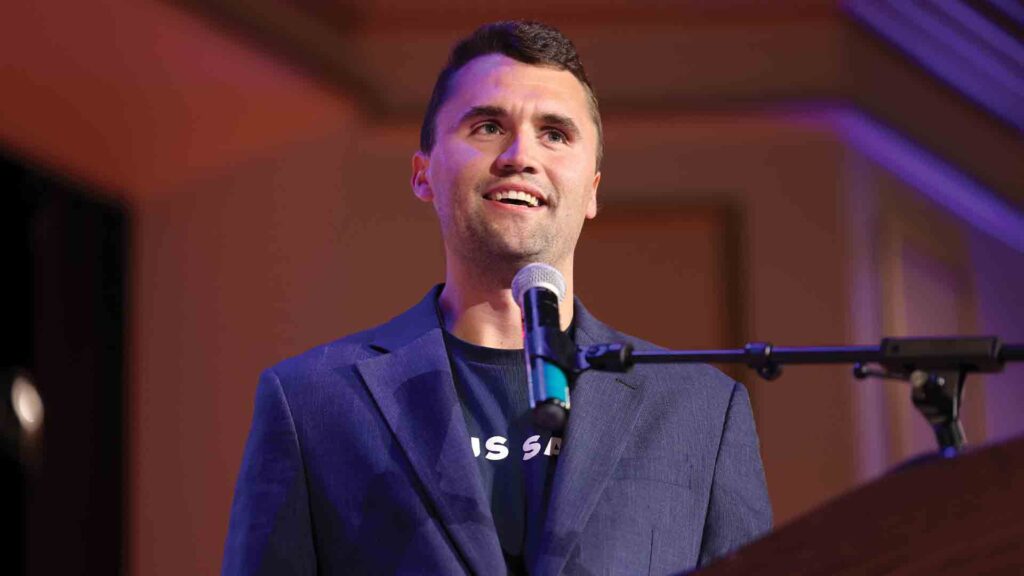
Many will condemn a man for an isolated sentence or two. Christians do it too. Instead, we should assess others just as we would like to be judged (Matt. 7:12). ***** If you have liberal friends or family, then in the days and weeks after Charlie Kirk’s murder, you probably saw all sorts of Kirk quotes, shared by them to warn people about what a problematic figure Kirk supposedly was. While Kirk had his flaws, the most common quotes being shared were generally not at all what they first seemed, being taken right out of context. As Proverbs 18:17 teaches us, “The one who states his case first seems right, until the other comes and examines him” so we need to go beyond that first impression, and do the cross examination. We can do so, not as people who must defend Charlie Kirk, wrong or right, but instead as God’s people, equipped by Him to discern right from wrong. Using our discernment, it’s easy to see that Kirk was attacked by the Left, not for what he might have gotten wrong, but for how often he expressed godly thoughts bravely and clearly. So, we shouldn’t accept their word for any of it. We need to check whether the quote is: 1) even accurate 2) in context So, what follows, are a few of the more common accusations stated in bold, and then put in context right below. “I don’t believe in empathy.” This is likely as much a misquote as it is a quote out of context. You can find Kirk saying he didn’t like this particular term, and wasn’t at all opposed to feeling for the injured and suffering. What he has said along these lines is: “I can’t stand the word empathy. Actually, I think empathy is a made-up, new age term that does a lot of damage. But it’s very effective when it comes to politics. Sympathy, I prefer more than empathy.” “Black women do not have the brain processing power to be taken seriously.” This was pitched as proof of Kirk being racist. Like the previous “quote” it is both inaccurate and out of context. Kirk wasn’t insulting black women in general; he found it ridiculous that four specific black women were proudly declaring they were beneficiaries of affirmative action. Kirk was arguing, during the July 13, 2023 episode of his podcast, that affirmative action is the opposite of earning something. He thought it funny, then, that anyone would brag about being an affirmative action beneficiary. “If we would have said three weeks ago... that Joy Reid and Michelle Obama and Sheila Jackson Lee and Ketanji Brown Jackson were affirmative-action picks, we would have been called racist. But now they're coming out and they're saying it for us! They're coming out and they're saying, ‘I'm only here because of affirmative action.’ Yeah, we know. You do not have the brain processing power to otherwise be taken really seriously. You had to go steal a white person's slot to go be taken somewhat seriously. In other words, he wasn’t critiquing black women. He was criticizing these four black women. “If I see a black pilot, I am now going to wonder: Boy, I hope he’s qualified.” Charlie Kirk is no fan of affirmative action, which responds to past discrimination by flipping the script – you are still judged by the color of your skin, but the racism is directed the opposite way now. Here he was responding to a 2021 United Airlines plan to have half their pilot trainees be blacks or women, and among the points he was making was that this kind of DEI/affirmative action has the effect of undercutting blacks who are qualified, by giving people a reason to question whether they earned their position or were just given it on the basis of their skin color. Black economics professor Thomas Sowell made a similar point, on the Uncommon Knowledge podcast about how his students treated him: “I received more automatic respect when I first began teaching in 1962 as an inexperienced young man with no PhD and few publications than I did later in the 1970s after accumulating a more substantial record. What happened in between was affirmative action hiring of minority faculty.” "I think it's worth it. I think it's worth it to have a cost of, unfortunately, some gun deaths every single year so that we can have the 2nd Amendment to protect our other God-given rights." Longer and shorter wersions of this quote circulated again after Kirk was killed by a gun-wielding assassin. While Kirk’s enemies were sharing it gleefully, the quote was blunt enough to shock Kirk-appreciating Christians. Why would he say something like that? How can any gun deaths be “worth it”? In this case, the quote was entirely accurate, but in need of context. As Christians we know life is to be revered as a precious gift from God. But we live in a broken world in which death is an ever-present enemy – everything we do comes with risks of injury, and even death. The example Kirk used was that: “Driving comes with a price. 50,000 people die on the road every year.” Do we think that’s “worth it”? We could cut down on those deaths entirely by banning cars. But, of course, that comes with a cost too, in all the freedoms that come with driving, like a broader range of places you can live, or work, or people you can visit, foods you can eat, and entertainment you can enjoy. All of that would be severely curtailed. And, there would come a cost in lives too, in that without ambulances, some wouldn’t get to the hospital in time. We can agree or disagree with Kirk on whether the 2nd Amendment is worth the price being paid, but we should acknowledge his larger point. The Left will deny or ignore it, but life always involves tradeoffs, and freedoms always come with risks. Photo of Charlie Kirk during his 2024 “You’re Being Brainwashed” university tour. Picture is adapted from one by Gage Skidmore and used under a CC BY-SA 2.0 license....

Red heart icon with + sign.
Assorted

Why Charlie Kirk’s death hit so hard

For a time, in September, my Facebook feed – I’m sure yours too – was full of tributes to Charlie Kirk. At this point, I don’t need to tell you that Kirk was big. He was the founder of Turning Point USA, an organization maybe best known for setting up tables at university campuses across the USA, with Kirk, and sometimes his friends too, willing to debate anyone who would take the mic. Some give Kirk credit for Trump’s win in 2024, because of the way Turning Point was so effective in its outreach to young voters. I felt a weight when I heard about his assassination. And the weight increased as I processed. Maybe that’s how you felt too. If you track the news, it’s been a heavy year. Overdoses. Transgenderism. Abortion. Stabbings. Euthanasia. Shootings. Never mind the economy. Now this. But why is this hitting so hard? I only watched Kirk’s videos occasionally. Why am I mourning someone who had so little impact on my day-to-day life? Of course, you have to feel sad for his loved ones – but it’s not that kind of grief. Assassinations are jarring, by nature. Not that I’ve lived through too many. But this is different. Charlie Kirk’s murder crystallized the hatred that I’ve been seeing directed towards Christian ideas and towards prolife activists. The hatred that activist Christians have felt directed our way through the condescension and the shouts, now manifested through murder. Across America, and Canada too, thousands celebrated. Mocked. Laughed. Who watches a man die, and laughs? That scares me. The apostle John equated hatred with murder (1 John 3:15), and I’ve never felt how close that link is until now. In her video commemorating Charlie, Christian commentator Allie Beth Stuckey put it, “We’re bringing words. They’re bringing weapons.” Ultimately, Charlie Kirk was murdered for views that I hold. Probably not all of them, but the fundamentals. Many of those views are non-negotiable Christian convictions that you and I and all God’s people hold. Christianity wasn’t a part of Kirk’s message: it was the driving force behind it. The gap and the bridge For a while, it’s been pretty clear that Christianity stands at odds with secular beliefs. Now, two seemingly contradictory things come to mind: 1. It’s not an “us” versus “them” We can’t just write off everyone on the other side. Christ came and died for us while we were still His enemies (Romans 5:8-10), and if not for Him, we would be enemies still. So, if God can do that for us, what might He be working in those folks over there? So we need to talk. As Charlie put it: “When people stop talking, really bad stuff starts. When marriages stop talking, divorce happens. When churches , they fall apart. When civilization stops talking, civil war ensues. When you stop having a human connection with someone you disagree with, it becomes a lot easier to want to commit violence against that group.” The Christian response is to treat everyone with dignity (Matt. 7:12), and pray for anyone who hates us (Matt. 5:43-44). 2. There are two sides We can’t be confused about how there are two sides (Josh. 5:13-14): God’s side, and everyone else’s. As God’s people we are, and are called to be, fundamentally different. To me, the spiritual battle was brought to light by this assassin’s physical act. Are these two conflicting views? No. These both make sense when we recognize what we share with our enemies: we’re all made in the image of God (Gen. 9:6), and we’re all in desperate need of a Savior. We can look across the divide in humility knowing there but for the grace of God, go I. Social media makes both sides think, “Duh!?” The algorithms selecting what’ll show up in our social media feeds only sharpen the division, making it difficult to actually have compassion for others. Everyone wonders: How can anybody support ____? It’s just so obviously wrong! Then we all click on what we want to see, and afterwards the algorithm feeds us more and more of the same. My liberal friend commented, “He shouldn’t have been killed. But he said the gun deaths are worth it, so it just feels ironic.” Worth it. Worth what? Did he really say that? What did he mean? But the internet clip stops right there. “Hah,” laughs an anti-gun activist. The assumption is that had Charlie known he would be killed by a gunman, then his tune would’ve changed. I disagree, largely because I got to see what else Charlie said. Another thing Kirk said was: “I don’t believe in empathy,” and since his murder that quote has been pasted across the Internet. “How heartless can you be?” thinks the social studies student. Missed is the next phrase that isn’t included: “I prefer sympathy.” And Kirk went on from there to explain why. One student asked him, “If your ten-year-old daughter was raped, would you want her to have the baby?” Kirk answered: “Yes.” Some stop listening at “yes.” Those who listen longer hear a compassionate “why.” Explanations on immigration and marriage aren’t heard, but clips “proving” xenophobia, transphobia, and homophobia dominate YouTube. Charity is dead. Assumptions of good intent are gone, and undiscerning scrolling forms a worldview. Those who hear only what they want call him a hateful, dangerous fascist. When that’s your belief, then all redeeming qualities fail. They’re not redeeming qualities at all – they’re manipulation tactics. And assassinating a fascist is a heroic act. One spray-painted billboard read: “Death to all Charlie Kirks.” That’s enough Internet for me today. Can we get back to normal life? It’s tempting to dismiss this as a one-time event. A crazy person shot a MAGA activist. We’re not American. Most people aren’t crazy. Right? Maybe we could start to be discerning again. More neutral. The words “He had it coming,” will always be wrong. But we might reflect, “Should he really have linked his Christianity so closely with partisan politics?” or “He was unnecessarily controversial… if he just spoke the Gospel, this wouldn’t have happened.” Not quite victim blaming, but maybe we should adjust the halo a bit? Should we really call him a martyr? If he is one – if that’s what we were to conclude – we’d also have to conclude that Christianity itself is hated, not just some Christians who don’t put a good face to it. Then it’s not just about Charlie; you and I are hated. And I think the 100+ church burnings across Canada in the last 5 years bear witness to Who is really hated. So no, this wasn’t a matter of tone. We don’t look at prophets in the Old Testament, and suggest perhaps their tone was off. Sorry, Jeremiah. You were a bit harsh there - a little too blunt on that one! Watch any of his videos – in whole – and listen to those who knew him; Charlie Kirk was incredibly patient and well-versed. He was grounded in the Gospel, in both public and personal life. Many young people attribute their own shift to conservatism to Charlie Kirk, and many are now opening their Bibles for the first time while navigating the loss. Charlie Kirk was targeted because he was effective. The turning point I’m not the first to say this – it’s ringing all over the Internet: in the bullet, hate took a physical form. And this is how Charlie’s wife responded: “You have no idea what you have just unleashed across this world and across this entire nation.” Erika Kirk is right, God has so used this that in Charlie’s death his voice has been amplified. His videos are being watched even more. And I’m excited for all the new voices who have been emboldened to speak. Christian voices. As I’m writing this, a lot has already been said. An insane amount of commentary. But the hate felt personal, so I wrote too. I’ve done outreach – speaking up for the unborn – some of it on university campuses. My life hasn’t been in danger, but the hate’s been the same. The people in Kirk’s videos are the same sort that pro-life activists talk to every day on the streets. Like Charlie Kirk, I enjoy talking to someone who radically disagrees with me; I get to show my own humanity, and I get to tear down the image of heartless, ignorant pro-life monsters that they’ve crafted about us in their minds. Conclusion Charlie’s assassination brought it home: they hate us – they really hate us. And there are so many of them. I wrote a poem a few years ago, while struggling with the weight of others’ opinions of me. I find it a good measure for checking my own heart and actions. Am I doing something wrong, or am I just scared of being ridiculed? Am I hesitant to speak because I think it’s prudent, or because I fear the opinions of others? Strive, at the end of the day When fingers are pointed my way, To have no fault but Thine. Let them hate my faithfulness, I say. Your laws, they laugh at. Your love, they despise. I pray, they find those in me, And be not me, they criticize. You and I both know we’ll do it imperfectly. But that’s not the calling. We don’t have to worry about perfection – Jesus has accomplished that for us. The outcome of evangelism isn’t on us either. But obedience is. May God grant us the courage to speak out boldly and patiently to a world that so desperately needs to hear His Good News. Picture is adapted from one by Gage Skidmore and used under a CC BY-SA 2.0 license....

Red heart icon with + sign.
Assorted

Dominee’s friend

There is style and there is class. Dominee may not have had much style, as the world considers style, but he had class. Dominee had accepted a call to another church. At such a time we cover up the pain of separation with laughter. How could we be happy? This was the man whom God had sent to us to speak to us the Word of God every Sunday. We heard the voice of the Great Shepherd through His under-shepherd twice every Lord’s day. Because Dominee’s voice was so familiar, and his sermons somewhat predictable, we thought we knew him. We knew from the cadence of his heavily accented sentences when he was wrapping up the sermon — just the final song yet, and the benediction, and we’d soon be outside chatting, swapping stories, and laughing. Dominee was not what you would call an especially stylish man. During all the years he preached to us he wore a grey suit. He may have replaced it with a new one once in a while, but we never noticed because the new one was identical to the previous. Nothing stylish about Dominee. Even when he would drop by because of illness in the family or if someone needed encouragement, he’d wear a grey suit. We thought we knew him, until his farewell evening. As I said, when we are sad, we turn to laughter. To cover up our sadness. The farewell evening had begun and was evolving in a predictable way. There was only one unusual thing that immediately caught everyone’s attention. Near the front of the church sat an old Sikh gentleman and his wife. We could tell he was a Sikh because he was wearing a turban. The turban happened to be pink. Later I was told it was, in fact, lavender. The chairman of the men’s society, a serious man, ascended the pulpit. He read some Scripture, prayed, and invited us to sing a well-known Psalm. On behalf of the men’s society, he spoke some kind words of farewell to Dominee, his wife, and the children, and then presented them with a gift, a beautiful painting of local scenery: “We don’t want you to forget this beautiful part of the country!” This was followed by several presentations — women’s, young people’s, youth. And on it went, predictably and comfortably. The presentations alternated between funny, sad, and poignant. But mostly we laughed. When the elders and deacons performed a humorous skit about Dominee’s typical way of leading a meeting, we laughed heartily. When one of Dominee’s local colleagues told a story about Dominee at a classis meeting, we laughed so hard we thought our sides were going to burst. After several hours, when everyone was good and ready for coffee and cake, the chairman of the men’s society ascended the pulpit once again. With gravity, he thanked everyone for coming, bade Dominee farewell once more, and asked if there was anyone whom he had missed, or who had not been on the program but yet wanted to say something. The Sikh gentleman stood up. Well, this was interesting. Slowly, with age and dignity, he walked to the front of the church. He began to speak. This was very interesting. No one could remember a Sikh speaking in our church. He began to tell a story. It had been a hot summer afternoon when he and his wife were walking along the sidewalk. Suddenly overcome by heat, thirst, and exhaustion, he sat on a stone wall in front of a house. That house, as it turned out, was the Manse. Dominee was sitting in the shade reading a newspaper from the old country that had just come in the mail. He noticed the Sikh man sitting at the end of the driveway on the stone wall, and the man’s wife bending over him with a look of concern on her face. Dominee got up to see if he could help. “My husband is very thirsty,” said the lady. “Could he please have some water?” Dominee went to the house and came back with a pitcher of water and some glasses. He poured two glasses of water, and then he took a moment to speak about the other water, the living water that Jesus provides. On that day Dominee and the Sikh became friends. The Sikh gentleman and his wife would drop by more often to talk with Dominee. We never knew. We thought we knew our Dominee. We all listened intently to the Sikh as he told us the story about our kind Dominee. He considered it an honor to count him a friend and wanted to give him a parting gift. The Sikh explained that it was their custom to give the turban they are wearing to their departing friend. The turban would be a reminder of their friendship. With that the Sikh removed the turban from his head, reached forward, and placed it on Dominee’s head. Dominee was mostly bald and had a smaller head than his Sikh friend, and so the turban sank down over Dominee’s forehead. It was a sight to behold! Our Dominee clothed in his trademark grey suit, the only way we had ever seen him in all the years he had ministered to us, wearing a lavender-colored turban. No one laughed, snickered, or tittered. Instead, after a moment during which you could have heard a pin drop, the congregation slowly rose and began to clap. We did not know whether we were clapping for Dominee or the Sikh. Likely, we were clapping for the Lord. We had seen a remarkable thing. Our immigrant congregation may not have had much style, but on that evening we had class. Dominee wore the turban for the rest of the evening, during coffee and as we all came by his table to say farewell. He wore it with pride. Dominee did not have much style, but he had a lot of class. And we thought we knew him. There is style, and there is class. This is a true story, which I experienced as an adolescent boy at the departure of a neighboring minister. The references to style and class were inspired by Sietze Buning’s “Style and Class” collection of poems. This first appeared in the January 2015 issue....

Red heart icon with + sign.
Assorted

Veya’s story

The fight for her life in a broken and biased healthcare system – one that sees doctors perpetrating euthanasia and abortion and calling them both medical care. ***** “Our sweet Veya Hope ran into the arms of Jesus yesterday.” So shared Veya’s mother, Krystal Vanderbrugghen, on her Instagram page on August 2, 2025. Krystal continued: “Her name was her calling – Hope. She carried it with her every single day she spent inside those hospital rooms and gave it to all who knew her.” Veya was first introduced to the waiting world, and to the arms of her parents Krystal and Jeremy, just a year and a half earlier, on December 4, 2023. Although the LORD didn’t have many days allotted for Veya here on Earth, her life touched tens of thousands of hearts. And her experiences here also exposed just how difficult it can be to fight for care in a broken world and medical system. “We pray that Veya’s story continues to encourage other families who are given this same precious gift – the gift of loving and raising a child with Down Syndrome,” Krystal explained. Hope born Jeremy and Krystal, along with their other children Ivylee, Irelyn, and Lincoln, live in Caledonia, Ontario. In the fall of 2023, as they were eagerly awaiting the birth of another child, they learned that their baby had a congenital heart defect which would require surgery at some point after birth. “While this is a lot to process, we know without a doubt God truly has a perfect plan for this baby even though the road ahead is filled with uncertainties.” That’s what Krystal shared at that time on Instagram, not realizing just how true these words would be for her and her family. She would continue to share, with all who took an interest, the challenges of the road they were on. In an appearance on RP’s Real Talk podcast earlier this year, talking with Lucas Holtvluwer, Krystal explained that hospital stays brought their own problems. “She was born with Down Syndrome and a cardiac defect – pretty straightforward – but she has now encountered some medical complexities from living her life in a hospital this long and from delayed treatments.” One complication and delay led to another, and Veya was transferred from Hamilton’s McMaster Hospital to SickKids Hospital in Toronto, which is one of the leading children’s hospitals in the world. Crumbling care “Our journey started off really great, like we had teams that were really invested,” Krystal explained to Lucas. “But then we experienced her care declining January of this year, so that kind of set her on a totally different trajectory.” “Specifically with her last ICU admission, you could just tell through the conversations with the doctors that they were really just trying to wrap things up with her and kind of coerce us into letting her go rather than help her,” she shared on the podcast. “I feel like the team coach, trying to keep the spirits alive…. But they all just kind of vanished.” Krystal was particularly confused when Veya was denied a necessary liver transplant. She asked their Pediatric Advanced Care team if it was Veya’s Down Syndrome that was influencing their decision-making. “They can never say yes or no, but they said, ‘Mom, I think you know the answer to that deep down in your heart.’ And I said, ‘well, that is the confirmation.’” One particular incident really broke Krystal’s trust in Veya’s care. “Right after her liver surgery, she got RSV , and then a few days after that, she got overdosed with a lethal amount of potassium. It wasn't just a little bit, it was 10 times the regular amount that she normally gets, and it was during the evening when none of us were there.” Veya’s heart rate went to 350 beats per minute, and she had to be shocked three times to stabilize her. “I do have questions whether it actually was an accident or not, because these sorts of things happen when families step away. So, the timing of it, but also the amount. You know, it's one thing, if you gave a little extra, but 10 times the amount, like, an actual lethal dose?” Growing support Krystal shared the ups and downs of Veya’s journey on her Instagram account. Her photos, videos, and touching words lit a fire in many hearts around the world, and she ended up with close to 40,000 Instagram followers, many of whom were praying for Veya, and encouraging Krystal and her family. “For me, social media was like an open diary and a way for me to process but also a way for me to be able to connect with others that were raising children with Down Syndrome, because I knew nothing about it, and so it's been a really great place for resources and connecting.” But the care hasn’t only been virtual. Krystal and Jeremy are members of Trinity Canadian Reformed Church in Glanbrook, Ontario. And as she told Lucas back in July, “Our church community, they're phenomenal. I'll tell you this, we had a meal train set up for Veya when she was born, and we are 19 months into this and that same meal train is still going.” She added that the amount of support they have received allowed them to be fully present and to advocate for Veya, because everything else was being taken care of. The many prayers that were raised for their family carried them. “I don't think my husband and I really understood that till we lived this experience. Like you really feel carried by prayers. There's just this indescribable peace that comes with it.” Growing faith We read in James 1:3 how “the testing of your faith produces endurance” and Krystal attested to this when speaking about their journey prior to Veya’s death. “As much as we want to enter the next season of life and be off of this medical journey, there's a part of you that doesn't, because of the experience you have with God's nearness. Because it forces you to slow down and really lean into Him. “….The ways we've experienced God's goodness and care over these 19 months, we're forever thankful for that. Faith is not without pain. It's there to give you the courage to face it, right? And a lot of times this journey has really forced us to our knees.” She later added that, as hard as it has been, they have seen so much good come from this journey already, particularly with the many interactions with people in the hospital. Seeking justice After Veya’s promotion to glory, Krystal shared with Reformed Perspective that they hope to have further meetings with SickKids Hospital regarding the neglect that Veya experienced, which Krystal sees as a push to end Veya’s life rather than care for it. “What was happening was the team was trying to 'stealth euthanize' Veya through means of denying life-saving measures.” They are working with other families who experienced similar harms for their medically complex children at the same hospital, seeking to raise their concerns collectively. Her hope is to see a formal acknowledgement of harm, public reporting requirements, independent investigations, disability rights training, and whistleblower protection so that staff can report unsafe practices without fear of losing their jobs. Although she has devoted much of her past couple of years to being an advocate for Veya and others with disabilities, she also understands that she can only do so much. And that is OK. “Our God, The Creator of Life has the final say.” Advice for others When asked by RP what advice she would have for other families who may face similar situations, she urged them to document everything, including conversations and decisions, names, and copies of medical records. She also advised to never go into important meetings alone. Bring someone to witness and support you. Further, use clear and assertive language like “can you explain in writing why you are denying this treatment?” And if there are concerns, escalate them by asking to speak with a patient’s relations person or ombudsman, or even filing a complaint with the hospital leadership or licensing board. She encourages others to seek a second, or third opinion, and not be afraid to transfer care to another institution, even if it feels scary. And “trust your instincts – God gives them to us for a reason!” You know your child best so “if something feels wrong, it probably is.” Most soberly, she warns “know that Canada has become a death culture.” In an age where it has become legal to end the life of someone who requests it simply because they are suffering, it becomes all the more important to be on guard for the care of our loved ones, particularly those who are more vulnerable. “Instead of offering care, too many hospitals offer ‘comfort care only.’ Instead of fighting for life, they push families towards giving up and will blame you for your loved one’s suffering.” Her final advice is most encouraging. “You are not alone, God goes behind you and before you…. When you are battling the medical system for your child never forget to stop and ask God for guidance, strength, wisdom and peace. He sees, He knows, and He will lead you step by step.” A tribute for Veya In the weeks following Veya’s death, Krystal paid tribute to Veya with these words: “I didn’t have to look into your eyes to fall in love with you. I didn’t need to hear your soft, raspy cry to know you loved me too. I didn’t have to hold your hands to cherish you forever – because from the very beginning, within my womb, our hearts were already intertwined. “Veya, you changed me. Through you God gave me a deep perspective. You touched my soul and awakened a love so deep that can only be explained by His goodness. You gave me countless memories that I will hold close for the rest of my life. My heart aches in a way words can’t fully capture, and I know that ache won’t leave until we’re together again. …Though the longing never fades, each day moves me closer to the joy of holding you in Heaven.” Pictures used with permission of the Vanderbrugghens....

Red heart icon with + sign.
Assorted

Our forever home

Reflections on finding permanence from someone who has lived in 27 homes. ***** Home is Where the Heart Is. God Bless Our Home. Home Sweet Home. Have you seen or heard these slogans lately? Maybe on a plaque or as an embroidered craft on your grandmother’s wall? Maybe on a hand-painted sign? Or how about this. You’re searching real estate online and a beautiful property is described as “your new forever home!” Recently, I heard a Christian podcaster use that term – forever home – in reference to where she was living. It made me think a little deeper about how we bandy those words about. Perhaps a little carelessly? God understands Although the idea of finding the perfect place to live is universally appealing, what should our perspective as Christians be? We’re all going to die one day so the concept of finding a permanent place on this planet is fundamentally flawed. So where is our forever home? As believers we know that “our citizenship is in heaven, and from it we await a Savior, the Lord Jesus Christ” (Phil. 3:20). And yet God understands our earthly desire for home here and now. He promised the Israelites that one day they would enter a land flowing with milk and honey. They would build houses and dwell securely. Psalm 132:13-14 says, “For the LORD has chosen Zion; He has desired it for His dwelling place; ‘This is my resting place forever; here I will dwell, for I have desired it’” . If God desired an earthly dwelling place, then surely, He understands our desire for one. How do we live with our own intense longing and need for an earthly home, knowing that this planet ultimately is not where we will spend eternity? The conundrum set before us is to create loving spaces where we can raise families, practice the art of hospitality, and honor God… all the while remembering the words of Jesus in Matthew 6:19-21. “Do not lay up for yourselves treasures on earth, where moth and rust destroy and where thieves break in and steal, but lay up for yourselves treasures in heaven, where neither moth nor rust destroys and where thieves do not break in and steal. For where your treasure is, there your heart will be also.” Did you catch that last part? Sounds a lot like Home is Where the Heart Is, doesn’t it? My parents did an amazing job of keeping the tension between our earthly and heavenly homes foremost in the hearts and minds of their five children. Whenever we drove home from an afternoon of shopping, a visit to another family, or our annual camping trip, my mother sang an old-fashioned song… ‘Mid pleasures and palaces though we may roam, Be it ever so humble, there’s no place like home. But she always followed that up with… There's a land that is fairer than day, And by faith we can see it afar. To an impressionable, often sleepy young child, sitting squished between her older siblings in the backseat, that balance struck home. The yearning for a safe place at the end of a long tiring day became permanently intermingled with the conviction of knowing this world isn’t our final abode. Citizenship? Fast forward through the years and I’m in a car again. Over our 40+ years of marriage I’ve moved many times with my husband and have given a lot of thought to this subject. Each time we moved into a new place, I prayed for God’s hand of protection to cover us. Each time we moved out, I learned to hold our earthly possessions lightly, letting go of material things and clinging ever more tightly to heavenly treasures. My car is parked beside a booth. A uniformed guard perches on a stool inside. “Citizenship?” he asks brusquely. I’m at the border. Crossing the invisible line between two nations. On my way to visit our daughter who married an American and moved there fifteen years ago. Every time I’m asked that inevitable question, I want to answer “my citizenship is in heaven.” But then I remember that the agent posing the question has the authority to lawfully detain me or send me on my way. I dutifully answer “Canadian.” How much more can God, who has the ultimate authority, welcome us one glorious day into His everlasting kingdom… or banish us from His presence. Our forever home is not and never can be here on earth. One day, at the brink of eternity, we will all stand before His judgment throne, and our citizenship will either be in heaven or hell. Let’s be diligent to lay up our treasures where they rightfully belong. In our true forever home....

Red heart icon with + sign.
Assorted

Sliver Mustard's journey

Perhaps as many as a million people lived in Noah's Grove. A thriving community, it had begun small but had grown over decades and centuries. Children were born, grew up and had more children. Farms dotted the surrounding countryside and buildings edged the skyscape. Markets with fresh produce were held every Tuesday and Friday. Housewives milled about stands filled with round cabbages, bright yellow carrots, leafy greens and the like. And there were, as in all towns, the rich and the poor, the beggars and the bag ladies as well as the ones whose pockets were filled with clinking coins, the shy and the forward, the meek and the proud. The mayor of Noah's Grove was a portly man. Well-fed and financially secure, he possessed the gift of persuading people he was the right man for his job. Amiable, he ambled through the cobble-stoned streets greeting both children and adults alike. He wore a great, heavy golden chain about his neck, a chain much admired by the younger population of Noah's Grove. The head of the police in Noah's Grove was very much respected and recognized by all. Perhaps it was due to the fact that muscles rippled through the lining of his shirt. He wore a star on the lapel of his blue jacket. His broad jaw embosomed law and order and commanded obedience. Then there was the local judge – a man venerable and full of years. Grey-headed, thinning hair partly covered by a fur-lined beret, he walked upright - shoulders erect. His green eyes were so piercing that people avoided his glance. They were convinced that his eyes might ferret out every little misdeed they had committed. But he was only a human as they were human - and, as such, he was also prone to sin. There were also the bankers, the bakers, the butchers and the candlestick makers; the soldiers, the sailors and the craftsmen; and the list of Noah's Grove citizens could run on and on and on. An honest man Sliver Mustard, a street cleaner, was also a resident of Noah's Grove. A tiny seedling of a man, shriveled and old, he resembled the broom he perpetually held in his hands. It was his job to sweep some of the sidewalks and the streets of the town. He didn't look up much while he was cleaning, as he was always searching the ground for dust, for dirt, for any sort of refuse. He was a kindly type of fellow, an honest man, for whenever he found anything he considered to be of value, he would pick it up and knock at the door of the house in front of which he had been sweeping. "Pardon me. Have you lost this?" he would ask, holding up the particular object he had just found. Mostly people would glance at the item for an instant before shutting the door in his face. The recovered items were mostly trinkets, baubles, and in Sliver Mustard's rough, grimy hands they usually appeared rather dirty and worthless. Sometimes a small child would remember and recognize a lost necklace, or a toy and a smile of happiness would cross a little face as an eager hand reached for the article the sweeper held up. And in these rare moments the street sweeper felt as if he had performed a singular service which somehow outshone the stars he so admired at night. He sometimes wondered at the possibility of a star falling down from the sky into his gutter. Would he then be able to knock on the gate of heaven and ask God if He had lost it? Then, pondering upon this possibility, he would smile to himself, smile almost shyly, knowing in his heart that such a thing could not be. Who was he to return a thing to the Creator? For were not all things His? Invitations go out The letter carrier brought invitations one day - invitations from His Majesty, the King, for all the citizens of Noah's Grove. The content of these invitations was the same for everyone and commanded citizens to present themselves to be painted by the greatest artist of all times - Mr. Potter. The envelopes containing the invitations were deposited into the various mailboxes around town. Slipped into the black, open-mouthed slots, they were retrieved first by one person, then by another. Word traveled quickly. "You'll never believe who contacted me...." "I received a personal word from ...." The street sweeper heard the town's folk talk, listening as he swept out the gutters and cleaned the grey-mouthed cracks in the sidewalks. He was glad that the widow on the corner of Church Street had received a notice. She frequently smiled at him and was a kind woman. Sliver Mustard also rejoiced when a simple-minded fellow, a lad who helped the blacksmith at the forge each day, was ecstatically waving about an envelope. Sliver Mustard did not expect an invitation for himself. In the first place, he had no mailbox, and in the second place, what interest could Mr. Potter possibly have in him? Indeed, even if Mr. Potter did know him, why would he want to paint an old, grizzled geezer like himself – dusty, dirty and quite, quite unattractive? Yet there it was when he came home that evening. Outlined white and pure on the faded blue tablecloth of the kitchen table, it made every object in the one-room shanty flow with warmth. Sliver Mustard gingerly wiped his right hand on his pants, thereby making it even dirtier than it had been. Picking up the envelope between his thumb and forefinger, he carried it over to the chair and sat down. For a long while he did not move. He simply held onto the unexpected pleasure. It seemed to him this was enough. That he had been remembered - this was beyond belief. Finally, mustering up all his courage and strength, he opened the envelope. Or perhaps, the envelope opened itself in his hands. Later on, he could not quite remember. Fully expecting the note to read along the lines of "Sliver Mustard, perhaps next time I come to town...." or "Sorry, Sliver Mustard, but you do not meet the qualifications as I have set them...." But he read no such lines; he didn't read anything of the sort. The words that Sliver Mustard read were these: "This is to ask Sliver Mustard to present himself as he is, tomorrow afternoon, at three of the clock, at the hill." One shirt, no dryer Sighing deeply, Sliver Mustard leaned back in his chair. He had sat up straight for the reading of the letter but the words overwhelmed him. He stretched out his feet in front of him. He only owned one shirt, a shirt which he rinsed out every Saturday night, hung out to dry and put on again on Sunday morning. He bathed weekly in a nearby creek. There was hardly time to perform these ablutions now. As he contemplated his options, he knew that he had none. Sliver Mustard both longed and feared to go. He sat in the chair all of that night, dozing and waking at intervals. He sat as the dark hours crept by and as the light of morning dawned through the small window in the kitchen. Sliver Mustard still swept the streets that morning. It was his job after all. It was what the town was paying him to do and it would not be proper for him to neglect that job. Promptly at twelve he stopped, and, carrying the broom over his shoulder, headed home. He brushed his hair, regretted the ownership of a hat and rubbed a rag over his shoes. Then he washed his hands at the sink and ran a washcloth over his face. It was time to go. There was no doubt about it. It would never do to keep Mr. Potter waiting. Force of habit made him pick up his broom. Outside, Sliver Mustard trailed, by several miles, all the other people from town also going in the same direction. They were far ahead and he could just make out the glint of the mayor's chain as it shone in the noonday sun. He did appear to be last for when he turned his head, he could see no one behind him. As he walked, he noted with a bit of alarm, that it was later than he had thought. Picking up his steps, he pondered on the pitiful figure he must cut. Perhaps the invitation had been a mistake. But it had read, in unmistakably clear printing, "This is to ask Sliver Mustard to present himself as he is.... With a flower in his buttonhole The sun shone down hotly on Sliver Mustard's body and he began to sweat. Trudging on through what appeared to be endless stretches of road, he felt his shirt cling damply to his body. What a wretched figure he was! He sincerely wished that he was wearing a chain such as the mayor had. Not a gold chain - that would be a presumptuous thing for which to wish. But a metal chain, an inexpensive chain, one that would also glint and shine a bit. Surely the mayor, leading all the folks in Noah's Grove towards Mr. Potter, was a fine sight to behold - dapper and upright. He glanced at the fields around him and noticed a broken lily at the side of the road. Undoubtedly someone from town in his haste to see Mr. Potter had trampled on it. Stooping down, he picked the flower up. There was no door on which to knock and ask if someone had lost it. There was only a field of flowers. For a moment he was enthralled. How beautiful these flowers were! Dressed as the Creator had seen fit to dress them. "Have you lost this...?" He smiled and carefully put the lily in the buttonhole of his dirty shirt. No chain, but surely this was just as good. But as Sliver Mustard trudged on, the thought that Mr. Potter would be unimpressed with him weighed him down more and more. Surely, he would have to be! He fingered the frayed cuff of his sleeve. And for a moment he coveted the star embroidered jacket that the head of the police would be wearing. Still, he reflected a minute later, it would be hot walking in such a uniform jacket today. Sliver Mustard stopped to contemplate. And as he stopped, a bird alighted in his shoulder. It was a sparrow. A lily and a sparrow! What strangeness was this? There was no house here – no house at which he could ask "Excuse me, but have you lost this sparrow?", and he was secretly glad of it. Sliver Mustard kept on walking, embellished with a flower and a bird. "Clothes make the man." That's what people were wont to say and he understood that saying and sentiment. But was it true? Mr. Potter had not said it in his invitation. The words in Mr. Potter's invitation read, "This is to ask Sliver Mustard to present himself as he is, tomorrow afternoon, at three of the clock, at the hill." Clothes make the man? As he pondered, Sliver Mustard almost tripped over several clods of earth in his path. His scuffed shoes kicked the mud unintentionally and they flew ahead of him. Surely, most of the town's people had reached the hill by this time – had reached it clean and well-dressed. Would Mr. Potter be able to paint all of them simultaneously? He sighed and bent down, taking a rag out of his pocket as he did so, fully concentrated on rubbing a bit of a shine back onto his shoes. The lily touched his face as he bent and the sparrow chirped. "Why, Sliver Mustard?!" Startled, he looked up, finding himself face to face with the mayor, flanked by the police chief and the judge. How could he not have seen them coming? "On your way to the hill, Sliver? He nodded. The mayor's chain glinted, glinted so that it hurt Sliver Mustard's eyes. "You need not bother, Sliver," the mayor went on in a kindly sort of way. "You need not bother to go on to the hill." Sliver Mustard was puzzled as he stood up, stuffing the rag back into his pocket. What did the mayor mean? "Mr. Potter," the mayor continued, his voice heating up, "wanted me to take off my chain and my robe of office. Can you believe that? He wanted me to be painted without the symbols that define me. He told me to take them off." Dumbly Sliver Mustard shook his head. The police chief and the judge had walked on without bothering to speak and the mayor began to follow them. **** For a long time Sliver Mustard watched them - he watched them until they disappeared around a bend in the road. Then he turned. He smelled the lily and it was a sweet smell to him. He heard the sparrow on his shoulder sing and it was a song of fullness. In his heart he believed the words of the invitation, and he could see the words as clearly as if they had been written across the wide, wide overhead sky. "This is to ask Sliver Mustard to present himself as he is, tomorrow afternoon, at three of the clock, at the hill." So Sliver Mustard went on and on. At three of the clock he reached the hill. The watchman at the gate opened the gate and drew him in. And Sliver Mustard was painted as he was. Christine Farenhorst is the author of many books, including a short story collection/devotional available at Joshua Press here. She has a new novel – historical fiction – coming out Spring 2017 called “Katharina, Katharina” (1497-1562) covering the childhood and youth of Katharina Schutz Zell, the wife of the earliest Strasbourg priest turned Reformer, Matthis Zell....

Red heart icon with + sign.
Assorted

Fun is something you make

11 tips for family road trips ***** “Bored” is a curse word in our house. Say that word, and my mom is liable to wash your mouth out with soap. Because here’s the thing: boredom is just a socially acceptable word for ingratitude, for being discontent with the things God gives us. Your kids have plenty of toys and activities to occupy themselves, so why are they coming to you looking for something to do? Maybe it’s because we tend to think the toys are the ones doing all the work, the ones keeping kids from getting bored, when in reality, the child is the one bringing the fun. As with everything else, this is a heart issue. This is an attitude that needs changing. And that is all well and good if you are in your home, surrounded by possibilities during a normal day. But let’s say you’re in a situation where you literally have nothing to do, like waiting in the waiting room of the hospital, or driving six long hours to visit relatives, or standing in a long line at the grocery store. How do you teach them to occupy themselves? How do you ban boredom from your family? It is fair to say that my family and I have done a lot of driving. We have always been the one family that is farther away from relatives, from town, from church, and from practically everything, so we have had to learn how to pass the time well! It bears repeating, so I’ll say again that with the tips and suggestions I have for you the key to the success of all remains gratitude. Without gratitude, without recognizing that God has given you the exact moment you are in and equipped you to delight in it, you are waiting for the game to entertain you, which almost always end in boredom. But if you enter everything with gratitude, it’s like sitting with your hands outstretched, just waiting for God to bless you with that present you know you’re getting. And the gift is ten times better when received in thankfulness. With that said, here is a list of things that have helped my siblings and me numerous times. Would you rather? A simple game where one player makes up two scenarios, and each of you say aloud which you would rather do if given the choice. Questions can be as wild or as ridiculous as can be! Encourage the players to explain the pros and cons of each situation, and the hows and whys. I have played this very recently, and my brother gave the following scenario: “Would you rather be on the very top of a skyscraper, or below the earth approximately the same height as the skyscraper?” Personally, I’d choose the skyscraper, because there’s no oxygen the deeper into the dirt you go, but my brother was assuming there would be air. See how many digressions there can be within one topic? Rock, paper, scissors A classic that is highly underrated! Play multiple rounds high speed, and your kids will dissolve into giggles. (Maybe it’s only me...) We have learned a trick to the game from watching YouTuber Mark Rober: You have rock, paper and scissors in a row in your head. Let’s say you start with rock. If you win with rock, you move to right, which would be paper. If you win with paper, you continue with scissors. Now, if you lost with rock, you go to the left, which would mean you would play scissors. If you lose with scissors, you play paper. This is a tested strategy by Mark Rober that, if followed, will help you win a disproportionate percentage of time. But if you want to have plain fun without all the technical junk, just play the game as you normally would. It’s still fun either way. 20 questions Definitely a go-to for us, because each person comes up with the weirdest things to think about! Each person has 20 questions to ask the one who has the topic in their head. If I’m thinking about spiders, well, you have 20 questions to find that out. No cheating! No giving hints! And make your topic as clear as possible. I once picked oblivion as a topic, and my siblings were infuriated because they couldn’t figure it out. It’s literally nothingness! You can’t guess that! (Which is why I chose it.) Make everything a competition I cannot begin to relate how many things my siblings and I turned into a competition! Who can leave their bare hand on the icy car window the longest? Who can hold their water bottle at arm’s length the longest? Who can make the silliest face? Who can hold their breath the longest? And the list goes on! (All of those examples are real competitions that have been hosted in our van on long drives, and all too recently. I participated in them all. In fact, I came up with them. Mad skills, anyone?) Buggy Fingers What an odd name for such a simple game that can be played anywhere, because everybody I know possesses fingers! Many long hospital stays granted us ample opportunity to play Buggy Fingers. You stick your pointer finger out, and this becomes the head and face of “Buggy,” while the rest of the fingers on that hand act as the legs. Now, the original character, made by my father, was named Artie, and Artie would eat everything in sight, but finding it inedible, would spit it out and grunt, “Needs salt.” The future generations of Artie broadened their horizons, and tales were spun surrounding these little misbehaving fingers. Stuffed animal adventures Grab those stuffed animals, because you’ll be needing them here. My older sister and I would place our stuffed animals on the ledge of the windowsill of the car, and pretend they were on a motorcycle. The motorcycle would travel along the scenery that rushed past our windows. Was Kitty Cat about to collide with a barbed wire fence? Well, for pity’s sake, JUMP! Once you were over that obstacle, you might have to navigate through a field of smelly cows, and end up on the other side without getting caught by the farmer. So many stories and exciting adventures are at your fingertips here! Sing hymns My whole family loves to sing around the piano, and in fact our parents are trained musicians, so a love for singing runs deep in our veins. We enjoy bringing our church hymnal, the Cantus Christi, into the car, and singing in harmony to the various hymns selected, especially the 4-part melodies. It is much like caroling, but not in winter. And not to an audience. So feel free to warble your way through a song. We won’t laugh. Count cars Who hasn’t done this, seriously? My brother is an avid vehicle enthusiast, and he and my little sister began counting how many Teslas they would see on any given drive, because we live in the Seattle area, and Teslas seem to be popular there. There were so many Teslas, we soon got tired of counting them, so we have now moved on to cool and unusual cars, as well as vintage vehicles. Make landmarks We have driven across Washington State many, many times, and we have come to recognize familiar landmarks along the way. There’s the lonely tractor that’s always sitting at the base of a hill; there’s the bicycle that is parked by a street sign; there’s the company that Grandpa used to work for years ago, before we were born; there’s the blue bridge with the American flag mounted on it; there’s the train yard, where we count how many trains’ lights are on. I have such happy memories of those drives, and the excitement of searching for the “landmarks.” Make traditions As a child, my older sister and I were forever going to the children’s hospital in Seattle, and those doctor trips were depressing and no fun in and of themselves, but we made the time fun. There are a couple of tunnels you have to drive through on your way to that specific hospital, and my sister and I, as soon as we entered the tunnel, would suck in our breaths and hold them until the car emerged out the other side. Of course, Dad would slow down on purpose and see how purple he could make our faces by the time we finally could draw a breath. Another tradition we had was ducking under tunnels, overhead signs, and traffic signals. To signify this, we would shout “Duck!” To signal that it was clear, we would shout “Peacock!” The point is, make your own fun. With a bit of prodding, and a dreary situation to be placed in, you can come up with a lot of great games and memories that will be treasured for decades, and will hopefully help you survive those long relentless hours with nothing to do. Count it all joy I’ll say again, how much fun your kids have with these will depend largely on the gratitude they bring. They might not like you for reminding them of this, but they should take even boredom as an opportunity for joy, like the Apostle James says in James 1:2; “My brethren, count it all joy, when you fall into various trials, knowing that the testing of your faith produces patience.” God has given you so many gifts; you just have to use them....

Red heart icon with + sign.
Assorted

Our family’s trip to the Ark

Ken Ham’s creationist organization Answers in Genesis has built a life-size replica of Noah’s Ark in the State of Kentucky. These Christians are proudly leading with the Flood – one of the most ridiculed portions of Scripture – and attesting to the reliability of God’s Word in this big bold way. It is glorious! ***** It started in the airport. We were picking up a rental car and the friendly agent asked why we were in town. I had a moment’s hesitation, the mental blip I get when a stranger totally sets me up to talk about God and I’m wondering what the guy will think if I take him up on it. A fear-of-man moment. It helped that I was wearing my “Made in His Image” t-shirt so onward I plunged: “We’re here to see the Ark.” "It just kept getting bigger and bigger!" “Oh that’s great! I think half the people who rent a car from us are here to see it,” and then he went on about his uncle – or maybe it was a friend of his grandfather – who had donated a biblical manuscript featured in the Ark’s Bible Museum display. Not quite sure I got that all right, but what I do remember is the surprise of meeting a stranger who just started talking about things biblical. I come from a small town where there’s about 5 churches for every coffee shop, and I was still struck, in this spot somewhere in Kentucky, that this might be the most Christian place I’ve been. And the airport was just the beginning. Shucks, even our Airbnb rental was bedecked in a full shopping cart load of Christian crafts and signs. But what we came for was the Ark, and it is enormous. You can’t see it from the parking lot because it’s situated in the middle of 800 woodland acres – these folks are planning for all sorts of expansion possibilities (we could see the beginnings of their ancient Jerusalem walk-through exhibit). The Ark is set so far back you have to take a five-minute bus ride just to get there. Then you see it! It is wonderful and just a bit surreal. A replica of the Ark, to try and reach a lost world? But the world thinks the Ark is a fairy tale, and kids’ stuff! They’ll make fun of anyone who takes it seriously, won’t they? Yes, they will. And worse too. When the Ark opened they had to have pretty intense security – there are still guards everywhere – because they were getting all sorts of bomb threats. So, yes, the world will mock anyone who believes the Bible’s Flood account, and that’s what got me just a little verklempt as we walked up to the Ark. It kept getting bigger and bigger! I couldn’t miss just how many people had to have been involved to plan and build it. And to keep it running there are more than 1,200 part- and full-time staff employed by Answers in Genesis across their three enterprises – the Ark, their Creation Museum, and their publishing arm (it had me thinking of 1 Kings 19:18). These are Bible-believing folk who are happy to risk the ridicule of the world to proclaim the gospel of their God. If that doesn’t get you right in the gratitude, I don’t know what will. Favorites inside the Ark Our family went to the Ark one day by ourselves, and a second day with our neighbors so we got to share our favorite sights with them, and see what you might skip if you just had the one day. The first floor should be your last priority. It is still interesting – half the length of the floor is filled with bamboo cages showing how Noah and his family might have housed the smaller animals. How could just eight people feed and clean away the waste for thousands of critters? Well, the exhibit designers had some ideas: gravity-fed water and food dispensers that would only need to be filled every few days, and chutes that would also use gravity, this time to funnel the waste away from the cages to where it could be easily collected and carted away. This is all “Arktistic” license (as one display puts it), since the Bible doesn’t go into detail about the Ark’s inner workings. But these cages show how a small crew could have taken care of thousands of animals. So the first floor is worth seeing, but all our kids’ favorites were on the top two floors. As you move from one level to the next, challenge your kids to spot Noah and his family. All eight members can be found on each of the three floors, caring for the animals, and doing other chores. That’s 24 family members to spot in total. We all had our favorite spots and exhibits. One of mine was the bookstore below the Ark. It’s one thing to read online reviews of creationist books, but so much better to be able to page through a physical copy. Another of my favorites were the two ten-minute films being shown on the third floor. It was just nice to take a break from walking, but these were also clever stories. They take place 4,000 years apart, but cast the same actors in both films, and in similar roles. The first is set right before the Deluge, with a hostile secular reporter scoffing at Noah, asking why he built his boat. The second story takes place today, and once again we have a hostile reporter, this time asking the Ark Encounter president, Noah Zomarsh (a Ken Ham stand-in) why they built the Ark. Street evangelist Ray Comfort, who might be familiar to some readers, makes an appearance via holography to issue a call to repentance, and offer up a gospel presentation. The Gilgamesh ark was not the seaworthy vessel the ark was. My wife Janice loved how everything was a gospel presentation. She also enjoyed the science and engineering aspect, with Ark Encounter designers addressing the problems Noah’s family would have had with pumping waste out, and bringing fresh air in. We don’t know how they did do it, but the designers showcase some pretty ingenious ways they could have done it. Our neighbor Brian loved how he didn’t have to correct the information for his kids, like we get used to doing whenever we go to a secular museum. Everyone enjoyed the crew quarters. Again, a lot of imagination was involved, including names given to Noah’s wife, and his daughters-in-law (the Bible doesn’t list any). Since Noah’s three sons probably all bore a resemblance to each other, the Answers in Genesis folk wondered if the differences we see today among the world’s ethnicities came about via Noah’s sons’ wives. The three women are presented as the progenitors of the three “races” – one looked African-ish, another Caucasian-ish, and the third Asian-ish. It’s an intriguing idea, so long as your kids understand it is more “Arktistic license” and just a guess, not a fact. The third floor was tops among almost everyone, though for different reasons. My oldest was intrigued by the different Ark stories found in other cultures, and the mock-up models of their Arks. Bible skeptics will point to the Story of Gilgamesh and its flood account as the precursor for what we read in Genesis. They say Noah’s Flood is just a rip-off. But if you work out the dimensions of Gilgamesh’s “Ark” you get a square that would get rolled over and over by the waves. The dimensions of Noah’s Ark are the only realistic measurements among all these accounts. The top floor also featured a teaser exhibit for the Bible Museum in Washington, DC. My youngest liked the very last hall which features what was basically a comic book enlarged and thrown onto the walls. The plot revolves around a group of university friends who are wrestling with the purpose of life in very different ways. The story’s got a bit of grit to it, and, again, ends with a gospel presentation. Favorites outside with the animals What would an ark be without animals? The zoo here isn’t as large as you might find in some big cities – there’s no lions or elephants – but when was the last time you’ve pet a kangaroo? (They aren’t soft like a cat, but are maybe as soft as a Labrador.) For just a bit extra, our girls got a short camel ride, and for free they got to pet goats named Abraham, Sarah, and Hagar. We all got to see a Zorse – half horse, half zebra – and a Zonkey – half zebra and half donkey – which highlighted that these species might all be part of the same single horse “kind” that was taken on the Ark. Janice and our girls caught a “creature feature” – a zookeeper bringing out an owl to speak about it and show it around – and Janice was struck again by how this too was a gospel presentation. They didn’t want the audience to miss how amazing this owl was, and more importantly, how amazing its Creator was. 3 tips Depending on when you go there can be some pretty lengthy lines to enter the Ark. If you start with the crowds, it’ll be slow progress all the way up. One way to skip the lines is to enter through the gift shop on the bottom floor at the front prow of the boat (on the far left end as you approach). Then take the elevator up to the third floor and start there where it won’t be crowded yet. If you do go through the entrance at the back of the boat, they’ll try to take your picture, which you can purchase as a souvenir later. It only takes a minute, but you can save your time and money by politely but firmly expressing that no, you don’t want a picture. Food, even snacks, are quite expensive, and they don’t want you bringing in food. There are cheaper options nearby, but be sure to get a wristband before leaving so you can get back in. One caution Before our visit, a friend suggested we read Genesis 6-9 for family devotions, to act as a refresher for what the Bible actually says about the Flood. It was a great idea. And while you’re there you’ll want to encourage your kids not to take everything on display as fact. This is quite the counter to the Ark-as-a-children’s-bathtub-toy, or as a fable likened to the Greek myths, but there is still a lot of imagination going on here – possibilities and maybes and might have beens. And our kids need to know it. Conclusion An Ark selfie, with my wife Janice So who would enjoy the Ark Encounter experience, and how long should you go? I can’t really imagine a Christian adult not loving this. I could have stayed longer, even after sneaking in part of a third day while my family was resting back at the rental. Some of my appreciation comes from remembering my youthful wrestlings with evolution, back when it disturbed me. I’ve long since settled that issue in my head and heart, but I still appreciate the encouragement and insight on offer in such a concentrated form at the Ark Encounter. My kids and my wife loved going two days. That was, in part, because going two days meant we didn’t have to race through the whole thing. We could meander, linger, and stop wherever we liked because we knew we were coming back to see the rest. That also meant we didn’t have to make it a super long day. We didn’t even get to the third floor on our first day. Our neighbors went for just one day, and with a little help from us, were able to hit the highlights. If you skim through that first level, and focus on the last two, and the zoo, that’s do-able, and a good way to save some money – tickets are expensive! As to age, adults are going to be awed, and teens will find lots of little things here and there to pore over. It’s more of a question of how young is too young? All of our kids – both the neighbors and ours – are ten and over and I suspect that’s about how old you’d need to be to get a lot out of the experience. So if you have only littles, you might want to wait a few years yet before making it a family trip. And then what a trip it will be! After I marked 25 years as RP editor, the RP Board gave the whole Dykstra family a wonderful present, sending us to the Ark and to the Creation Museum (which I might have to write about too!). It was the trip of a lifetime and we are very grateful!...

1 2 3 4 5 6 7